
Lego's new Smart Play system embeds NFC chips inside its bricks, marking the Danish toymaker's biggest bet against digital platforms since 1978.
Lego's new Smart Play system embeds NFC chips inside its bricks, marking the Danish toymaker's biggest bet against digital platforms since 1978.
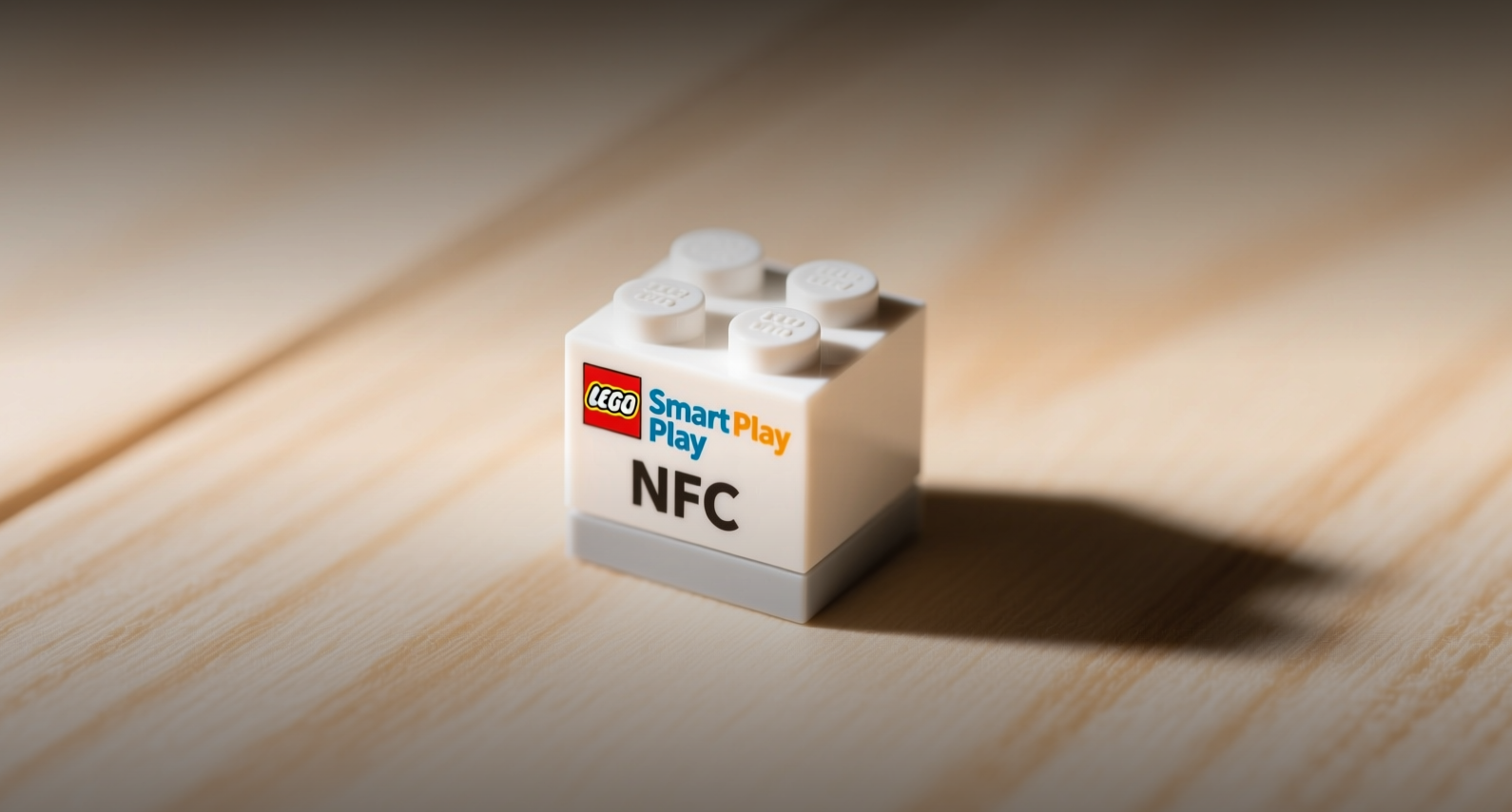
Lego's Smart Play system, launched in March, embeds rechargeable NFC-powered bricks into its classic building sets — a bid to reclaim children's attention from YouTube, Roblox and Minecraft without abandoning physical play.
"From a creativity standpoint, kids' play will be fundamentally changed by these smart bricks," said Josh Golin, executive director of Fairplay, a nonprofit that advocates for less screen time in children's entertainment. "Every time the brick does more, the child's imagination does less."
The smart bricks use near-field communication — the same tap-to-pay technology found in grocery stores — to read digital tags embedded inside other pieces. They detect motion, light up and produce sound effects that change based on play. Star Wars-themed sets with smart bricks range from $70 to $160, alongside lower-priced compatible sets with digital-tag pieces. A Pokemon-themed line was unveiled in July and hits stores in August, with bricks that detect each other to enable battles with light effects and creature sounds.
Lego, privately held, does not disclose quarterly earnings, but the Smart Play investment signals a strategic pivot after a difficult period. The company reported an 8% sales decline in 2018 — its first drop in more than a decade — and cut 1,400 jobs. The new system is Lego's most ambitious attempt to compete with the $4.5 billion Roblox platform and YouTube's dominance in children's entertainment, where screen time averages more than four hours daily among US kids aged 8 to 12, according to Common Sense Media.
The smart brick system traces its origins to a 2018 road trip by Lego designers through the American Midwest. Visiting dozens of homes in Wisconsin and Minnesota, the team observed three unmet needs: children wanted social play, agency over outcomes and "delightful surprises" that changed with each session, said Sam Coates, a Lego vice president who was on the trip.
Children should feel like "the director of the new 'Star Wars' movie that you're creating," Coates said. The bricks and tags are meant to "get the action going, get the inner movie going, and prime and prompt the kid to keep going."
Lego dipped into interactive play in 2024 with Super Mario sets that played theme music and coin-collection sounds. Smart Play is more technologically elaborate, functioning as a platform where smart bricks are interchangeable between sets and adapt to different functions. Tom Donaldson, a Lego senior vice president, called it the "most dramatic upgrade" to Lego's system of play since minifigures debuted in 1978.
The Competitive Trade-Off
The technology walks a tightrope. Lego wants to innovate without letting digital features overshadow its core building experience. Dan Klitsner, the toy inventor who created Bop-It in 1996, said the recipe that has kept Lego successful is the hands-on nature of the toys, not novel tech.
"Kids really like things that move and that are physical," Klitsner said. "What's important is that it doesn't replace the physical play. You want the technology to animate the player and to be shareable."
The risk is that parents may balk at premium prices for what amounts to a few extra beeps and lights. The $70-to-$160 price range for smart-brick sets compares with $20 to $50 for standard Lego Star Wars sets of similar piece counts, according to Lego's online store.
Investment Angle
For investors in the broader toy and entertainment ecosystem, Smart Play represents a test case for hybrid physical-digital play. Hasbro and Mattel have pursued similar strategies — Hasbro's digital gaming segment generated $1.1 billion in 2025, while Mattel launched interactive versions of its Fisher-Price line. If Lego's chip strategy succeeds, it could accelerate a shift toward connected toys across the $90 billion global toy market, according to Circana data. If it falters, it may reinforce the view that physical toys cannot compete with the engagement loops of digital platforms.
This article is for informational purposes only and does not constitute investment advice.
