


Kodiak AI becomes the first driverless-truck maker to deploy AMD EPYC processors, powering its seventh-generation autonomous platform.
Kodiak AI becomes the first driverless-truck maker to deploy AMD EPYC processors, powering its seventh-generation autonomous platform.
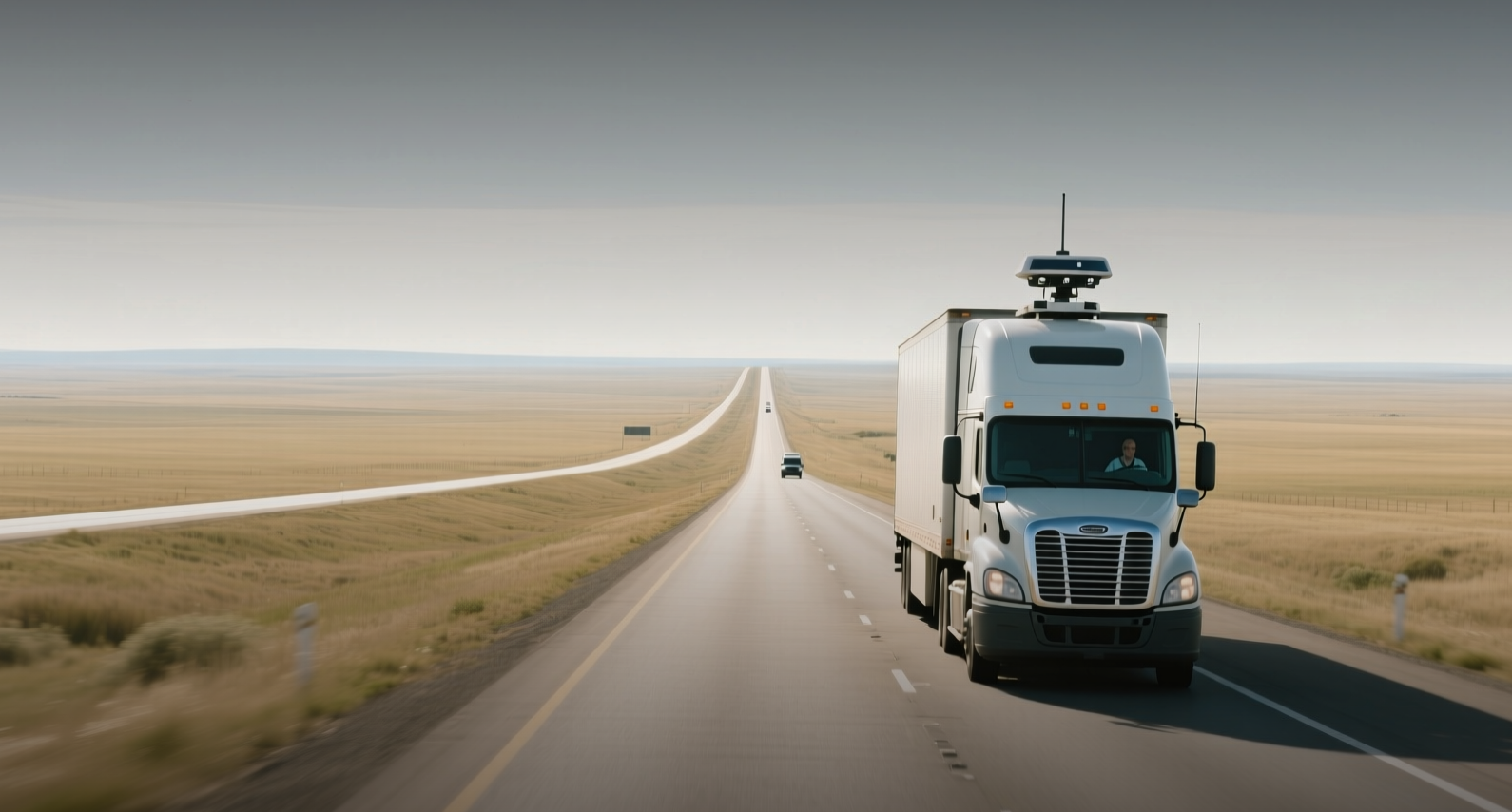
Kodiak AI is the first company to put AMD EPYC processors in a driverless-truck platform, giving its seventh-generation Kodiak Driver higher clock speeds at lower power draw to handle the sensor load of autonomous hauling.
"Physical AI requires compute capabilities that can rapidly handle enormous amounts of sensor data while supporting increasingly sophisticated AI workloads," Don Burnette, founder and CEO of Kodiak, said. "AMD EPYC CPUs give us the compute capabilities we need to advance the Kodiak Driver and continue commercializing autonomous trucking."
Within the seventh-generation Kodiak Driver, the EPYC CPUs aggregate sensor data, preprocess information from LiDARs, cameras and radars, and support the path-planning processes that determine how the vehicle safely navigates complex environments. These workloads are latency-sensitive and cannot easily be parallelized, so the higher clock speeds — a meaningful upgrade over the prior-generation device — let the system process critical data faster while consuming less power. Kodiak said it is the first company to deploy the advanced EPYC processors in hardware for driverless trucking.
The collaboration hands AMD another design win in the physical AI computing segment as Kodiak scales a Permian Basin fleet that already operates with no humans in the cab and targets driverless trucks on public highways later this year. Kodiak shares rose 5.28 percent and AMD gained 4.91 percent, according to Investing.com data.
Why CPU speed matters in driverless trucking
Driverless trucks demand exceptional central processing unit performance because the sensor stack — LiDAR, cameras, radar — generates a massive volume of data that must be aggregated and preprocessed in real time. "Physical AI is pushing computing into some of the most complex and data-intensive environments in the world," Wayne Lyons, senior director of automotive market at AMD, said. "Together with Kodiak, AMD is providing the processing capabilities needed to move driverless trucking from innovation to significant scale."
Physical AI refers to software that lets machines perceive and act on the physical world, and autonomous trucking is among its most demanding applications because a 40-ton vehicle must make split-second decisions from continuous sensor input. Using commercially available hardware from AMD lets Kodiak focus resources on building scalable, production-ready trucks rather than designing custom silicon, an approach that matters as the company grows its driverless fleet. Kodiak commercializes the technology through a Driver-as-a-Service model and strategic partnerships, with customers including Atlas Energy Solutions, IKEA, J.B. Hunt, Bridgestone, Werner Enterprises, C.R. England, General Dynamics Land Systems and Roehl Transport. In 2024, Kodiak became the first company to deploy driverless technology in customer-owned semi-trucks.
The deal pits Kodiak against rivals including Aurora Innovation and TuSimple in the race to commercialize driverless freight, while AMD's EPYC line competes with Intel's Xeon in the data-center and edge computing market that underpins autonomous driving. For investors, the announcement shows Kodiak's push toward production scale — the company trades on Nasdaq under KDK — and extends AMD's reach into automotive compute, a segment where it competes with Nvidia's Drive platform. Kodiak did not disclose the financial terms of the collaboration, and the company's AI-tagged announcements have historically drawn mixed share-price reactions, according to StockTitan data.
This article is for informational purposes only and does not constitute investment advice.
