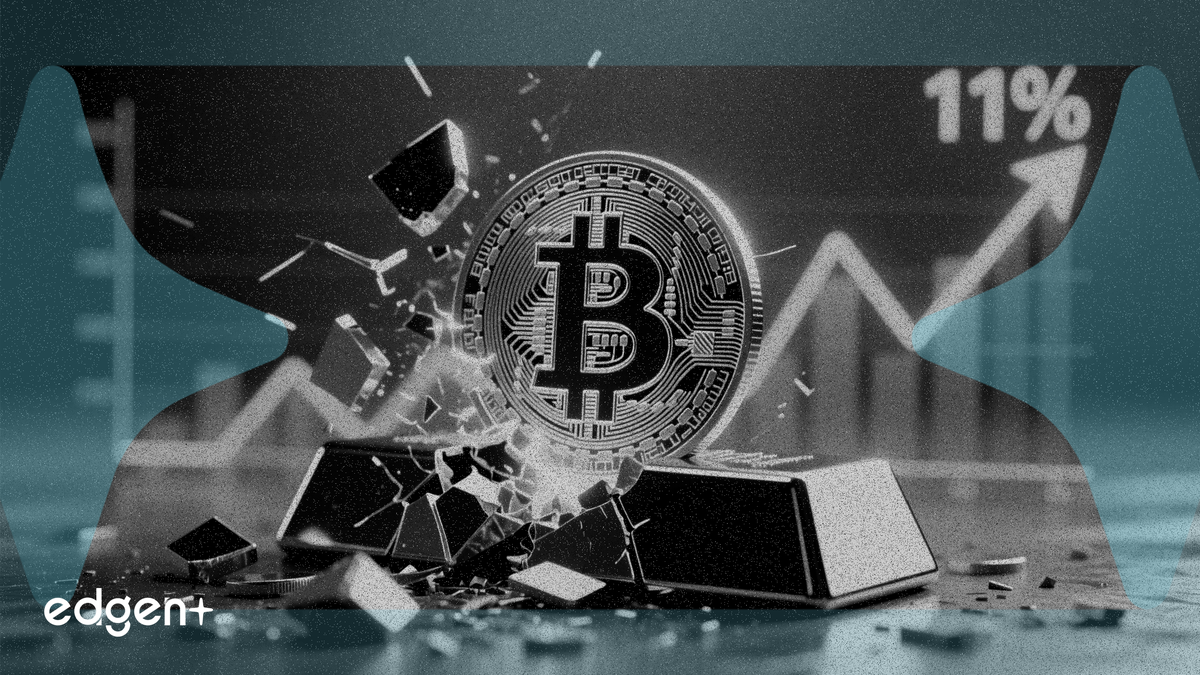
Bitcoin gained 11% to trade near $80,120 since the start of the Iran conflict while gold fell 5%, prompting JPMorgan analysts to declare the cryptocurrency is replacing the metal as a debasement hedge.
"The recent bitcoin ETF inflow streak highlights deepening institutional optimism in bitcoin as a strategic, long-term allocation rather than a short-term speculative trade," Nick Ruck, director of LVRG Research, said.
The divergence is most visible in fund flows. US spot Bitcoin exchange-traded funds have recorded inflows for three consecutive months through May, including a recent streak of five straight days totaling nearly $1.7 billion, according to data from Farside Investors. In contrast, gold ETFs are still recovering from outflows that accelerated during the March conflict.
The trend highlights a structural shift in how investors are positioning for geopolitical risk and currency debasement, with JPMorgan and Goldman Sachs taking opposite sides. The key test ahead is whether Bitcoin ETF inflows can be sustained and if gold's performance recovers as geopolitical tensions evolve.
ETF Flows Show Clear Divergence
Data shows the institutional turn to Bitcoin is accelerating. BlackRock’s IBIT led the most recent session with $134.6 million in new capital. The sector is now on pace for its sixth consecutive week of positive flows, its longest such streak since July 2025.
This consistent buying stands in stark contrast to gold-backed ETFs, which have failed to recover outflows that began in February and worsened in March. JPMorgan analysts noted this failure to rebound is what makes the structural shift toward Bitcoin visible.
Strategy's Bitcoin Pace Accelerates
The institutional demand engine is further powered by corporate treasury accumulation, led by Strategy. The company has added 145,834 BTC year-to-date and now holds 818,334 BTC, worth over $65 billion.
JPMorgan estimates that at its current pace, Strategy could purchase an additional $30 billion worth of Bitcoin in 2026. This would exceed the roughly $22 billion the company bought in each of the prior two years, signaling an acceleration of its treasury strategy.
Wall Street Divided on Top Hedge
Not all of Wall Street agrees with the asset rotation thesis. Goldman Sachs recently raised its year-end gold forecast to $5,400 per ounce, citing strong demand from central banks and the metal's lower long-term volatility compared to Bitcoin.
JPMorgan acknowledges Bitcoin's higher volatility but notes the ratio between the two assets is at a record low of 1.5. The bank suggests this could narrow further as institutional adoption through vehicles like ETFs continues to deepen liquidity and stabilize the market.
This article is for informational purposes only and does not constitute investment advice.