
Key Takeaway: Jordan's air defenses intercepted 10 Iranian ballistic missiles early Tuesday, the second wave in 48 hours, as the U.S.-Iran confrontation over the Strait of Hormuz escalates into a widening regional conflict.
Key Takeaway: Jordan's air defenses intercepted 10 Iranian ballistic missiles early Tuesday, the second wave in 48 hours, as the U.S.-Iran confrontation over the Strait of Hormuz escalates into a widening regional conflict.
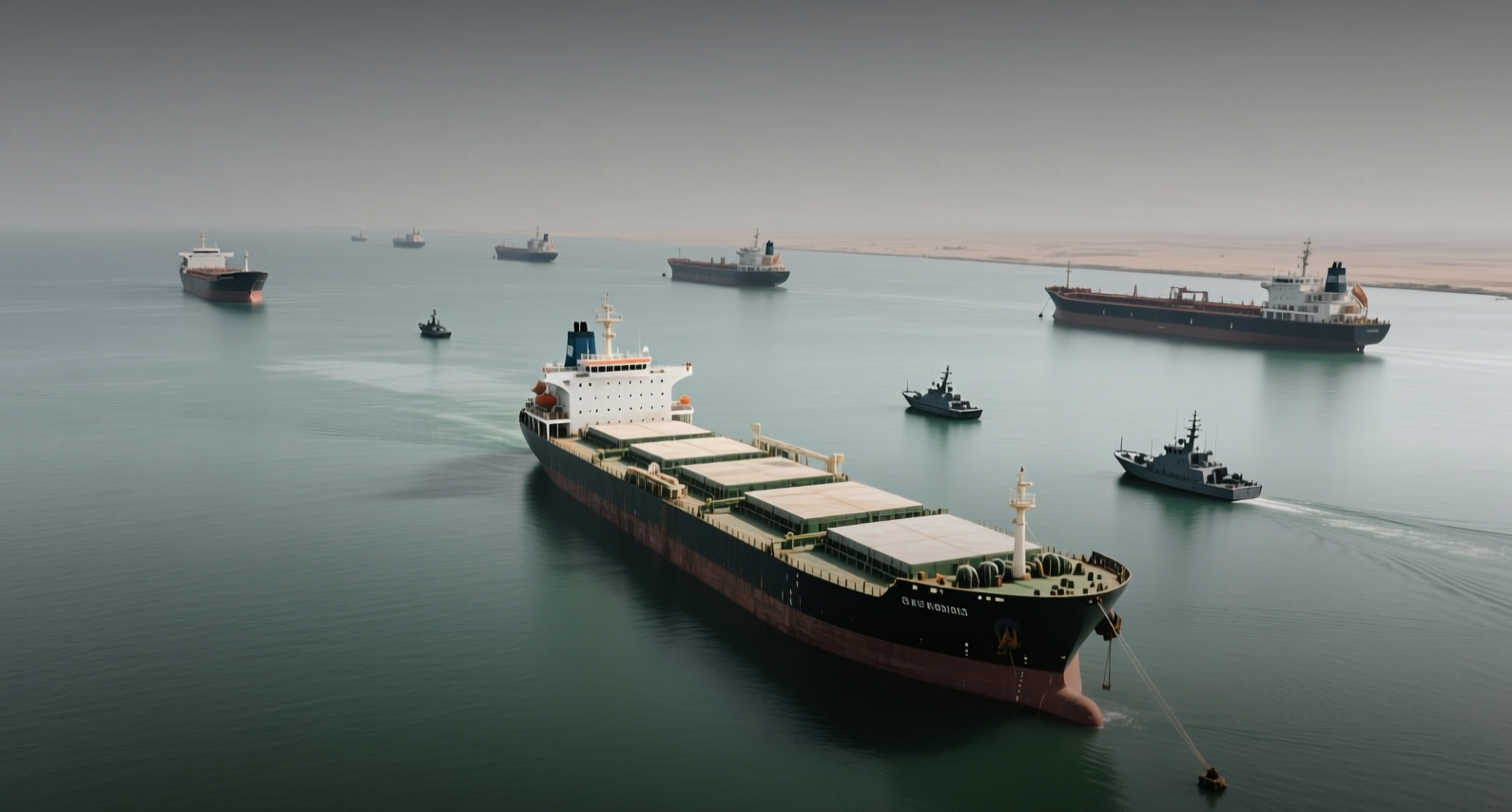
Jordanian air defenses intercepted 10 Iranian ballistic missiles early Tuesday, the second barrage in two days, as crude oil briefly topped $90 a barrel on renewed Strait of Hormuz supply risk.
"What's strange to me is that sometimes they even fire on their own allies, just to prevent the free flow of oil and gas," Vice President J.D. Vance told reporters Monday night, describing Iranian actions in the waterway.
The Jordanian military said its air defense systems intercepted 10 missiles that entered Jordanian airspace, with three additional missiles landing in remote areas and causing no casualties. The barrage follows Iran's earlier salvo of eight ballistic missiles at the King Hussein and Al Azraq air bases on Sunday, which Jordanian defenses also intercepted. Oil prices briefly moved above $90 per barrel as traders priced in the risk of further disruption to the Strait of Hormuz, which carries roughly one-fifth of global petroleum liquids consumption.
The escalation threatens to unravel the fragile ceasefire framework that has held since June, when Washington and Tehran agreed to a 60-day truce and the reopening of the Strait of Hormuz. With the ceasefire deadline having expired in late August without a final deal, the renewed missile exchanges raise the prospect of sustained supply disruption in a waterway that moved roughly 7 million barrels a day last week under U.S. Navy escort.
The latest exchange began Sunday when U.S. forces destroyed two Iranian rocket launchers on Larak Island in the Strait of Hormuz. A U.S. official confirmed that American forces struck the launchers after Islamic Revolutionary Guard Corps personnel were observed preparing rockets carrying sea mines for deployment into the strategically important waterway. Iran's Revolutionary Guard said the attack caused casualties among soldiers and civilians and vowed retaliation.
The confrontation marks the first publicly reported direct U.S. attack against Iranian military positions in more than a month, ending a period of relative calm that had raised hopes Washington and Tehran might gradually move away from direct military exchanges. A July Iranian ballistic-missile attack on Muwaffaq Salti Air Base, which killed two U.S. service members, had demonstrated the risks of the ongoing confrontation.
The Strait of Hormuz remains the central flashpoint. The narrow waterway connecting the Persian Gulf with the Gulf of Oman handles roughly one-fifth of global petroleum liquids consumption, making any sustained military disruption a potential shock to energy markets worldwide. Oil flows through the strait reached approximately 7 million barrels a day last week via an Omani corridor under U.S. Navy escort, but analysts expect the Larak strike to inject fresh uncertainty and likely reduce flows in the coming days.
President Trump escalated the rhetoric further on Sunday, threatening on social media to destroy Kharg Island, Iran's main oil-export hub, to "smithereens." Treasury Secretary Scott Bessent announced on August 30 that the U.S. intends to impose new sanctions on Iran weekly, particularly targeting banks and aiming to cut Tehran-linked institutions out of the dollar system entirely.
The conflict, which began February 28 after U.S. and Israeli strikes killed Iranian Supreme Leader Ayatollah Ali Khamenei, has seen multiple ceasefire attempts. A June agreement extended a truce for 60 days and reopened the Strait of Hormuz, but the arrangement remained fragile. The late-August deadline expired without a final deal, setting the stage for the renewed escalation.
The cycle of retaliation poses a central danger for both governments. A limited tactical operation can quickly generate a response, which then creates political and military pressure for another strike. If American personnel are killed or major U.S. military infrastructure is damaged in future Iranian attacks, Washington could face pressure to launch additional strikes against Iranian missile installations or command facilities. Iran could then respond against additional U.S. facilities elsewhere in the region.
For consumers and financial markets, the consequences extend beyond the battlefield. Prolonged disruption of the Strait of Hormuz could affect crude oil supplies, gasoline prices, shipping insurance rates and transportation costs worldwide. The key developments to watch are whether Iran launches additional missiles, whether the Pentagon confirms casualties or damage in Jordan, and whether commercial shipping through the Strait of Hormuz experiences further disruption.
This article is for informational purposes only and does not constitute investment advice.
