

Key Takeaways:
- Joby Aviation stock fell below $10, down 47% year to date in 2026
- Investors now demand commercial revenue over technological milestones
- The eVTOL sector faces a broad de-rating as cash burn and dilution risks mount
Key Takeaways:
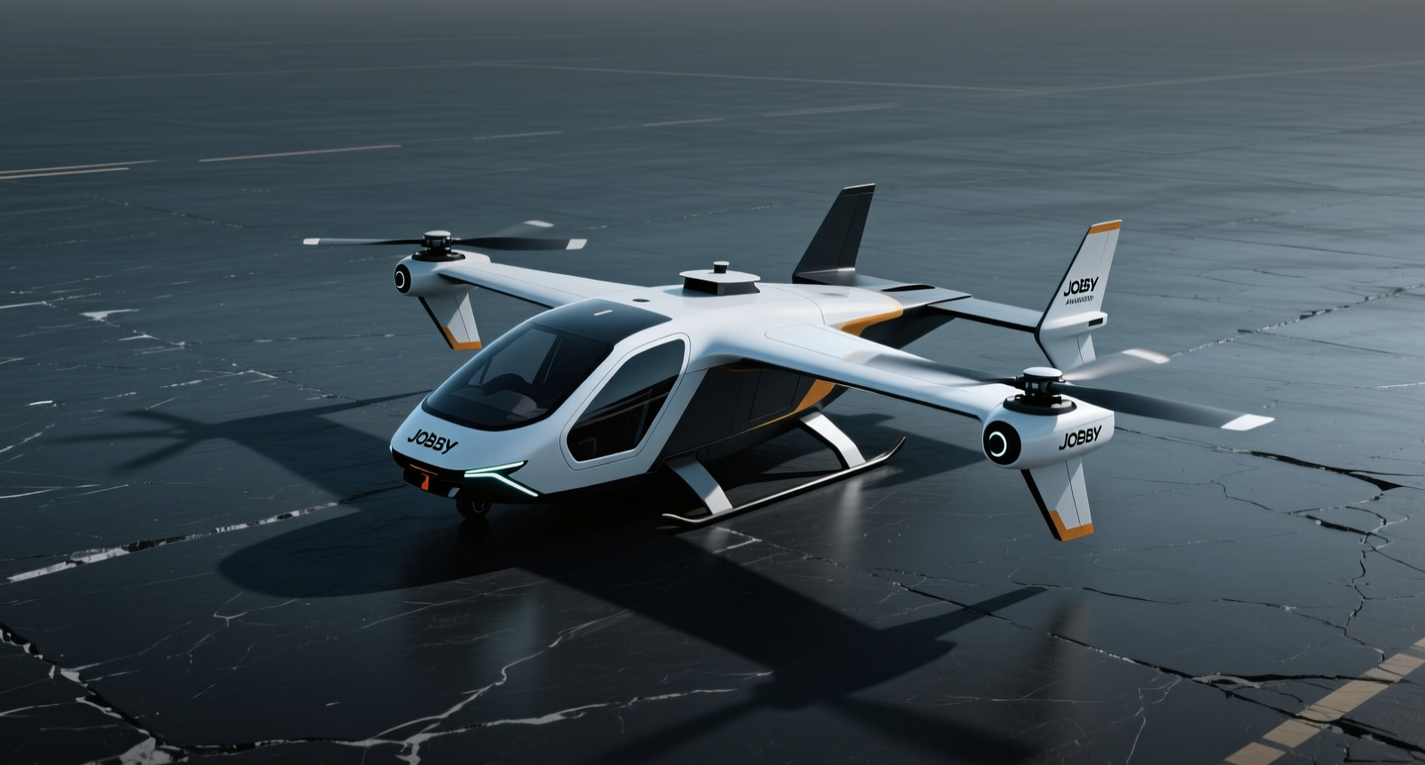
Joby Aviation's stock has lost nearly half its value in 2026 as investors shift from betting on flying taxi potential to demanding proof of commercial revenue.
Joby Aviation Inc. fell below $10 for the first time since 2024, losing 47% year to date as investors pivot from technological milestones to commercial execution. The Santa Cruz-based eVTOL manufacturer now carries a $7.2 billion market capitalization despite generating just $77.7 million in trailing 12-month revenue and posting a $957.4 million net loss over the same period.
"The market has repriced the entire pre-revenue eVTOL cohort as risk appetite for speculative growth has thinned," a Morgan Stanley analyst said. "Joby is well-capitalized, but the runway to profitability is measured in years, not quarters."
The stock's decline mirrors a broader de-rating across the eVTOL sector. Archer Aviation has fallen 40% year to date, while EHang Holdings has dropped 62%. Joby ended the fourth quarter with $1.41 billion in cash and added roughly $1.2 billion in equity and convertible debt in February, but its Q4 2025 operating loss of $206.8 million and research and development spending of $161.3 million highlight the cash burn required to reach commercialization.
What is at stake is whether Joby can convert years of engineering and regulatory progress into a viable business. The company expects to begin passenger service in Dubai in 2026 and has secured partnerships with Toyota Motor, Delta Air Lines, and Uber Technologies. But with sell-side analysts split — three buys, five holds, three sells — and a median price target of $11.01 implying 52% upside, the stock remains a bet on execution rather than technology.
The Shift From Potential to Proof
For years, Joby's investment case rested on the promise of electric air taxis revolutionizing urban transportation. The company logged tens of thousands of flight-test miles, advanced through FAA certification, and expanded manufacturing capacity with Toyota. Each milestone reinforced confidence that flying taxis could eventually become a reality.
But that narrative has lost its power. Investors now want evidence that Joby can launch commercial operations, attract paying customers, and generate sustainable revenue. The company's fiscal year 2026 revenue guidance of $105 million to $115 million, while a step forward, remains modest relative to its $7.2 billion valuation.
Insider Activity Adds to Pressure
Adding to the negative optics, Chief Product Officer Eric Allison sold 27,932 shares at $7.53 on July 13 to cover mandatory tax withholding from vested restricted stock unit awards. While the sale was non-discretionary, it reduced his direct holdings by 4% and came as the stock traded near its lowest levels of the year.
Joby's path to profitability remains uncertain. The company must demonstrate that customers will use the service regularly, ticket prices can support healthy margins, and operations can scale safely. Until those questions are answered, the stock is likely to remain volatile.
This article is for informational purposes only and does not constitute investment advice.
