

JD.com's partnership with Magic Atom marks the e-commerce giant's biggest bet yet on embodied AI, targeting 1 billion yuan in sales of humanoid and service robots as China's robotics industry accelerates toward mass commercialization.
JD.com's partnership with Magic Atom marks the e-commerce giant's biggest bet yet on embodied AI, targeting 1 billion yuan in sales of humanoid and service robots as China's robotics industry accelerates toward mass commercialization.
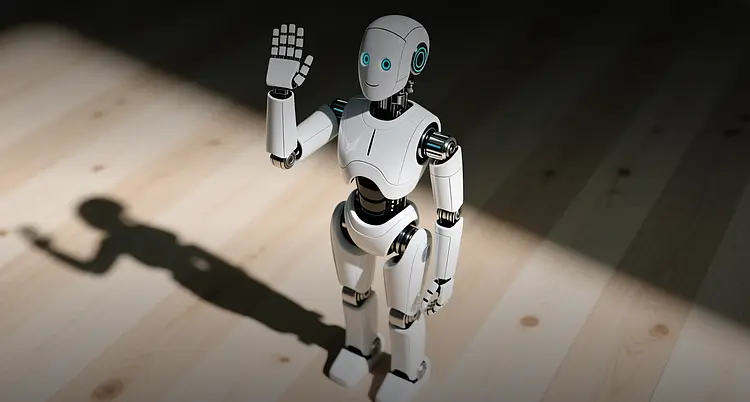
JD.com's partnership with Magic Atom marks the e-commerce giant's biggest bet yet on embodied AI, targeting 1 billion yuan in sales of humanoid and service robots as China's robotics industry accelerates toward mass commercialization.
JD.com and Magic Atom signed a strategic cooperation agreement to jointly develop consumer-grade embodied intelligent robots, targeting 1 billion yuan ($137 million) in sales on JD's platform across education, inspection and tour guide scenarios, the companies said. The partnership covers technology co-development, product incubation, channel sales and after-service operations — a full lifecycle approach that signals JD.com's intent to become a primary distribution channel for China's booming humanoid robotics sector.
"JD.com brings the distribution infrastructure and consumer reach; Magic Atom brings the embodied AI technology," a person familiar with the deal said. "The 1 billion yuan target is ambitious but reflects the speed at which these robots are moving from demo to deployment."
The agreement comes as Morgan Stanley sharply upgraded its outlook for China's humanoid robotics industry, projecting 50,000 units will be shipped in 2026 — almost double its earlier estimate of 28,000 units and up from 14,000 units forecast in January. The Wall Street bank now estimates China's humanoid robotics market will be worth approximately $2 billion this year and expand to $15 billion by 2030, with annual shipments climbing to 446,000 units by the end of the decade.
Why JD.com is betting on robots
For JD.com, the deal extends beyond simple retail distribution. The e-commerce platform, which already operates automated warehouses and delivery drones, sees embodied AI as a natural extension of its logistics and smart retail ecosystem. Magic Atom's robots — designed for education, facility inspection and guided tours — represent the first wave of consumer-grade products that could eventually find their way into JD's own fulfillment centers.
The partnership mirrors a broader push by Chinese technology companies into physical AI. At the World Economic Forum's Summer Davos meeting in Dalian last week, Matrix Robotics deployed its MATRIX-3 humanoid platform as an AI barista, serving coffee to attendees using its WAVE Embodied AI Foundation Model. The demonstration showed the system's ability to perform continuous, multi-step service tasks — picking up cups, operating a coffee machine and delivering drinks — without human intervention.
Shangcheng District in Hangzhou has emerged as a hub for this activity, with its Xizi Smart Industrial Park housing more than 30 humanoid robot enterprises. The Zhejiang Humanoid Robot Training Base, inaugurated there in early 2026, has already deployed robots in factory and daily service scenarios.
Market opportunity and competitive landscape
Morgan Stanley identified Shanghai-listed Leaderdrive as one of the companies best positioned to benefit from the robotics boom, raising its 12-month price target to 464 yuan ($68) from 269 yuan. The Suzhou-based precision components supplier could hold a 40% share of the global humanoid robot components market this year, analyst Sheng Zhong said.
Chinese robotics companies are also pursuing international expansion. Seer Intelligent, which made its Hong Kong market debut this week, generated 18% of its revenue from overseas operations spanning more than 65 countries last year. Chief Operating Officer Jonathan Fan said geopolitical uncertainty remains the most significant headwind, with the company mitigating risk through geographic diversification and regulatory compliance.
The competitive dynamics are intensifying globally. Tesla Chief Executive Elon Musk said the company's Optimus humanoid robot would not be available for public sale until the end of 2027, giving Chinese manufacturers a potential multi-year head start in commercial deployment. According to research firm Omdia, Chinese companies occupied the top five positions by humanoid robot shipment volumes globally last year, with U.S.-based Figure AI ranking seventh and Tesla placing ninth.
For investors, the JD.com-Magic Atom partnership provides a tangible revenue target in a sector where many companies still operate at the prototype stage. JD.com shares, which trade at roughly 10 times forward earnings, could benefit from the market's reassessment of its AI-related revenue streams. The broader robotics supply chain — including component makers like Leaderdrive and software platforms like Magic Atom's — represents the more direct investment opportunity as commercialization accelerates.
This article is for informational purposes only and does not constitute investment advice.
