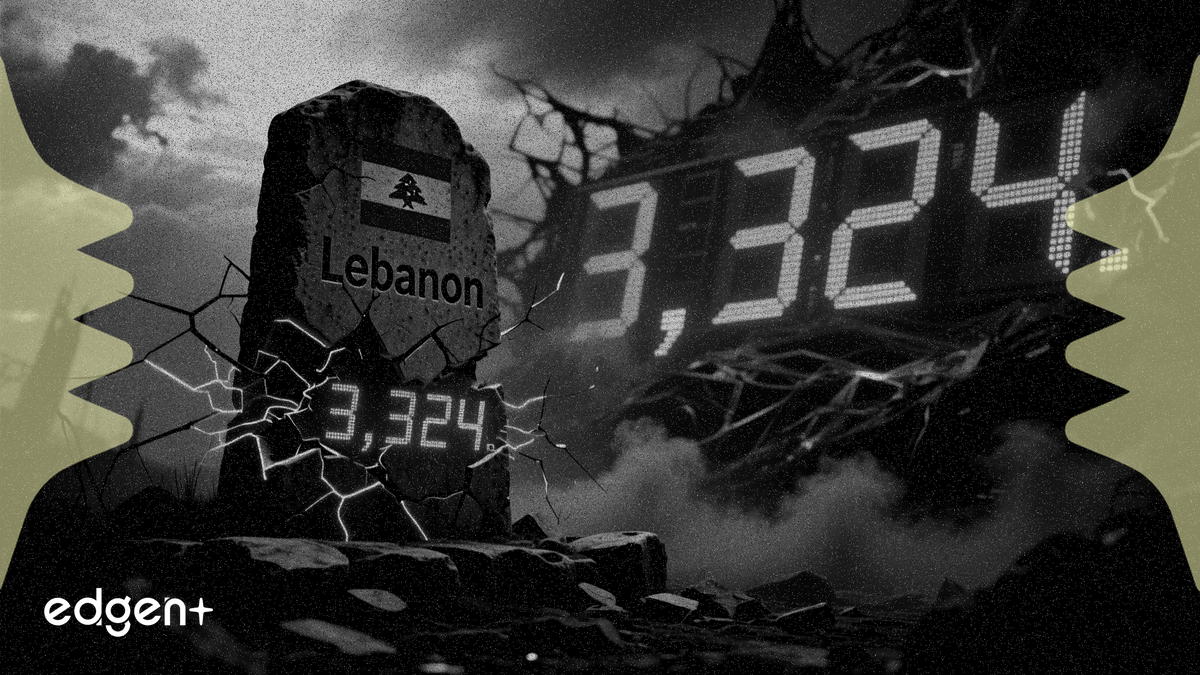
Israel's intensification of air strikes across Lebanon has pushed the death toll past 3,324 and sent crude oil and gold higher as investors price in a widening Middle East conflict.

Israel ordered the evacuation of the southern Lebanese city of Tyre on Wednesday and struck more than 100 Hezbollah targets overnight, pushing the five-week-old US-brokered ceasefire to the brink of collapse and sending Brent crude above $78 a barrel.
"The escalation removes any remaining hope that the ceasefire framework could hold, and markets are now pricing in a prolonged conflict that draws in Iran directly," said Torbjorn Soltvedt, principal analyst for Middle East and North Africa at Verisk Maplecroft.
At least 14 people were killed in Thursday's strikes across southern Lebanon, including five women and children and a Lebanese soldier, according to the Lebanese Health Ministry. The Israeli military said it hit more than 90 weapons storage facilities, command centers and observation posts. Hezbollah responded by targeting three Israeli barracks and a military post in northern Israel with drones and rockets, while an Israeli soldier was killed in a separate Hezbollah drone attack in northern Israel.
The escalation threatens to derail US-mediated talks between Israel and Iran scheduled for Friday in Washington, where a broader ceasefire deal had been expected to take shape. Iran has made ending the war in Lebanon a condition for its own nuclear negotiations with the US, meaning a collapse in Lebanon could unravel the entire diplomatic track.
Death Toll Rises as Strikes Spread Beyond the South
Israeli Prime Minister Benjamin Netanyahu said Monday he had instructed the military to "press the pedal even harder" against Hezbollah, prompting panic in Beirut's southern suburbs where thousands of families fled in cars. The warning was followed by one of the heaviest nights of bombardment since the ceasefire began April 17.
In the Bekaa Valley village of Mashghara, strikes destroyed several homes and killed 11 people, including two children and one woman, Lebanon's health ministry said. Further south in Sidon, an Israeli drone struck an apartment building housing displaced families, killing five people and wounding 21 others, among them five children. Among the dead was Hossan Zeidan, a former correspondent for Iran's Arabic-language al-Aalam television. In the coastal town of Adloun, a drone hit a car carrying a family fleeing the area, killing six people — two children and their parents.
The Israeli military's Arabic-language spokesman, Col Avichay Adraee, issued evacuation orders for eight buildings in Tyre and surrounding neighborhoods, accusing Hezbollah of violating the ceasefire terms. More than 1 million people in Lebanon have been displaced since the conflict began March 2, when Hezbollah launched rockets into northern Israel in retaliation for an Israeli strike that killed Iran's supreme leader.
Oil, Gold and Defense Stocks Catch a Bid
Brent crude rose 2.3 percent to $78.40 a barrel on Thursday, extending gains as traders priced in the risk of supply disruption from the broader Middle East. Gold gained 0.8 percent to $2,368 an ounce, while the VIX, Wall Street's fear gauge, climbed above 22. Defense stocks including Lockheed Martin Corp. and RTX Corp. outperformed the broader market, with the S&P 500 aerospace and defense index rising 1.8 percent.
The last time Israel and Hezbollah engaged in sustained combat was the 2006 war, which lasted 34 days and killed more than 1,100 people in Lebanon. The current conflict has already surpassed that death toll threefold, with the Lebanese health ministry reporting 3,324 killed and more than 9,800 wounded since March 2. Israel says 23 of its soldiers and four civilians have been killed over the same period, with Hezbollah's use of fiber-optic drones that can evade Israeli defenses representing a tactical shift.
Israeli and Lebanese military officials are scheduled to hold their first security talks Friday in Washington, though the intensification of strikes casts doubt on whether those discussions will proceed as planned. Hezbollah has dismissed the talks and instead endorsed Iran's position that any nuclear deal with the US must also address the war in Lebanon. The Strait of Hormuz, through which about 21 percent of global oil trade passes, remains the key risk factor for energy markets if the conflict widens to include direct Iran-Israel hostilities.
This article is for informational purposes only and does not constitute investment advice.