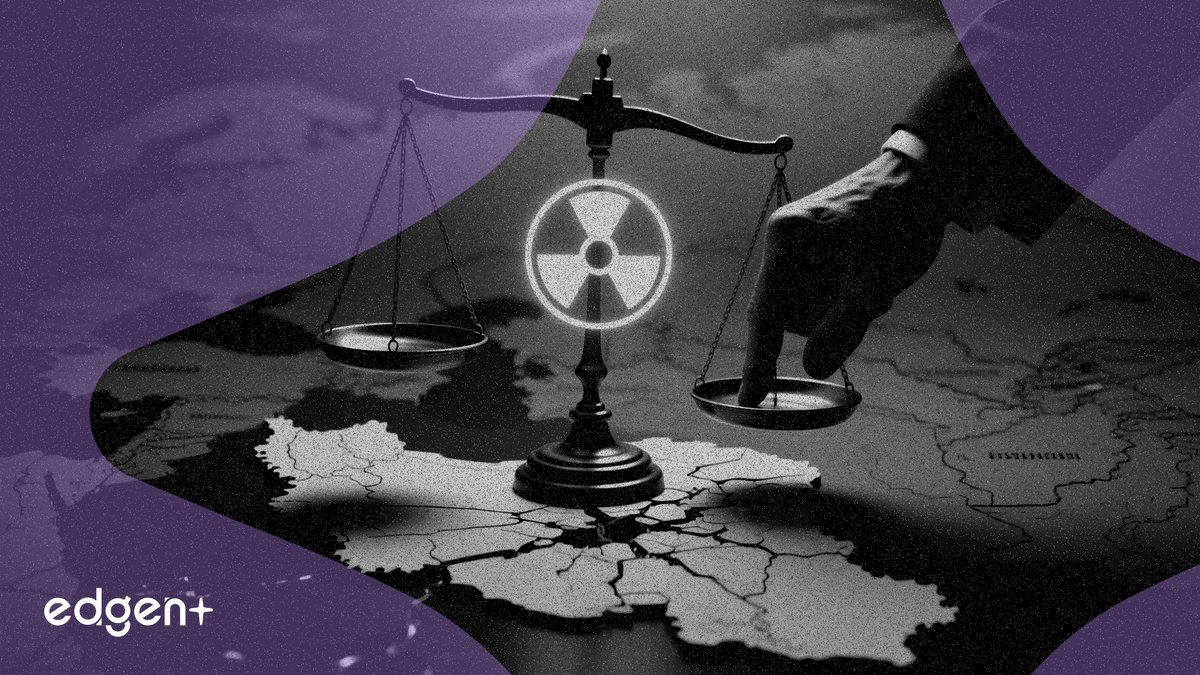
A second round of US-Iran nuclear talks hangs in the balance, with Tehran considering a new proposal from President Trump while his former advisor, John Bolton, argues for regime change.
Iran is reviewing a request from U.S. President Donald Trump for negotiations, according to Iranian Foreign Minister Abbas Araqchi, introducing fresh uncertainty into the conflict as a two-week ceasefire nears its end. The statement, made in Russia on Monday, comes after Trump canceled a planned visit by his envoys to Islamabad for talks, suggesting Iran should telephone if it wishes to negotiate. This diplomatic maneuvering unfolds against a backdrop of escalating nuclear activity from Tehran and increasingly hardline rhetoric from Washington.
"Iran now is a far more hardline and less pragmatic player that will play hardball at every junction. Trump cannot count on any goodwill in Tehran," said Andreas Kreig, associate professor of Security Studies at King's College, London. He suggested a new deal might resemble the original 2015 accord but warned that the political landscape in Iran has significantly hardened, with the Islamic Revolutionary Guard Corps (IRGC) "firmly in charge."
Since the U.S. unilaterally withdrew from the Joint Comprehensive Plan of Action (JCPOA) in 2018, Iran has accelerated its nuclear program. The International Atomic Energy Agency (IAEA) estimated in 2025 that Iran possesses 440kg of uranium enriched to 60 percent purity, moving it significantly closer to the 90 percent threshold required for weapons-grade material. The U.S. is demanding a complete halt to uranium enrichment and the removal of this stockpile, alongside new restrictions on Iran's ballistic missile program.
The standoff raises the stakes for the global economy, with a failure to secure a diplomatic path forward risking a wider conflict that could threaten the Strait of Hormuz, a chokepoint for 21 percent of the world's oil trade. The last war between the two countries in June of last year, which included attacks on Iranian nuclear sites, resulted in over 1,000 casualties and significant market volatility.
Bolton's 'Regime Change' Call
Adding to the pressure, former U.S. National Security Advisor John Bolton argued in a Wall Street Journal opinion piece that negotiations are futile and that only "regime change" can neutralize the threat. Bolton contends that the focus on uranium enrichment ignores the significant danger posed by Iran's plutonium path to a nuclear weapon via its Bushehr reactor. Citing Russian and IAEA estimates, nuclear-proliferation expert Henry Sokolski, quoted by Bolton, suggests Iran may have enough plutonium to produce more than 200 nuclear weapons.
Bolton also highlighted the long-standing cooperation between Tehran and North Korea on nuclear and ballistic-missile technology as a critical vulnerability. He pointed to a Syrian reactor, a clone of North Korea's Yongbyon facility destroyed by Israel in 2007, as likely intended for Iran's weapons program. "In Iran today, as in Iraq earlier, regime change is the only long-term solution," Bolton wrote.
JCPOA's Ghost
The current tensions stand in stark contrast to the period under the 2015 JCPOA, which saw Iran reduce its enriched uranium stockpile by 98 percent to under 300kg and cap enrichment at 3.67 percent. In exchange, international sanctions were lifted, releasing billions in frozen assets and easing restrictions on Iran's oil and banking sectors. Trump abandoned the deal in 2018, calling it the "worst deal ever" and reimposed crippling sanctions as part of a "maximum pressure" campaign designed to force Iran back to the table for a more restrictive agreement.
A Hardened Tehran
The political and military calculus has shifted dramatically since 2018. Two wars, including the current one, have seen direct attacks on Iranian soil and its nuclear infrastructure. Analysts, including King's College's Krieg, note that the IRGC's influence has grown, consolidating a more hardline, less pragmatic political environment in Tehran. This shift suggests that while economic incentives for a deal remain, Iran is unlikely to concede on what it views as its sovereign rights, including uranium enrichment and its missile capabilities, which it deems non-negotiable.
This article is for informational purposes only and does not constitute investment advice.