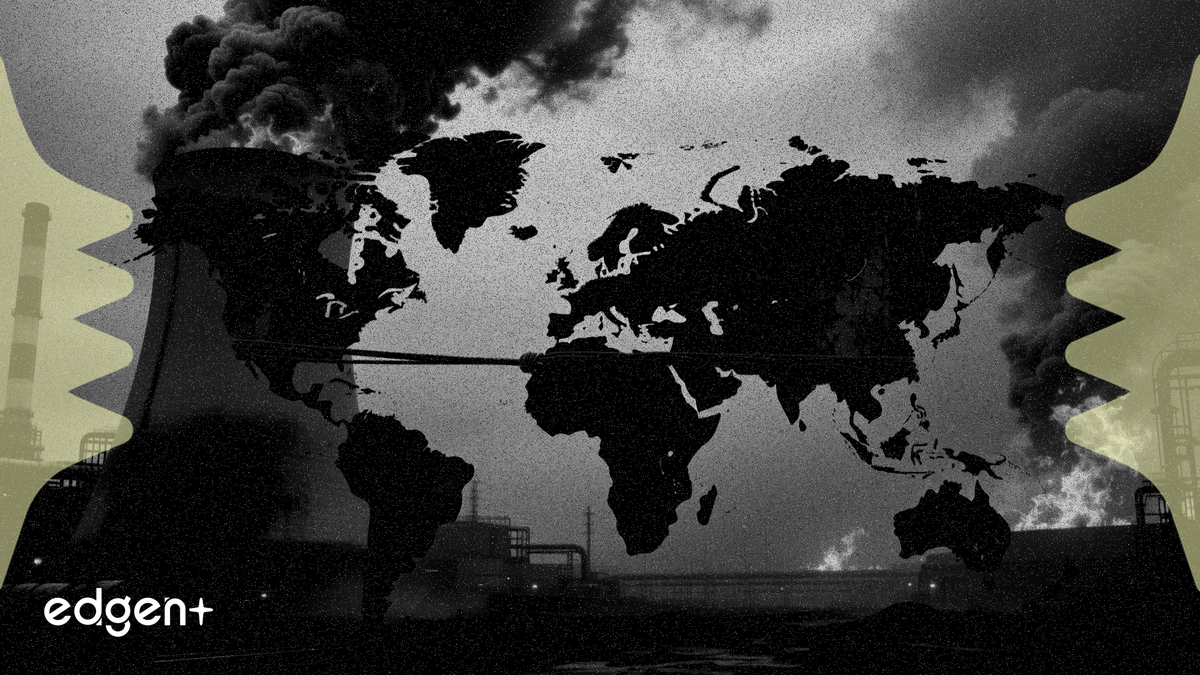
The closure of the Strait of Hormuz has forced a rapid energy triage in Asia, with Japan and South Korea turning to coal as liquefied natural gas supplies dwindle.

(P1) Major liquefied natural gas importers Japan and South Korea are ramping up coal-fired power generation, a direct consequence of the Iran war that has choked off LNG shipments through the Strait of Hormuz and caused prices for the super-chilled fuel to spike.
(P2) "Some companies won’t survive this triage for long," said Henning Gloystein of the Eurasia Group consultancy firm, warning that the pain will spread beyond Asia through global supply chains.
(P3) The market reaction has been severe, with Brent crude futures trading over $100 a barrel. The price of bunker fuel in Singapore, the world's largest refueling hub, has surged to more than $800 per metric ton from about $500 before the conflict began, according to data from OilPrice. The disruption amounts to a shortfall of 12% of global oil consumption for every month the strait remains shut.
(P4) The pivot back to coal highlights the severe economic fallout from the strait's effective closure, threatening global supply chains and pushing inflation higher. With 17% of Qatar's LNG export capacity knocked out for what could be three to five years, according to Reuters, the energy shock is set to have long-lasting consequences far beyond the Middle East.
The shutdown of one of the world’s most critical energy arteries is creating cascading effects across the global economy. The immediate impact has been on the shipping industry, which relies on sludgelike bunker fuel, a product whose supply is now severely constrained. The daily cost of the war for the global shipping industry is estimated at 340 million euros, according to the European Federation for Transport and Environment. In response, carriers have slowed vessel speeds by an average of 2% to conserve fuel, but these costs are expected to be passed on to consumers.
The pain is not limited to fuel. The price of plastics has soared, linked to the rising cost of crude oil and a shortage of refined chemicals like naphtha, much of which is sourced from the Middle East. The conflict has also shut down a factory in Qatar that produces a third of the world’s helium, a critical component for chipmakers in South Korea and Taiwan. Furthermore, prices for urea fertilizer have jumped, squeezing farmers in Asia and East Africa, where countries like Malawi receive more than 60% of their fertilizer imports from the Gulf.
While the oil market has seen the largest disruption by volume, the impact on the liquefied natural gas market reveals the fragility of global energy security. Qatar, the world's second-largest LNG exporter, saw Iranian attacks sideline 12.8 million metric tons per year of its export capacity.
A trickle of traffic is navigating the strait on a case-by-case basis. At least two Qatari LNG tankers have successfully transited to Pakistan under a deal approved by Iran, which is intended to build confidence with mediators. According to sources familiar with the matter, the shipments are part of a government-to-government deal as Pakistan faces an urgent gas shortage. However, these ad-hoc arrangements do little to alleviate the broader supply crunch facing Asia, which receives around 90% of the gas that normally passes through the strait. The turn to coal in Japan and South Korea shows that major importers are now planning for a long-term disruption.
This article is for informational purposes only and does not constitute investment advice.