
Iran's top security official warned Saturday that countries joining the US economic campaign face retaliation, with Hormuz oil flows at stake.
Iran's top security official warned Saturday that countries joining the US economic campaign face retaliation, with Hormuz oil flows at stake.
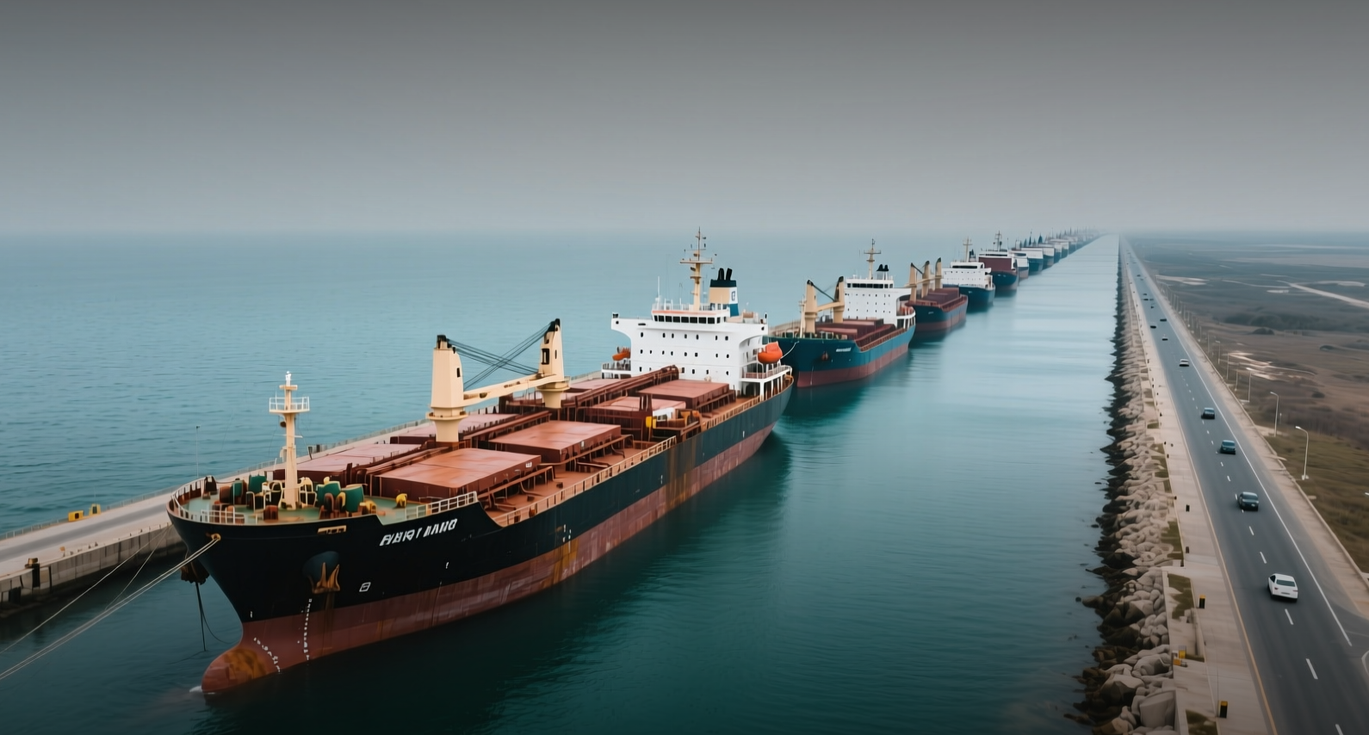
Iran's Supreme National Security Council Secretary Mohsen Rezaei threatened Saturday to block all oil exports through the Strait of Hormuz and the Persian Gulf if the US presses its "economic war," warning that countries cooperating with Washington would be treated as enemies.
"We tell all neighboring countries not to participate in the economic war with the US; otherwise, we will consider them an enemy," Rezaei said, according to state broadcaster IRIB. "If Trump wants to take action, we will respond in kind with earthquake-like force."
The threat escalates a standoff that has already cut traffic through the waterway carrying about a fifth of global oil consumption. US Energy Secretary Chris Wright said the US military helped move a seven-day average of 8 million barrels a day through the strait, down from more than 20 million before the war began Feb. 28. Only four commodity ships transited Thursday, none of them large crude carriers or liquefied natural gas tankers, ship-tracking data showed.
The warning lands days before Treasury Secretary Scott Bessent is due to announce what he called "the toughest sanctions in history" on Iran, a campaign President Donald Trump unveiled Aug. 19 as "the most crushing economic operation ever taken against any country." Oil prices have already climbed to near $94 a barrel, and a full closure would add a supply risk premium across energy, equities, and shipping.
Iran's warning targets neighbors including Gulf states that have moved to cut trade with Tehran. The United Arab Emirates has already reduced commercial ties, while Bessent said countries were "either with us or against us." Iran's Foreign Ministry spokesman Esmaeil Baghaei called the imminent sanctions an "assertion of extraterritorial sovereignty over every independent member state of the United Nations," saying such secondary measures "find no foundation in international law."
President Masoud Pezeshkian said Saturday that Tehran will not make concessions and stressed the need to move beyond what he called a "no war, no peace" situation. War offers no solution, he said, while prolonged uncertainty about whether fighting could resume is taking an economic toll. Investment will be difficult to attract as long as the threat of renewed conflict persists, he added, defending a June memorandum with the US as containing no provision that amounts to capitulation.
The June memorandum, signed in Islamabad through Pakistani and Qatari mediation, halted hostilities that began with US and Israeli airstrikes on Feb. 28. Talks have since stalled over implementation and navigation arrangements for Hormuz. Iran has granted permission for a number of Iraqi oil tankers to pass through the strait following repeated requests from Baghdad, state news agency IRNA reported.
The sanctions push also pressures China, which buys more than 80 percent of Iran's shipped oil, according to 2025 data from analytics firm Kpler. Beijing has urged diplomacy, while Bessent has pressed for cooperation with Washington. A full Hormuz closure would ripple through global energy markets, hitting Asian importers hardest.
The last time Iran threatened to close the strait, during the 2019 tanker seizures, Brent crude spiked roughly 15 percent within weeks before tensions eased. This time, with UN inspectors shut out of Iran's nuclear program since 2025 and Trump's stated goal of dismantling it unmet, the standoff carries deeper escalation risk. Iran maintains enough missile and drone capability to impede tanker traffic and attack regional rivals, even after US strikes devastated its navy and air force.
If Washington proceeds with the sanctions announcement Monday and Iran follows through on its blockade threat, oil prices could push well above $100 a barrel. If talks resume, the strait could reopen gradually, as it did after the June memorandum. Trump said Friday that Washington was observing "what happens" in the conflict, adding that Iran "would love to make a deal, but they're not ready to make the right deal."
This article is for informational purposes only and does not constitute investment advice.
