
A fragile truce in the Middle East is under severe strain after Iran launched a barrage of missiles and drones at the United Arab Emirates, targeting the nation’s critical Fujairah oil port and drawing a muted response from Washington.
A fragile truce in the Middle East is under severe strain after Iran launched a barrage of missiles and drones at the United Arab Emirates, targeting the nation’s critical Fujairah oil port and drawing a muted response from Washington.
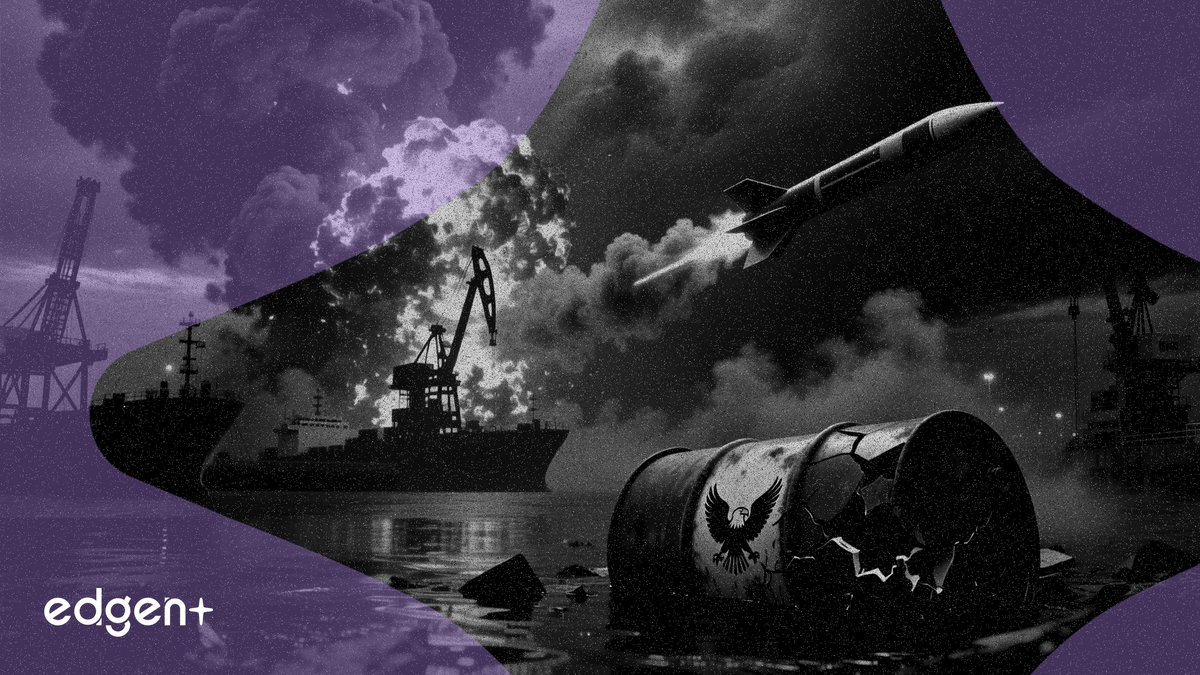
A fragile truce in the Middle East is under severe strain after Iran launched a barrage of missiles and drones at the United Arab Emirates, targeting the nation’s critical Fujairah oil port and drawing a muted response from Washington.
Iran launched at least 15 missiles and four drones at the United Arab Emirates on Monday, striking the country’s main oil export hub of Fujairah and openly challenging a month-old ceasefire, raising fresh doubts about the stability of global energy supplies. The attack, which the UAE called a "serious escalation," disrupted flights and came just as the U.S. began a new push to reopen the vital Strait of Hormuz to commercial shipping.
"Pakistan strongly condemns the missile and drone attacks on civilian infrastructure in the United Arab Emirates last night," Prime Minister Shehbaz Sharif said on X, urging all parties to uphold the ceasefire to "allow necessary diplomatic space for dialogue."
The attacks caused a significant fire at the Fujairah oil industry zone, injuring three people and forcing the UAE to close schools for the rest of the week. The strikes coincided with a new U.S. initiative, dubbed "Project Freedom," to escort stranded tankers through the Strait of Hormuz. In the operation, the U.S. military said it destroyed six small Iranian military boats, a claim Iran denied.
The escalation tests the Trump administration's commitment to its regional allies, as Tehran appears to be betting that Washington's desire to avoid a wider conflict will allow it to continue disruptive attacks. This high-stakes gamble could keep oil prices elevated and shipping insurance rates soaring, impacting the global economy. "The new equation of the Strait of Hormuz is in the process of being solidified," Iran's parliament speaker, Mohammad Bagher Ghalibaf, warned on social media.
Despite the exchange of fire, Washington maintained that the truce holds. "Right now the ceasefire certainly holds, but we're going to be watching very, very closely," U.S. Defense Secretary Pete Hegseth said at a press conference. Hours later, the UAE reported it was defending against another wave of missile and drone attacks from Iran.
The UAE's foreign ministry stated it reserved its "full and legitimate right" to respond to the aggression. The conflict, which began with U.S. and Israeli attacks on Iran on February 28, has killed thousands and virtually closed the strait, a chokepoint for a large portion of the world's oil and fertilizer supplies.
Iran's Foreign Minister Abbas Araghchi, who was traveling to Beijing for talks, said the events showed there was no military solution and warned the U.S. and UAE against being drawn into a "quagmire." He dismissed the U.S. naval operation, stating, "Project Freedom is Project Deadlock."
The situation in the Gulf remains fraught with conflicting reports. The U.S. military announced that two American merchant ships, supported by Navy destroyers, had successfully navigated the strait. While Iran denied any crossings, shipping giant Maersk confirmed its U.S.-flagged vessel, the Alliance Fairfax, had passed through with a military escort.
Tehran, meanwhile, claimed to have fired warning shots at a U.S. warship, forcing it to retreat. Iranian media also accused U.S. forces of targeting civilian boats, resulting in five deaths. Several other commercial vessels reported explosions and fires, including a South Korean-flagged ship, HMM Namu, though the cause remains unclear.
The attacks on Fujairah are particularly significant as the port lies outside the Strait of Hormuz, providing the UAE with a crucial bypass to export its oil. Iran's apparent willingness to strike this strategic asset signals a readiness to expand the conflict zone, further endangering regional stability and the flow of energy to global markets.
This article is for informational purposes only and does not constitute investment advice.

