
Une explosion dans une ville portuaire iranienne critique menace d'aggraver les risques pour les 1 500 navires de commerce bloqués à proximité du point de passage pétrolier le plus important au monde.
Une explosion dans une ville portuaire iranienne critique menace d'aggraver les risques pour les 1 500 navires de commerce bloqués à proximité du point de passage pétrolier le plus important au monde.
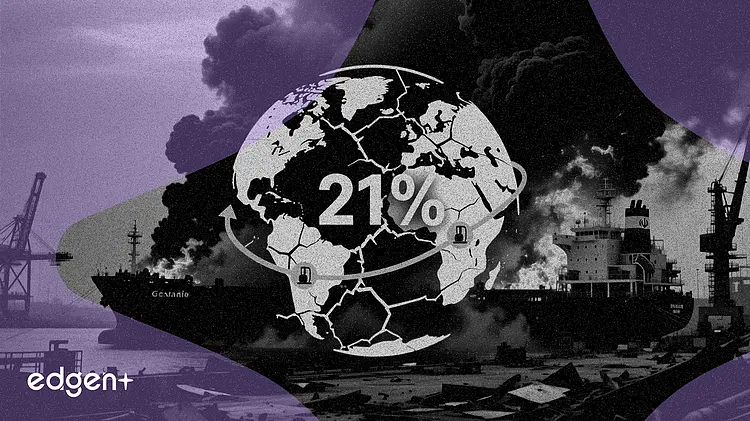
Une explosion d'origine inconnue dans la ville portuaire iranienne de Bandar Abbas alimente les craintes d'une instabilité renouvelée dans le détroit d'Ormuz, une voie navigable vitale qui gère environ 21 % de la consommation mondiale de pétrole et qui est sévèrement restreinte depuis trois mois.
« Une explosion a été entendue dans la ville de Bandar Abbas », a rapporté l'agence de presse iranienne Mehr, sans donner de détails sur la cause ou l'étendue des dégâts. L'incident met de nouveau l'accent sur l'état précaire des expéditions énergétiques mondiales, avec plus de 1 500 navires et 20 000 marins déjà bloqués dans le golfe Persique.
L'impact sur le marché pourrait être immédiat, car toute perturbation dans le détroit déclenche généralement une fuite vers la sécurité sur les marchés mondiaux et une flambée des prix du pétrole brut. Avant les récentes réductions de navigation, plus de 125 navires transitaient quotidiennement par le détroit. Selon Lasse Kristoffersen, PDG de Wallenius Wilhelmsen, même avec un éventuel accord de réouverture, un retour au trafic normal pourrait prendre de 30 à 45 jours.
L'explosion met en évidence les risques opérationnels et financiers immenses auxquels l'industrie maritime mondiale est confrontée. Une réouverture complète du détroit présenterait son propre cauchemar logistique, du déminage de la voie navigable à la décision de savoir lequel des 1 500 navires en attente passera en premier, ce qui pourrait maintenir les prix de l'énergie et les taux d'assurance maritime élevés pendant des mois.
L'explosion à Bandar Abbas, une base navale et une plaque tournante maritime majeure, rappelle brutalement la volatilité de la région. Le Joint Maritime Information Center de la marine américaine a noté « de multiples cas d'appels agressifs et d'actions affirmées de la part d'unités iraniennes » au cours des dernières 48 heures seulement, selon un récent avis. Ces tensions ont réduit le trafic maritime à un filet, avec une moyenne de seulement 10 navires par jour récemment, une fraction du volume d'avant-guerre qui atteignait 140.
Les risques s'étendent au-delà du conflit direct. On pense que l'Iran a déployé des mines marines sophistiquées qui pourraient causer des dommages catastrophiques aux pétroliers. « Les marines, dont celles des États-Unis, de la Grande-Bretagne, de la France et de l'Allemagne, auraient besoin de plusieurs semaines pour déployer des dragueurs de mines », a noté l'Agence internationale de l'énergie dans un rapport récent, un délai qui prolongerait la perturbation et maintiendrait des coûts d'assurance élevés.
Même si une solution diplomatique est trouvée, le retour à la normale est semé d'embûches. Jakob P. Larsen, responsable de la sûreté et de la sécurité du Conseil maritime international et balte, a souligné la nécessité d'une hiérarchisation et d'un routage clairs pour les centaines de navires en attente. « Nous devrons savoir quel itinéraire emprunter et, bien sûr, quel type de coordination ou de permis ou quoi que ce soit d'autre devrait être obtenu auprès de quelles autorités », a déclaré Larsen.
De plus, les navires eux-mêmes se sont détériorés pendant qu'ils tournaient au ralenti pendant des mois dans les eaux chaudes du golfe Persique. Les navires ont accumulé des bernacles et d'autres organismes marins qui entravent la navigation et réduisent la vitesse, nécessitant un nettoyage approfondi avant de pouvoir voyager en toute sécurité. Rolf Habben Jansen, PDG de Hapag-Lloyd, a noté que l'un des navires de sa compagnie qui a réussi à quitter la région « atteignait toujours une vitesse nettement inférieure à la normale ». La dernière fois qu'un goulot d'étranglement maritime similaire, le canal de Suez, a été bloqué en 2021, il a fallu près d'une semaine pour résorber l'arriéré de seulement 400 navires.
Cet article est à titre informatif uniquement et ne constitue pas un conseil en investissement.
