
Iran launched a Fateh-110 ballistic missile at Kuwait's Ali Al Salem Air Base, wounding several US personnel and destroying two MQ-9 Reaper drones — the most serious breach of the fragile US-Iran ceasefire since it took effect.
Iran launched a Fateh-110 ballistic missile at Kuwait's Ali Al Salem Air Base, wounding several US personnel and destroying two MQ-9 Reaper drones — the most serious breach of the fragile US-Iran ceasefire since it took effect.
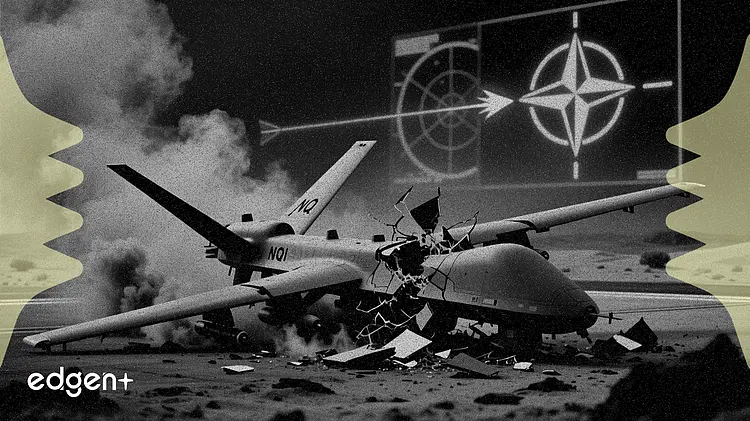
Iran launched a Fateh-110 ballistic missile at Kuwait's Ali Al Salem Air Base late Wednesday, lightly wounding several US personnel and severely damaging two MQ-9 Reaper drones in the most serious military escalation since the US-Iran ceasefire took effect, according to a person directly familiar with the incident.
Kuwaiti air defense systems intercepted the incoming missile, but falling debris struck the base, which hosts thousands of American troops at facilities including Camp Arifjan and Ali Al Salem Air Base. The attack occurred as President Donald Trump weighed whether to approve a 60-day memorandum of understanding that would extend the ceasefire and begin negotiations over Iran's nuclear program.
"The sequence of attacks reflects an ongoing cycle of retaliation in the region, even as Washington continues to push for de-escalation," US Central Command said in a statement, calling the missile launch an "egregious ceasefire violation."
The strike was the culmination of a 24-hour escalation cycle. Hours earlier, US forces intercepted five Iranian one-way attack drones near the Strait of Hormuz and struck a ground control site in Bandar Abbas to prevent a sixth launch, CENTCOM said. The Islamic Revolutionary Guard Corps responded by targeting what it described as a US air base, with state media confirming the missile launch toward Kuwait was retaliation for the Bandar Abbas strike.
The Strait of Hormuz handles about 21 percent of global oil trade, making any disruption in the waterway a direct threat to energy markets. The US Treasury last week sanctioned Iran's so-called Persian Gulf Strait Authority, which it accused of extorting vessels transiting the chokepoint. Treasury Secretary Scott Bessent said the action was part of "Economic Fury," the administration's campaign to constrict Iranian oil revenue.
Ceasefire at a Crossroads
The missile strike comes as Trump said he was entering the Situation Room for a final decision on whether to approve the tentative 60-day MOU reached between US and Iranian negotiators. The proposed framework would require Iran to remove all mines from the Strait of Hormuz within 30 days, commit to not pursuing nuclear weapons, and allow unrestricted shipping through the waterway. In exchange, the US would gradually lift its naval blockade and discuss sanctions relief.
Trump outlined the terms on Truth Social, writing that "Iran must agree that they will never have a Nuclear Weapon or Bomb" and that enriched material "will be unearthed by the United States and destroyed." Iran's Fars News Agency dismissed the claims as a "mixture of truth and lies," saying no such clauses appear in the text of the agreement.
The last time Iran directly targeted a US military installation in the Gulf was in January 2020, when it launched ballistic missiles at Al Asad Airbase in Iraq in retaliation for the US drone strike that killed Qassem Soleimani. That attack injured more than 100 US service members but produced no fatalities. Wednesday's strike, while less destructive, signals a willingness by Tehran to escalate directly against US forces even as diplomatic channels remain open.
Market Implications
The escalation injects a fresh risk premium into crude markets already pricing in supply uncertainty. Brent crude and WTI are likely to see an immediate bid as traders assess the probability of further disruption to Strait of Hormuz traffic. Safe-haven assets including gold and US Treasuries are expected to attract flows, while equity indices face headwinds from the prospect of a broader regional conflict. Defense and aerospace stocks may see a brief upside on expectations of increased US military posture in the Gulf.
Vice President JD Vance said Thursday that progress has been made on the MOU but that "a couple of issues on the nuclear stuff and the highly enriched stockpile" remain unresolved. "Hopefully, we'll continue to make progress and the President will be in a position where he can endorse the agreement, but obviously, that's still TBD," Vance said.
This article is for informational purposes only and does not constitute investment advice.
