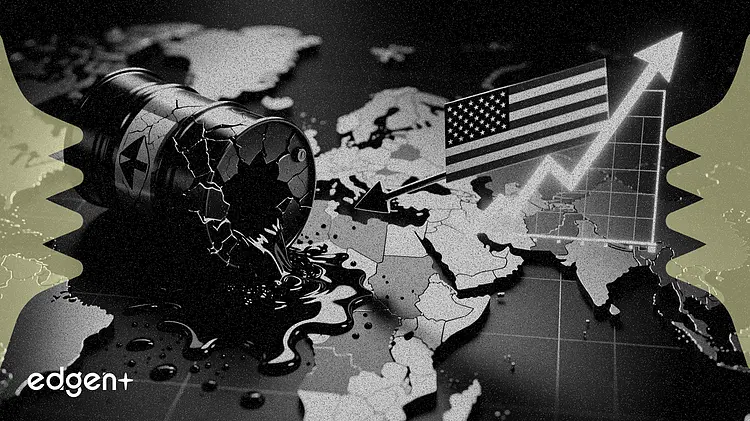
To break the current deadlock with Iran, the White House should prioritize reopening the Strait of Hormuz before tackling the more complex nuclear dispute.

With Iran threatening to block regional oil exports and mediation efforts showing only slight progress, the Trump administration should adopt a “sequential decoupling” strategy to resolve the immediate economic crisis in the Strait of Hormuz first, while deferring the complex nuclear dispute for a later, more comprehensive settlement. This approach, focused on de-escalation through targeted economic pressure rather than military brinkmanship, offers a viable path to secure immediate relief for global energy markets while building a stronger multilateral coalition to address nuclear proliferation in the long term.
"Rather than attempting to resolve both the Hormuz crisis and Iran’s nuclear program in one fell swoop, the Trump administration should decouple them—and address the oil issue first," Brian G. Chow, a former senior physical scientist at the RAND Corporation, said in a recent policy analysis. Chow, who has previously advised the Department of Defense and the President’s Science Advisor, argues that seeking massive concessions on both fronts simultaneously invites aggressive counter-demands from Tehran, leading to the current diplomatic stalemate.
The US blockade is already costing Tehran an estimated $500 million daily in lost revenue, forcing it to curtail up to 2.5 million barrels per day of crude production as its domestic storage facilities approach their physical limits. At stake is the free passage of nearly a fifth of the world's oil supply that normally transits the Strait, a closure that has already sent energy prices soaring. The crisis unfolds against the backdrop of Iran’s estimated 440 kg stockpile of 60 percent enriched uranium—theoretically enough material for 11 nuclear warheads, according to IAEA Director Rafael Grossi.
This strategy pivots from brinkmanship to a high-leverage economic response, aiming to secure an immediate win for consumers by stabilizing energy prices and building a durable, multilateral front to manage Iran’s nuclear ambitions long-term. The proposed framework suggests a tactical, reciprocal 120-day enrichment moratorium from Iran in exchange for the immediate reopening of Hormuz, providing a face-saving exit for both sides and setting the stage for broader negotiations.
The current US posture, characterized by President Trump’s warnings of hitting Iran "even harder" and getting "a little bit nasty," relies on the threat of devastating military escalation to force a settlement. However, this approach risks a protracted conflict that neither the American public nor its allies support. A more sustainable path, according to Chow, is a narrative of high-leverage retaliation that hits Iran’s poorly defended economic vulnerabilities. This involves expanding Treasury Secretary Scott Bessent’s “Operation Economic Fury” to aggressively freeze revenues of Iranian front companies and seize illicit, regime-linked cryptocurrency assets.
A novel enforcement mechanism proposed is a “Flag-Based Blockade,” which would use secondary sanctions to pressure maritime registries in countries like Panama or Gabon to strip their flags from Iran’s illicit oil-smuggling “shadow fleet.” Without a sovereign flag, these vessels are legally grounded and cannot acquire the insurance necessary for international voyages, paralyzing Iran’s maritime logistics at a bureaucratic level before a single tanker reaches open water. This economic pressure is designed to make Iran’s leaders realize they need to sell their oil much faster than the world needs Hormuz returned to normal, forcing them to seek a settlement first.
Diplomacy remains essential, but must be anchored in a unified coalition. The recent agreement between President Trump and Chinese President Xi Jinping that the Strait of Hormuz must remain open is a promising start. However, the core of the strategy lies in operationalizing America’s core alliances, particularly NATO, into a unified naval task force to patrol the strait. This transforms a unilateral American intervention into a legitimate, multinational mission to safeguard global commerce, insulating individual member states from targeted retaliation by Iran.
This allied anchor is also the indispensable foundation for confronting the long-term nuclear threat. With the sunset clauses of the 2015 Joint Comprehensive Plan of Action (JCPOA) having expired in January 2026, the administration should invite NATO allies to jointly develop a new framework for nonproliferation, using Iran as the inaugural test case. By pivoting to a multilateral framework that offers Iran a pathway to economic integration in exchange for verifiable nuclear constraints, the US can shift the burden of enforcement from a unilateral demand to a collective alliance mandate, reassuring European partners and eliminating talk of a separate “European NATO.”
This article is for informational purposes only and does not constitute investment advice.