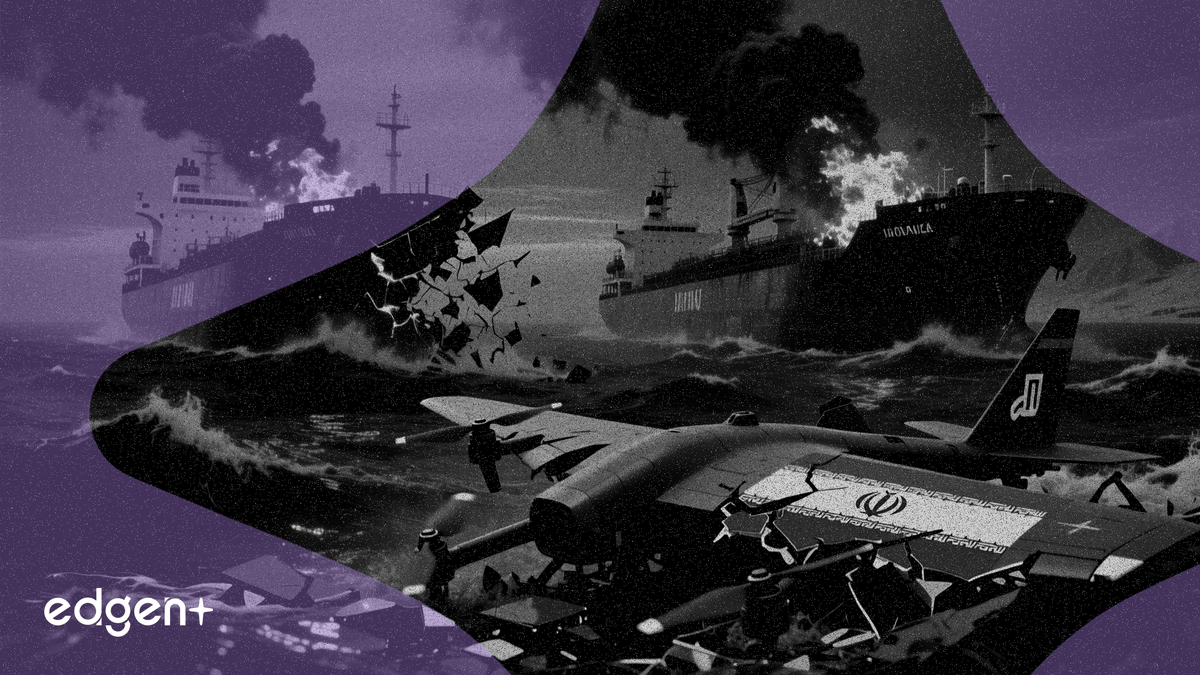
El ejército estadounidense atacó una estación de control terrestre iraní y derribó cuatro drones cerca del estrecho de Ormuz, informó Irán el miércoles, calificándolo como una violación del alto el fuego.
El ejército estadounidense atacó una estación de control terrestre iraní en Bandar Abás y derribó cuatro drones de ataque cerca del estrecho de Ormuz, informó Irán el miércoles, calificando la operación nocturna como una "violación continua" del frágil alto el fuego de tres meses.
"Los ataques estadounidenses son una violación continua del acuerdo de alto el fuego", declaró el Ministerio de Relaciones Exteriores de Irán en un comunicado, sin especificar si Teherán tomaría represalias. Un funcionario estadounidense, que habló bajo condición de anonimato, describió los ataques como "medidos, puramente defensivos y destinados a mantener el alto el fuego".
La operación tuvo como objetivo un sitio en Bandar Abás, Irán, que se preparaba para lanzar un quinto dron, según el funcionario estadounidense. Esto ocurrió horas después de que el presidente Donald Trump desestimara un informe de los medios estatales iraníes que afirmaba que Teherán y Omán habían llegado a un acuerdo para gestionar conjuntamente el tráfico marítimo a través del estrecho de Ormuz, un punto de estrangulamiento por el que pasa aproximadamente el 21% del comercio mundial de petróleo. Tres petroleros y buques LNG salieron del estrecho con sus transpondedores apagados, informó Reuters, una señal de mayores riesgos de seguridad.
La escalada amenaza con deshacer el alto el fuego que ha contenido la guerra desatada por los ataques de EE.UU. e Israel el 28 de febrero. Con el Tesoro de EE.UU. también sancionando a la autoridad del estrecho de Ormuz de Irán, es probable que la prima de riesgo incorporada en los precios del crudo se amplíe aún más. Los datos de volatilidad de opciones sugieren que el crudo Brent ya ha incorporado una prima de riesgo geopolítico de entre 8 y 12 dólares por barril desde que comenzó el conflicto.
Los ataques nocturnos marcan la segunda vez en tres días que EE.UU. realiza lo que denomina operaciones defensivas contra fuerzas iraníes. El lunes, el Mando Central de EE.UU. informó que atacó embarcaciones que intentaban colocar minas y sitios de lanzamiento de misiles que representaban una amenaza para las fuerzas estadounidenses. Irán calificó esa operación también como una violación del alto el fuego.
El estrecho de Ormuz sigue siendo el epicentro del conflicto. La vía fluvial conecta a los productores del Golfo Pérsico — Arabia Saudita, Irak, los EAU, Kuwait y el propio Irán — con los mercados globales. Cualquier interrupción sostenida podría disparar los precios del petróleo al alza, y la Agencia Internacional de la Energía estima que un cierre total afectaría el flujo de 17 millones de barriles diarios de crudo y productos derivados.
La última vez que el estrecho enfrentó una amenaza comparable fue en 2019, cuando Irán retuvo petroleros después de que EE.UU. se retirara del acuerdo nuclear. En ese momento, el crudo Brent se disparó aproximadamente un 15% en seis semanas antes de que las tensiones se calmaran. El conflicto actual, ya en su tercer mes, ha matado a miles de personas y disparado los precios mundiales de la energía, según Reuters.
Para los mercados, la pregunta clave es si el alto el fuego se mantendrá. La condena de Irán sin una respuesta militar inmediata sugiere que Teherán está sopesando el costo económico de la escalada frente a la presión política interna para tomar represalias. EE.UU., por su parte, ha señalado que continuará con lo que denomina operaciones defensivas para mantener el estrecho abierto. Los mercados de opciones están descontando una probabilidad del 35% de un cierre total del estrecho en los próximos 60 días, según datos de volatilidad.
Este artículo tiene fines exclusivamente informativos y no constituye asesoramiento de inversión.