
Key Takeaways:
- Iran demands $1.5M to $2M per vessel for passage through the Strait of Hormuz
- Some transit payments are settled using Tether's USDT stablecoin
- OFAC sanctioned Nobitex, Iran's largest crypto exchange, over sanctions evasion
Key Takeaways:
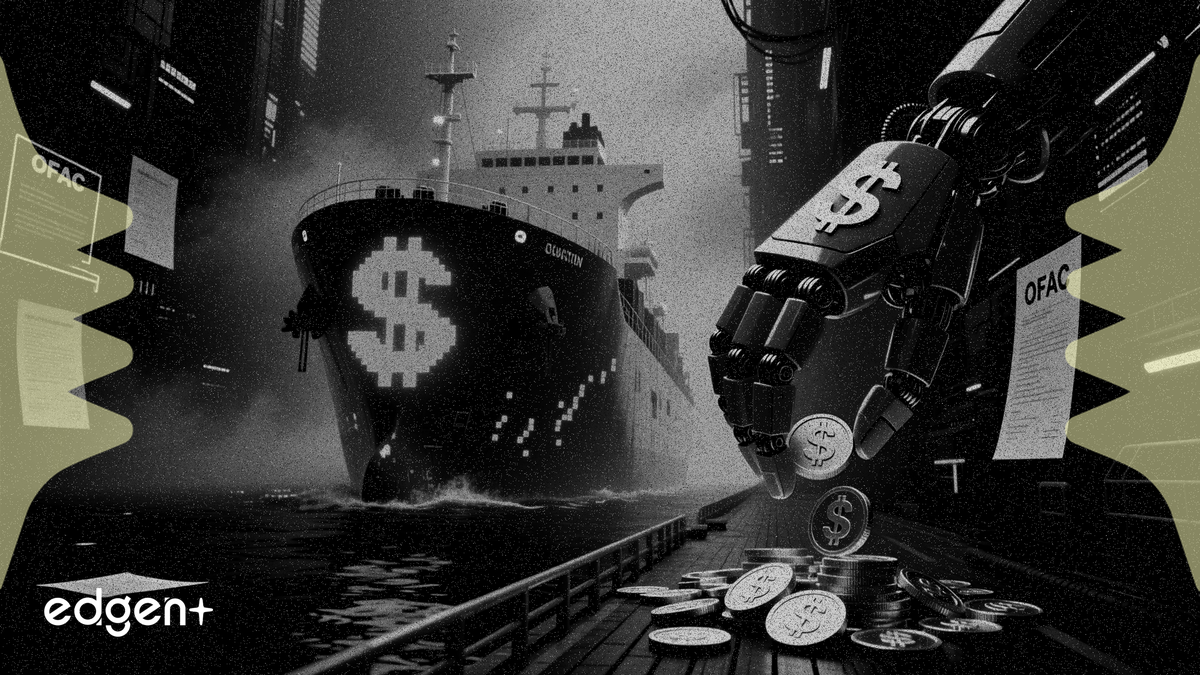
Iran is collecting up to $2 million per vessel for Strait of Hormuz passage, with some payments settled in Tether's USDT stablecoin, as US sanctions target the crypto infrastructure enabling the tolls.
Iran is collecting as much as $2 million per vessel for passage through the Strait of Hormuz, with some transit payments settled using Tether's USDT stablecoin, according to Iranian officials and maritime reports.
"While Iran's economy is in free fall, the regime has chosen to co-opt digital asset technologies for its own corrupt agenda, including evading sanctions and transferring wealth out of the country," US Treasury Secretary Scott Bessent said after OFAC sanctioned Nobitex, Iran's largest cryptocurrency exchange.
The US Office of Foreign Assets Control this week designated Nobitex along with three other Iranian crypto trading platforms, accusing the exchange of processing more than 50 percent of all Iranian digital asset inflows in 2025 and facilitating transactions for wallets linked to Islamic Revolutionary Guard Corps ransomware actors. The Treasury also alleged Nobitex helped the Central Bank of Iran access hundreds of millions of dollars in stablecoins.
The sanctions broaden Washington's campaign against Tehran's financial infrastructure but may do little to stop the toll collections, as Iran controls the chokepoint through which about 25 percent of the world's crude traffic passes. Since mid-March, dozens of vessels have rerouted through what maritime sources call the "Tehran toll booth" near Larak Island, with Lloyd's List reporting one operator paid $2 million to secure passage.
The use of stablecoins for these payments represents what Chainalysis called "the first known instance of a nation-state demanding cryptocurrency as payment for transit through an international waterway." Mohsen Zanganeh, a member of Iran's parliament budget and planning committee, confirmed that some payments have been settled using USDT, with funds deposited into the treasury in compliance with budget law.
The OFAC designation creates fresh compliance risks for shipowners and legitimate digital asset operators, according to James Mullion, a partner at UK-based law firm Janes Solicitors. "As long as Iran controls the strait, it will still expect to exact its 'toll,'" Mullion said. "The consequences for shipowners of the designation are that the price may increase as other, more complex, methods of payment are established."
Vijay Valecha of Dubai-based Century Financial said sanctions do not always eliminate financial activity but can push it into less transparent channels. "When a single platform handles the majority of a nation's digital asset flows, it starts to resemble a correspondent bank or clearing house rather than a traditional exchange," he said, noting that Nobitex restarted operations after a $90 million cyberattack in June 2025.
The US has warned that secondary sanctions could apply to maritime companies, insurers and financial institutions facilitating prohibited transactions, including those using digital assets, stablecoins, informal swaps or barter arrangements. The Treasury said the designation targets Iran's use of digital asset technologies to evade sanctions and transfer wealth.
This article is for informational purposes only and does not constitute investment advice.
