

IonQ's Capella secured an NRO Radar Commercial Augmentation contract, one of just three commercial SAR providers selected for U.S. national security missions.
IonQ's Capella secured an NRO Radar Commercial Augmentation contract, one of just three commercial SAR providers selected for U.S. national security missions.
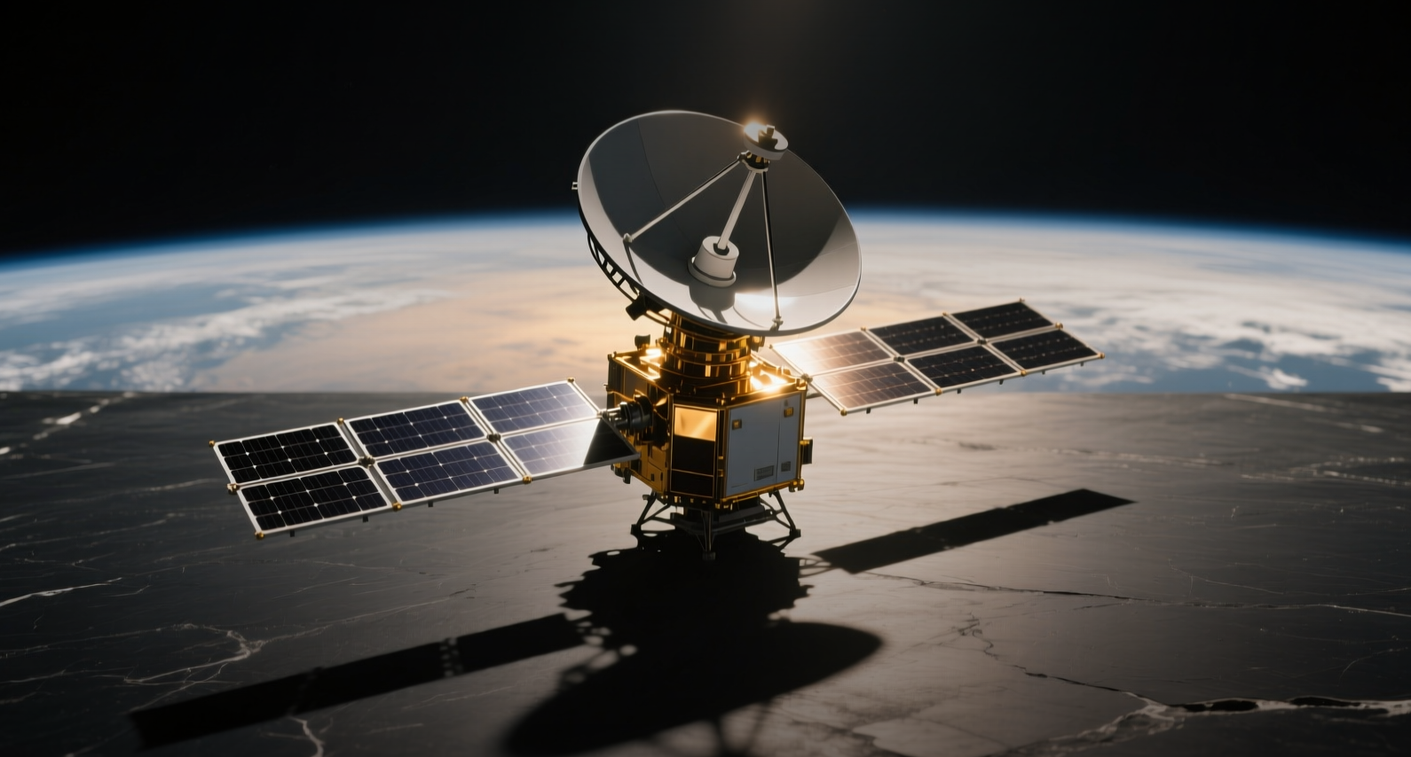
IonQ's Capella space division secured a contract under the National Reconnaissance Office's Radar Commercial Augmentation program, joining Iceye US and Umbra as the only three commercial synthetic aperture radar providers selected for U.S. national security missions.
"Our SAR capabilities are built for the mission demands of government customers who need reliable, timely intelligence in complex operating environments," Niccolo de Masi, chairman and CEO of IonQ, said.
The contract stems from the NRO's three-phased Commercial Radar Capabilities study launched in January 2022. Capella, Iceye US, and Umbra were the only three of five original participants to pass the agency's modeling, simulation, and on-orbit assessments, according to the NRO. Capella provides all-weather, day-and-night high-resolution SAR imagery that functions regardless of cloud cover or extreme conditions.
The award expands IonQ's national security portfolio as the company extends beyond quantum computing into space-based intelligence. IonQ reported record second-quarter 2026 revenues growing 287 percent year-over-year, and the company recently completed its acquisition of SkyWater Technology. Financial terms of the NRO contract were not disclosed.
Three providers survive NRO's two-year vetting
The NRO's selection process was rigorous. Of the five companies that entered the Commercial Radar Capabilities study, only Capella, Iceye US, and Umbra survived the agency's modeling, simulation, and on-orbit assessments. The NRO said it "remains committed to fostering a competitive commercial marketplace" and will continue to evaluate emerging radar capabilities through agile acquisition frameworks such as Commercial Solutions Openings.
Iceye US, the American arm of Finland-based Iceye, said its satellites pair rapid tasking-to-delivery timelines — order acceptance to imagery in hours — with the flexibility to capture areas as large as 120,000 square kilometers or at resolutions as fine as 25 centimeters from the same satellite. Umbra said its one-year contract with two one-year options builds on four years of work with the NRO's Commercial Systems Program Office, during which it provided more than 100,000 images over critical areas of interest.
The NRO said the RCA contracts "represent a significant step in the NRO's strategy to build a more resilient and responsive overhead architecture," integrating commercial SAR capabilities with national systems to increase intelligence, surveillance, and reconnaissance capacity. The agency's approach mirrors a broader shift across the intelligence community toward using commercial space assets to supplement government-owned systems, a trend that has accelerated as commercial satellite technology has matured. The commercial SAR market has grown as defense agencies seek persistent, all-weather Earth observation capabilities that complement optical satellite imagery, which is limited by cloud cover and darkness.
Defense revenue stream takes shape
The contract arrives as IonQ accelerates its push into national security markets. The company achieved 99.99 percent two-qubit gate fidelity in 2025, setting a world record in quantum computing performance. Its IonQ Tempo system has helped customers including Amazon Web Services, AstraZeneca, and NVIDIA achieve a 20x performance increase over previous quantum solutions.
Beyond the NRO award, IonQ has been building its defense credentials. The company signed a memorandum of understanding with Sandia National Laboratories to accelerate quantum co-design for national security applications, and DARPA selected IonQ to produce advanced atomic clocks. The company also completed its acquisition of SkyWater Technology on July 31, adding semiconductor manufacturing capabilities that could support both its quantum and space businesses.
IonQ shares closed at $39.93 on Aug. 5, down 4.29 percent, giving the company a market capitalization of $15.57 billion. The stock rose 2.10 percent in after-hours trading to $40.77 following the contract announcement. The NRO award provides recurring revenue visibility for IonQ's space segment and could attract defense-sector investors who previously viewed the company primarily as a quantum computing play. With quantum computing revenue growing 287 percent year-over-year and a new government contract pipeline forming, IonQ is building a dual-technology defense business — though the market has yet to fully price in the space division's contribution to the company's overall valuation. The contract also prepares Capella for follow-on work as the NRO evaluates additional commercial radar capabilities through its Commercial Solutions Openings framework.
This article is for informational purposes only and does not constitute investment advice.
