


Intel’s foundry ambitions are gaining significant traction, with Tesla confirmed as its first 14A process customer while Apple and Google are reportedly evaluating its advanced manufacturing and packaging technologies.
Intel’s foundry ambitions are gaining significant traction, with Tesla confirmed as its first 14A process customer while Apple and Google are reportedly evaluating its advanced manufacturing and packaging technologies.
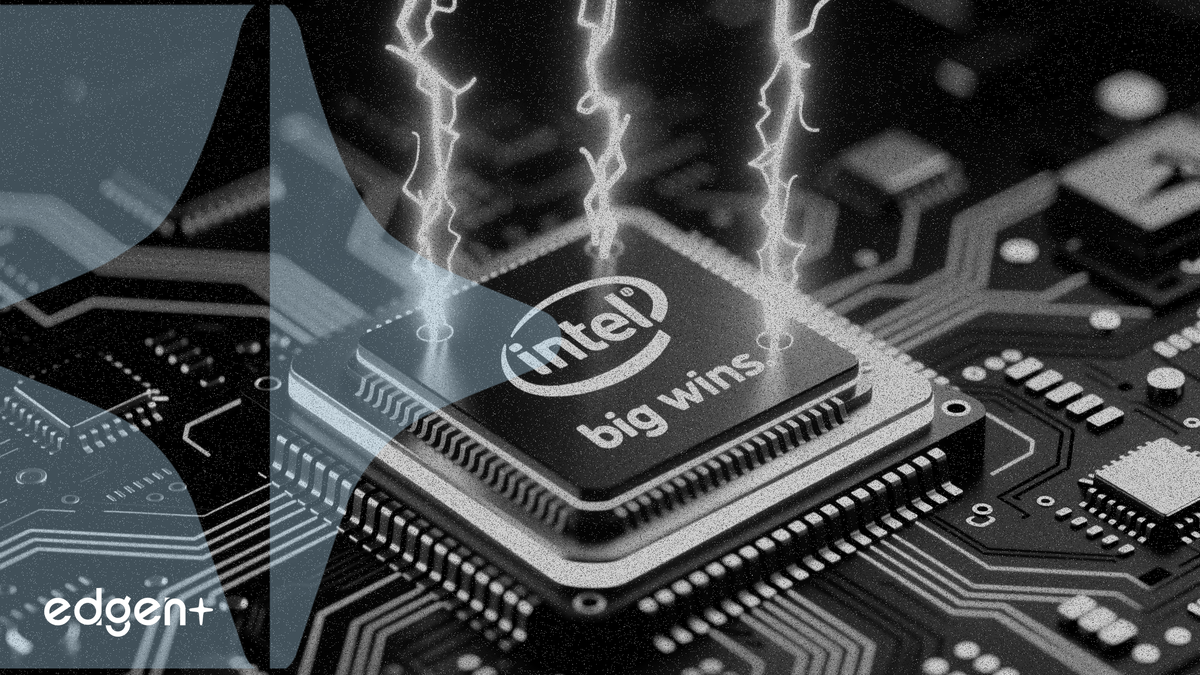
Intel Corp. is staging a multi-front comeback in the advanced semiconductor manufacturing race, securing a landmark deal with Tesla Inc. for its future 14A process node and drawing exploratory interest from Apple Inc. and Alphabet Inc.’s Google. The series of wins provides the clearest validation yet for Intel’s high-stakes turnaround strategy to challenge the foundry dominance of Taiwan Semiconductor Manufacturing Co. and Samsung Electronics.
"Elon and I share a strong conviction that global semiconductor supply is not keeping pace with a rapid acceleration in demand," Intel CEO Lip-Bu Tan said on the company’s recent earnings call. "We are excited to explore innovative ways to refactor silicon process technology, looking for unconventional ways to improve manufacturing efficiency that will eventually lead to a dynamic improvement in the economics of semiconductor manufacturing."
The most concrete development is Tesla’s plan to use Intel’s 1.4-nanometer-class 14A process to produce chips for its TeraFab AI project in Texas, making it the first external customer for the node. Separately, reports from Commercial Times and TrendForce suggest Google is evaluating Intel’s Embedded Multi-Interconnect Bridge (EMIB) packaging for its TPUv8e AI accelerators, expected around 2027, while Apple is assessing the 18A-P node for future M-series chips.
The moves could mark a pivotal shift in a foundry market where TSMC holds a share approaching 70 percent, leaving rivals to compete for the remainder. For hyperscalers like Google and Apple, which currently rely heavily on TSMC, diversifying their supply chain with a US-based alternative offers a hedge against geopolitical risk and capacity constraints. Intel shares jumped nearly 24 percent to a record $82.57 after the Tesla partnership was confirmed.
Securing Tesla’s TeraFab is a critical proof point for Intel Foundry, a business that continues to operate at a loss, posting a -45% operating margin in the first quarter of 2026. While the division’s losses are narrowing, the Tesla deal provides a much-needed external endorsement of its technology roadmap beyond its internal chip production.
The 14A process is Intel’s successor to 18A, a node that the company says is tracking ahead of schedule on yield improvements. Landing a marquee customer like Tesla for a future node signals growing confidence in Intel's ability to execute its ambitious plan to deliver five process nodes in four years. The partnership goes beyond a simple foundry relationship, with Tan hinting at a broad collaboration to rethink manufacturing efficiency.
While not yet confirmed, the reported interest from Google and Apple highlights a growing industry-wide concern: supply chain concentration. Google’s current TPU chips rely on TSMC’s CoWoS packaging, a technology facing persistent supply bottlenecks as AI hardware demand explodes. Intel’s EMIB offers a different, potentially more flexible approach to combining multiple chiplets into a single powerful processor.
According to reports, Google’s potential TPUv8e would use a Google-designed compute die, I/O from MediaTek, and Intel’s EMIB packaging. This collaborative, multi-vendor approach is becoming more common in the AI era, as designing and manufacturing monolithic chips becomes prohibitively complex and expensive. For Apple, evaluating the 18A-P node for its M-series processors represents a potential long-term diversification away from its sole reliance on TSMC.
Intel’s momentum comes as its primary rival for the number-two foundry spot, Samsung, faces challenges. The South Korean giant has delayed mass production on its 1.4-nm process to 2029 and its new $37 billion fab in Taylor, Texas, has slipped nearly two years behind its original 2024 target.
The dynamic creates a complex relationship with customers like Tesla. While Musk is partnering with Intel for the next-generation TeraFab, he also confirmed Samsung will produce an upgraded AI4+ self-driving chip and holds the exclusive contract for the AI6 chip starting in 2027. This shows that major chip buyers are pursuing a multi-foundry strategy, pitting the manufacturers against each other on technology, price, and execution. For investors, Intel’s recent design wins are a significant step, but the foundry must still prove it can deliver these advanced nodes at volume and turn its multi-billion dollar investments into profit.
This article is for informational purposes only and does not constitute investment advice.

