
Iran's blacklist of 45 tankers and the forced turnaround of an Indian crude carrier show Tehran still holds the decisive lever over the waterway that moves one-fifth of the world's oil.
Iran's blacklist of 45 tankers and the forced turnaround of an Indian crude carrier show Tehran still holds the decisive lever over the waterway that moves one-fifth of the world's oil.
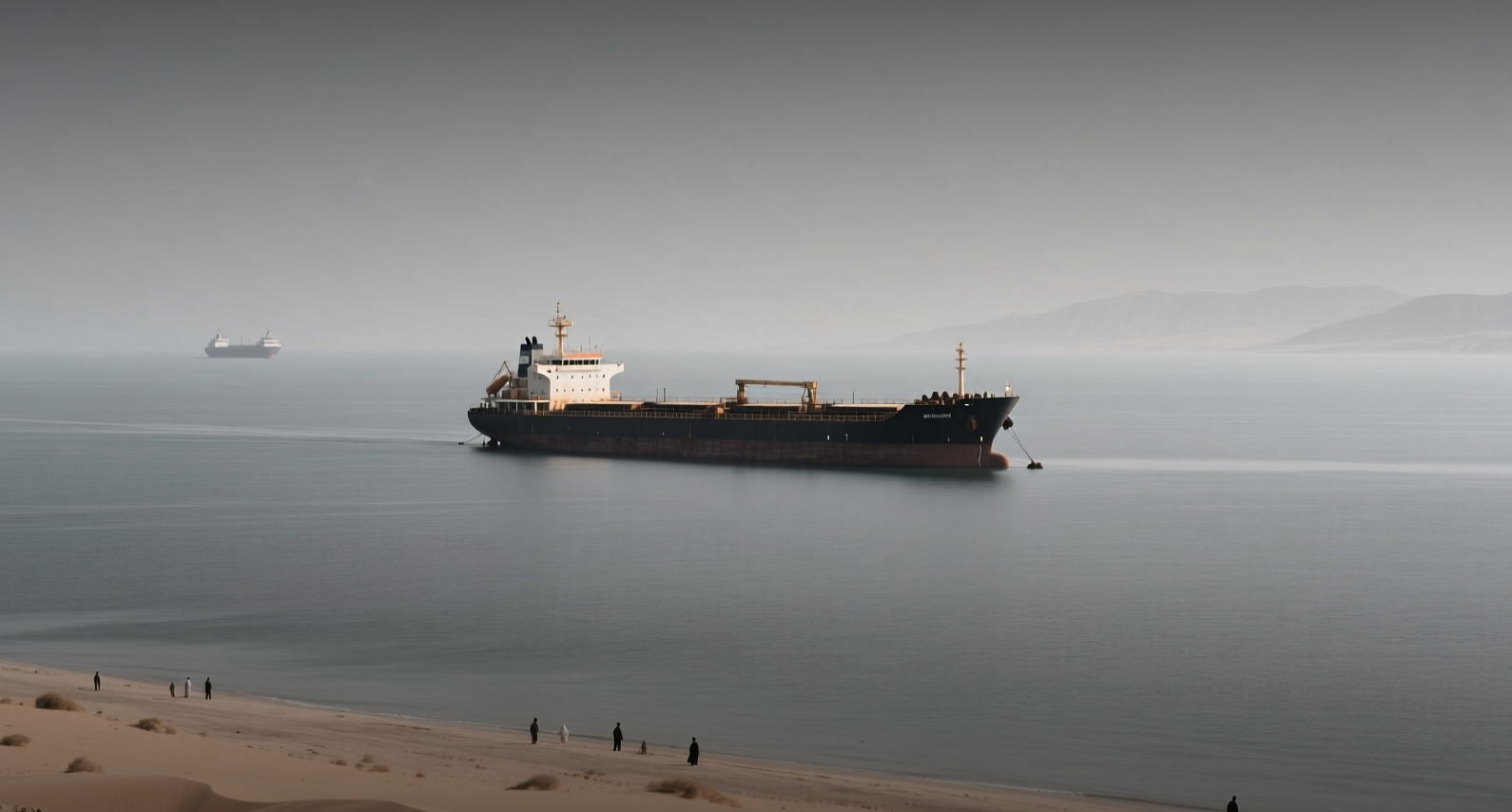
An Indian oil tanker abandoned its transit through Hormuz's southern Oman corridor after a warning, the latest sign Iran's grip on the waterway is tightening even as Washington insists oil is flowing.
"Iran still retains significant capacity to disrupt maritime traffic and threaten shipping in the Strait of Hormuz," said Neil Quilliam, associate fellow at the Middle East and North Africa Programme at Chatham House.
The HAANA, an Indian crude carrier, was forced to turn back from the southern route — the UN-authorized channel backed by the US Navy — after receiving a warning, according to media reports. The incident follows Iran's blacklisting of 45 tankers on Aug. 24, with the new Persian Gulf Strait Authority threatening fines, detention and cargo confiscation for vessels that break its transit rules. Brent crude traded at $92.9 a barrel Thursday, up from about $66 before the war began Feb. 28 and near the $100-plus peaks hit in March and July.
With the Gulf supplying about 20 percent of the world's daily crude and LNG, any sustained disruption to Hormuz traffic threatens to push prices higher and deepen the fuel-supply crisis already lifting US gasoline to $4.11 a gallon, nearly $1 above a year ago.
The HAANA's forced turnaround shows the risk calculus facing shipowners. Kpler data shows 112 vessels carrying crude, LPG and LNG passed through Hormuz between Aug. 1 and Aug. 19, but more than 80 percent of them — 89 ships — switched off their transponders or took unclassified routes to avoid detection. Only two oil and gas carriers openly used the Omani route, while 21 openly used the Iranian corridor.
The pattern suggests carriers fear Tehran's retaliation more than Washington's threats. Iran has attacked vessels it deems non-compliant, and the UAE's ADNOC said 15 of its ships had been hit by missiles and drones during the war, killing one crew member and injuring 20. The US, for its part, has fired Hellfire missiles at tankers attempting to break its blockade of Iranian ports.
The 45-vessel blacklist includes ships owned by UAE's ADNOC Logistics and Shipping, its Navig8 Tankers subsidiary, Saudi Arabia's Bahri, Norway's Klaveness Ship Management, Stolt Tankers and South Korea's Sinokor. Iran said any vessel involved in ship-to-ship transfers with the named ships could be added to the list, and warned that cargo owners should refer to the updated non-compliant list for Gulf voyages.
The escalation comes as Iran and Oman agreed on a temporary 7-mile-wide transit corridor through the strait, with Iran's deputy foreign minister Kazem Gharibabadi insisting the waterway will not fully reopen until the US fulfills commitments under the lapsed June memorandum of understanding, including sanctions relief and release of frozen assets.
The last time Hormuz traffic was this constrained, in early March when Iran first closed the strait, Brent surged toward $120 a barrel. The current $92.9 level embeds a risk premium that could expand if the HAANA incident proves to be the start of a broader Iranian enforcement campaign against the southern corridor.
US Energy Secretary Chris Wright said the seven-day average of oil leaving the strait is over 8 million barrels a day, but that remains a fraction of pre-war flows. Traffic through the waterway is running at about 20 percent of the seven-day pre-war average, according to UKMTO data cited by CNN.
With the 60-day peace window having lapsed and Trump halting talks with Tehran, the standoff over Hormuz — and the tankers caught in the middle — looks set to keep the oil market on edge.
This article is for informational purposes only and does not constitute investment advice.
