


Key Takeaways:
- US hybrid vehicle sales rose 33% in May from a year earlier
- Hyundai's hybrid sales jumped 90% with four models setting May records
- Rising gasoline prices above $4 a gallon drove consumer demand for fuel-efficient vehicles
Key Takeaways:
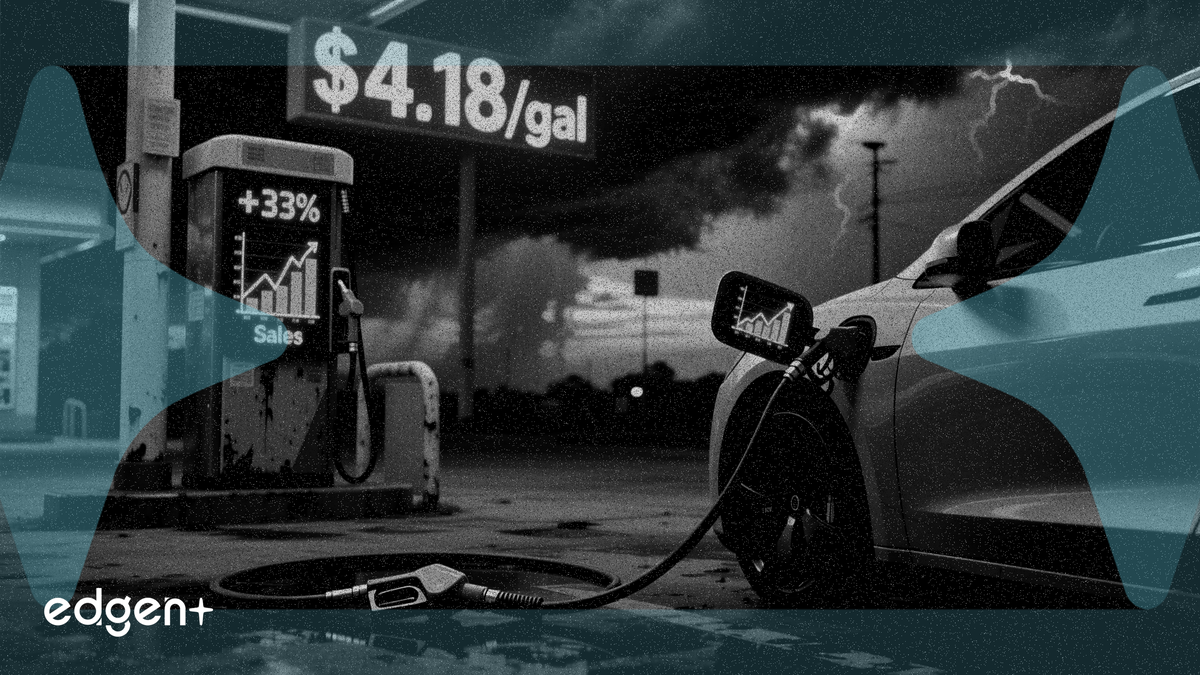
Rising gasoline prices pushed US hybrid vehicle sales up 33% in May, the biggest year-over-year gain in more than two years.
US hybrid vehicle sales jumped 33% in May from a year earlier as gasoline prices climbed past $4 a gallon, driving consumers toward fuel-efficient alternatives to traditional combustion engines.
"Hyundai achieved growth across nearly every part of our lineup in May, from sedans to SUVs, including both hybrid and electric models," Randy Parker, president and CEO of Hyundai Motor North America, said.
Hyundai's overall US sales rose 3% to 87,468 vehicles in May, with hybrid sales surging 90% while EVs increased just 10%. Four Hyundai hybrid models posted record May sales: the Tucson Hybrid rose 10%, Santa Fe Hybrid gained 30%, Elantra Hybrid climbed 29%, and the Sonata Hybrid soared 250%. The three-row Ioniq 9 EV posted a 279% gain to 1,145 units, while the Ioniq 5 rose 28% to 5,002 vehicles.
The shift toward hybrids represents a middle ground for consumers unwilling to pay a premium for fully electric vehicles but seeking relief from elevated fuel costs. With gasoline averaging above $4 a gallon nationally, hybrids offer 40 to 50 mpg without range anxiety — a calculation that has boosted sales across the industry, with Honda also reporting record hybrid volumes in May.
Hyundai's Hybrid Bet Pays Off
Hyundai's early investment in a broad hybrid lineup — spanning sedans and SUVs across multiple price points — positioned it to capture demand as gas prices rose. The Elantra Hybrid, starting around $26,000, delivers an EPA-estimated 54 mpg combined, making it one of the most affordable fuel-efficient vehicles on the market. The Tucson Hybrid and Santa Fe Hybrid cover the compact and midsize crossover segments, the two largest categories in US auto sales.
The contrast with Hyundai's EV performance is striking. While the Ioniq 5 and Ioniq 9 posted strong growth, the Ioniq 6 sedan saw sales collapse 85% to just 176 units, and the Kona EV fell 22%. The divergence underscores a broader industry pattern: consumers are embracing electrification, but many prefer the familiarity and lower upfront cost of hybrids over pure battery-electric vehicles, especially after the federal EV tax credit was scrapped last year.
Industry-Wide Momentum
The trend extends well beyond Hyundai. Honda also reported record hybrid sales in May, and Kia posted similarly strong gains for its electrified models. Toyota, the longtime hybrid leader with models like the Prius and RAV4 Hybrid, is expected to report robust figures when it releases May data. The 33% industry-wide gain marks the strongest monthly hybrid growth since the 2022 fuel price spike, when hybrids briefly became the fastest-growing powertrain category.
For investors, the hybrid surge carries implications across the automotive value chain. Toyota Motor Corp., which derives roughly 30% of its US sales from hybrids, is best positioned to benefit, while pure-EV makers like Tesla Inc. face a more competitive landscape as hybrids capture buyers who might otherwise consider battery-electric vehicles. Battery suppliers such as LG Energy Solution and Panasonic could see mixed demand: hybrids use smaller battery packs than EVs, but higher hybrid volumes may offset lower per-unit content.
This article is for informational purposes only and does not constitute investment advice.
