
A scramble for Huawei’s Ascend 950 AI chips by China’s tech giants signals a potential turning point in the nation’s push for semiconductor self-reliance, directly challenging Nvidia's market position.
A scramble for Huawei’s Ascend 950 AI chips by China’s tech giants signals a potential turning point in the nation’s push for semiconductor self-reliance, directly challenging Nvidia's market position.
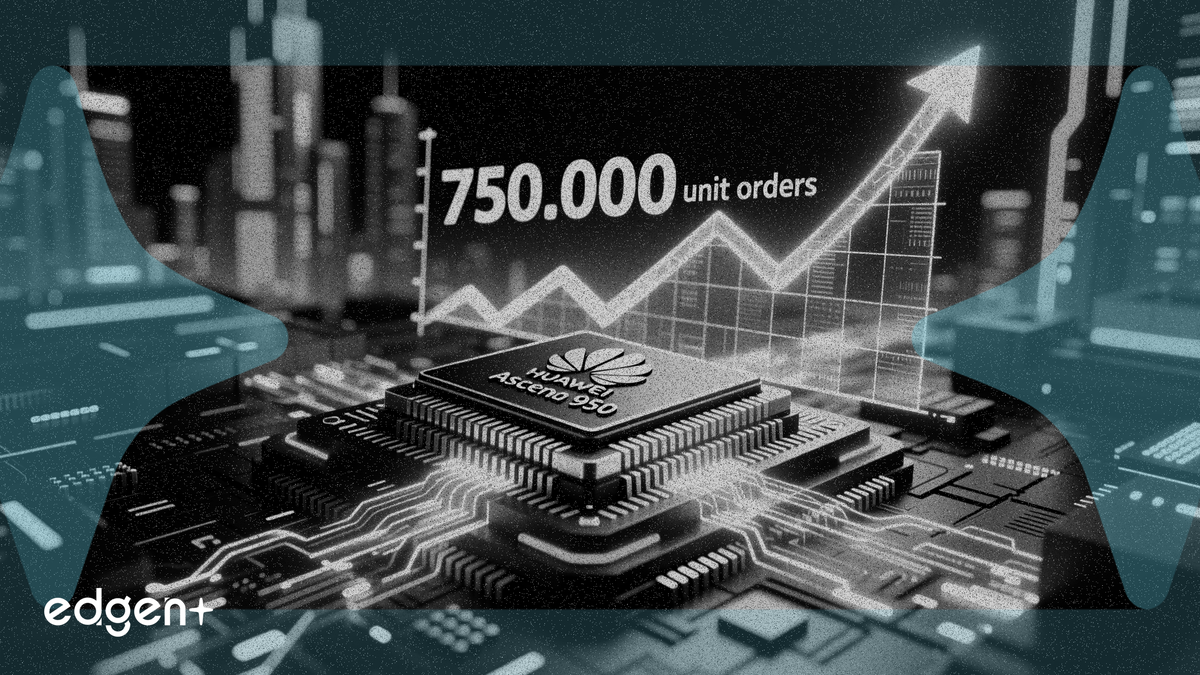
A surge in demand for Huawei’s Ascend 950 AI chips from China’s largest technology firms is creating a new focal point in the nation’s drive for semiconductor independence. Following the release of an AI model optimized for the chip, firms including ByteDance, Tencent, and Alibaba are rushing to place orders that could challenge Nvidia Corp.’s dominance in the world’s second-largest economy, according to a Reuters report.
The procurement discussions were directly linked to the release of the DeepSeek V4 model, which runs on the Ascend 950, three people familiar with the matter told Reuters. The model’s specific optimization for Huawei’s hardware marks a strategic shift by Chinese developers to build on a domestic ecosystem, a priority for Beijing amid ongoing US export controls that restrict access to Nvidia’s most advanced processors.
The chip at the center of the frenzy, the Ascend 950PR, reportedly outperforms Nvidia’s H20, the most powerful chip the American firm was permitted to sell in China before Beijing blocked its import. While it still trails Nvidia’s top-tier H200, ongoing regulatory disagreements have delayed H200 shipments, opening a critical window for Huawei. The company plans to ship approximately 750,000 units of the 950PR this year, with mass production having started in April.
This sudden spike in demand represents a significant breakthrough for Huawei, which has struggled for years to win large-scale orders for its AI processors. The move could redirect billions in domestic cloud and AI infrastructure spending, with major Chinese internet companies now actively designing their systems around Huawei’s hardware. This shift has the potential to lock in long-term supply chain dependencies within China, insulating a significant portion of the market from foreign competition and US policy.
The release of DeepSeek V4 has acted as a powerful catalyst, demonstrating the viability of a homegrown AI stack. DeepSeek’s decision to optimize its model for the 950PR and release it under a permissive open-source license has spurred rapid adoption. Huawei stated its Ascend SuperNode infrastructure would fully support the V4 models, and major cloud providers moved immediately to offer it to millions of users.
Alibaba Cloud made DeepSeek V4 available on its Bailian platform on the day of its release, while Tencent Cloud launched preview services on its TokenHub platform. This rapid deployment across China’s largest cloud platforms sharply increases the processing demand and, consequently, the underlying need for the Ascend 950 chips. The 950PR is currently the only domestic chip that supports compressed numerical processing, a key technique for handling more computations at a lower cost, giving it a distinct advantage in the local market.
Despite the surge in orders, Huawei’s ability to meet this demand remains a critical uncertainty. The company’s plan to ship 750,000 units this year is ambitious, as US export restrictions on advanced chipmaking equipment severely limit China’s manufacturing capacity. Full-scale shipments are not expected until the second half of 2026, and DeepSeek itself acknowledged that supply constraints will persist until production ramps up.
For investors, this creates a complex but clear picture. The primary investment thesis points to buying exposure to Huawei-related AI infrastructure, specifically through Chinese semiconductor equipment and packaging beneficiaries like China Resources Microelectronics and SMIC, which could see a pull-forward in capital expenditures. However, the key risk is that Huawei fails to scale production, leaving demand unsatisfied and forcing customers to seek alternatives. Second-order beneficiaries include Alibaba and Tencent, who stand to gain from increased AI service usage on their cloud platforms, though competitive price cuts on models like DeepSeek V4 could compress their margins.
This article is for informational purposes only and does not constitute investment advice.

