


Two of Japan's largest automakers are pooling software architecture to counter Chinese EV makers' cost advantage.
Two of Japan's largest automakers are pooling software architecture to counter Chinese EV makers' cost advantage.
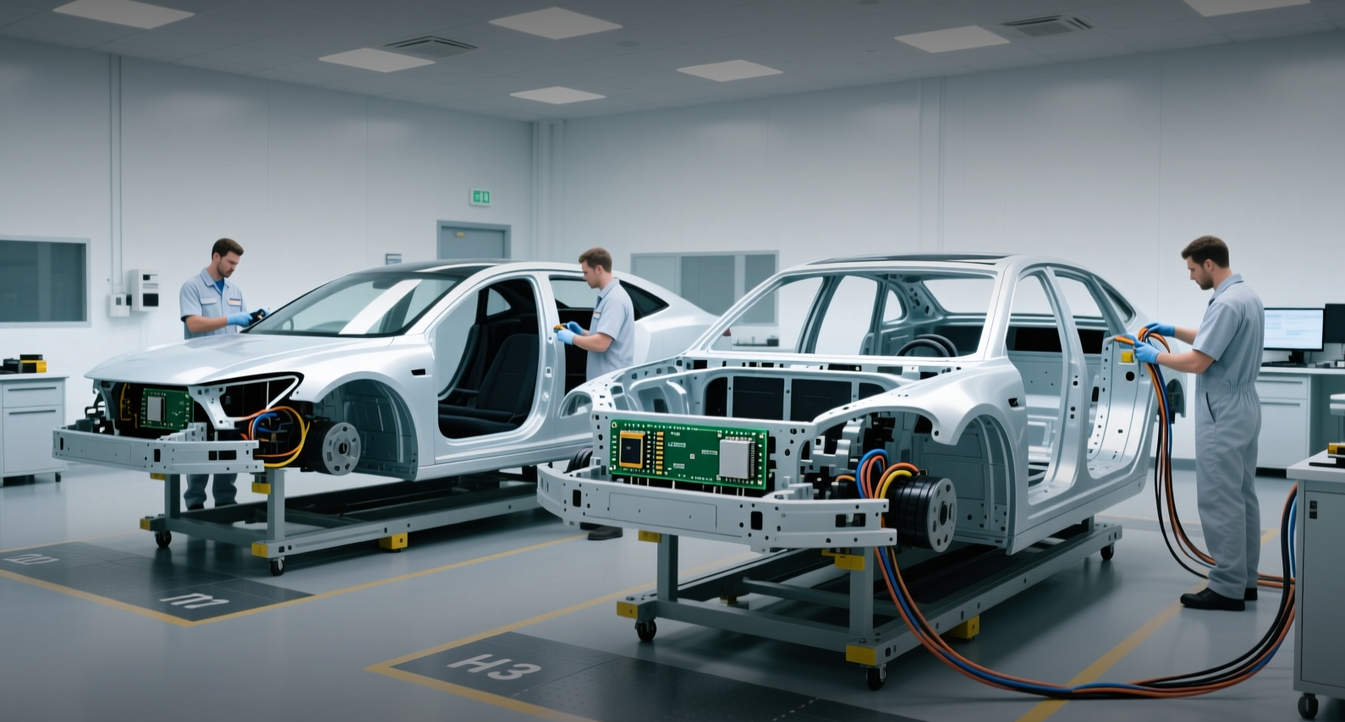
Japanese automakers Honda and Nissan will jointly develop standardized electronic control units and in-vehicle operating systems for software-defined vehicles, targeting deployment from fiscal year 2029 to cut development costs against Chinese rivals.
"The companies plan to introduce an architecture incorporating the jointly developed ECUs and software in next-generation vehicles from the 2029 financial year onwards," Honda and Nissan said in a joint statement on Aug. 31.
The agreement establishes common specifications for high-performance main ECUs built on systems-on-chip, zone ECUs that manage discrete areas of each vehicle, and parts of the middleware and vehicle-control software. Nissan's alliance partner Mitsubishi Motors said it was considering joining the collaboration and remained in discussions on potential areas of cooperation.
The partnership comes more than a year after the two automakers abandoned merger talks that would have created the world's fourth-largest automaker. Honda shares rose 0.44 percent to 1,710 yen while Nissan gained 2.34 percent to 328.50 yen on the Tokyo exchange, reflecting investor optimism about the cost-sharing potential.
Software has become a key battleground for automakers as vehicles take on more autonomous-driving and connected functions. Carmakers are investing heavily in operating systems that support features ranging from driver assistance and entertainment to over-the-air updates, increasing development costs across the industry.
The move reflects growing competitive pressure from Chinese automakers such as BYD, which have gained ground in markets including Europe and Southeast Asia with electric and hybrid cars packed with advanced software features. BYD's DiLink infotainment platform and DiPilot driver-assistance suite are integrated across its model lineup, giving the Shenzhen-based company a software edge that Japanese rivals have struggled to match.
Standardizing ECUs and core software across two competing manufacturers compresses individual development costs while establishing a shared capability floor. The approach mirrors a broader industry pattern: as software complexity rises, few manufacturers can justify building foundational layers entirely in isolation. Toyota has pursued a similar strategy through its Arene software platform, while Volkswagen has invested heavily in its Cariad software subsidiary, which has faced repeated delays and budget overruns.
The agreement stems from talks that began in 2024, when Honda and Nissan said they would jointly research software platforms for future vehicles. Neither company disclosed planned investment figures or whether the shared architecture might eventually extend to third parties.
The collaboration sits within a broader strategic partnership through which Nissan and Honda are jointly pursuing carbon neutrality and a target of zero traffic fatalities across their vehicle fleets. Both companies identified the SDV software domain as a priority given the pace of technological change and the scale of investment required to remain competitive.
For investors, the FY2029 timeline means the financial benefits will take years to materialize. Honda's market capitalization stands at roughly 41.4 billion dollars, while Nissan's is about 7 billion dollars. The two automakers combined would have created the world's fourth-largest automaker by volume, and while the merger collapsed, this software partnership preserves some of the scale benefits that drove the original deal talks.
The partnership also raises questions about the future structure of Japan's automotive industry. With Honda and Nissan sharing core software architecture, and Mitsubishi Motors potentially joining, the three companies could create a de facto software consortium that rivals Toyota's in-house development efforts. However, the competitive dynamics remain complex — Honda and Nissan still compete directly in key markets including North America and Japan, and sharing foundational software does not eliminate product-level competition.
This article is for informational purposes only and does not constitute investment advice.
