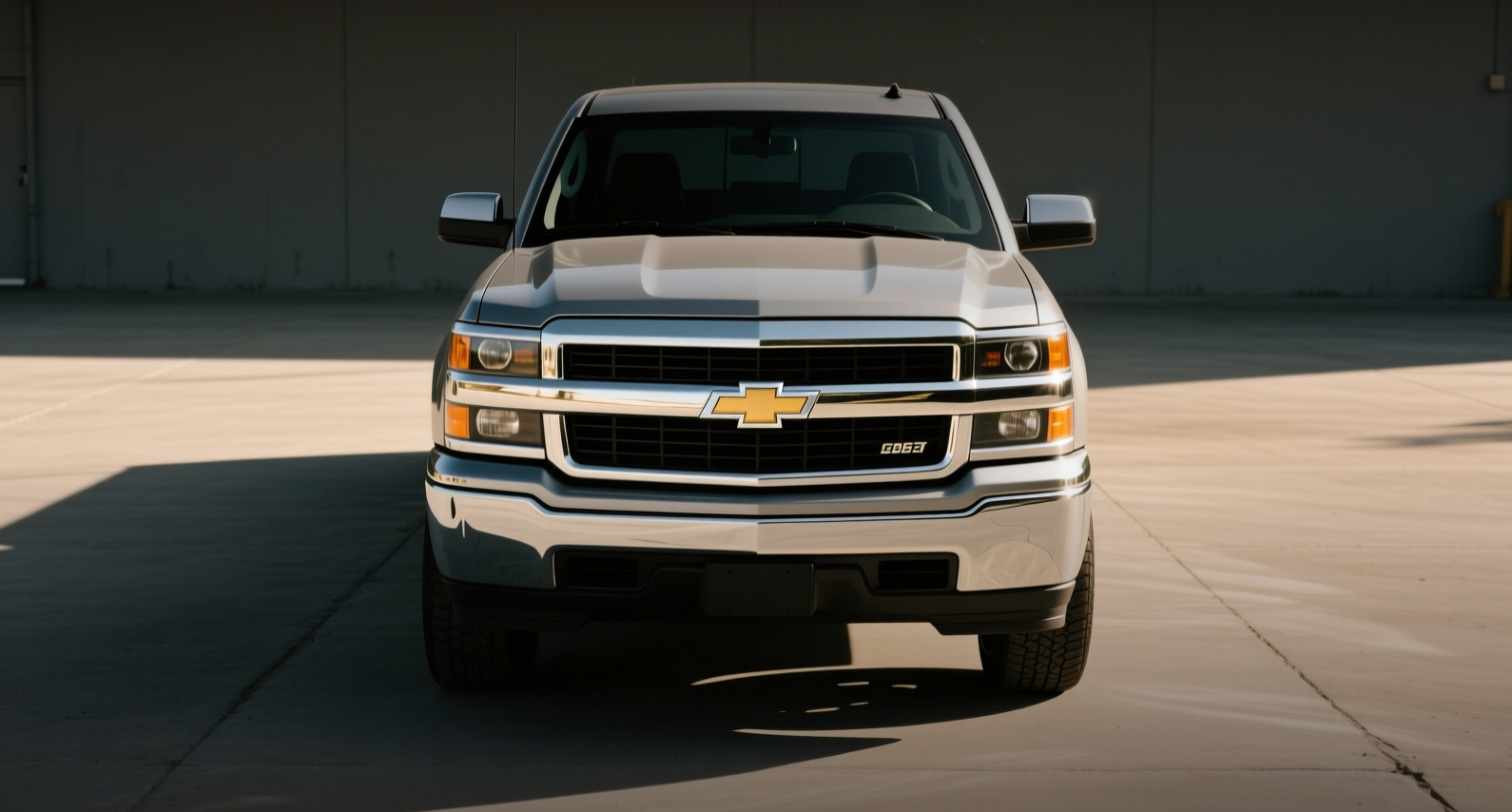
GM's strategic pivot under President Trump's second term — doubling down on big trucks while pushing into the defense industry — is already generating revenue gains, marking one of the most significant corporate realignments in the auto sector since the 2018 tariff cycle.
General Motors Co. is reshaping its business around two pillars that benefit directly from the current political environment: large pickup and SUV production, where trade policy has created a protective moat, and defense manufacturing, where Washington's push to quadruple production of "exquisite class" weapon systems is opening new revenue streams. The strategy, detailed in a July 21 report from the Wall Street Journal, reflects a calculation that the administration's second term will sustain both tariff protection for domestic truck production and elevated defense spending.
"The alignment between GM's product mix and the administration's industrial policy is unusually direct," said Elena Fischer, a geopolitical risk analyst. "The company is positioning itself to capture both trade-protected margins in its core truck business and a share of the defense buildout that is unlike anything we've seen since the Reagan era."
GM's heavy-truck and SUV lineup generates the bulk of its North American profit, with the Chevrolet Silverado and GMC Sierra franchises alone accounting for an estimated $12 billion to $14 billion in annual operating income, according to industry estimates. The Trump administration's 25% tariff on imported pickup trucks — a policy first imposed in 2018 and maintained through the second term — effectively shields GM's truck margins from foreign competition, allowing the Detroit automaker to sustain pricing power even as the broader auto market faces demand uncertainty.
The defense push represents a more dramatic departure. GM has been expanding its military vehicle business, which includes the production of the Infantry Squad Vehicle and other platforms for the U.S. Army. The company is also exploring opportunities in missile components and advanced manufacturing for defense applications, according to people familiar with the matter. The Department of Defense's fiscal 2027 budget request, which exceeds $900 billion, includes significant increases for vehicle modernization programs that could benefit GM's defense unit.
Defense margins offer a higher ceiling
The economics of defense contracting differ sharply from automotive manufacturing. While GM's auto business operates on single-digit net margins, defense contracts typically carry margins of 8 percent to 12 percent, with longer production runs and government-backed demand. For a company that generated $187 billion in revenue in fiscal 2025, even a modest shift in revenue mix toward defense could meaningfully lift overall profitability.
The last time a major U.S. automaker made a sustained push into defense was during the Cold War, when Ford produced the M151 military jeep and GM built armored vehicles. The current cycle is different in scale: the Pentagon's push to replenish stockpiles depleted by conflicts in Ukraine and the Middle East has created multiyear procurement commitments that give contractors rare visibility into future revenue.
GM's pivot also carries risks. The defense industry is capital-intensive, with long lead times between contract awards and revenue recognition. The company's $65 million investment in a new manufacturing facility in Oklahoma — announced in July 2026 — is partly aimed at supporting both commercial and defense production, but the upfront costs will weigh on free cash flow before the defense revenue materializes.
The broader implication for the auto sector is that GM's strategy could force competitors to make similar choices. Ford Motor Co. has already signaled interest in expanding its defense business, while Stellantis NV faces the challenge of competing in the truck segment without the same tariff protection for its Mexican-built Ram pickups.
This article is for informational purposes only and does not constitute investment advice.