


Ford Motor Co. and Geely Automobile Holdings agreed to form a manufacturing joint venture at Ford's Valencia, Spain plant, pooling production to build four new multi-energy models starting in 2028.
Ford Motor Co. and Geely Automobile Holdings agreed to form a manufacturing joint venture at Ford's Valencia, Spain plant, pooling production to build four new multi-energy models starting in 2028.
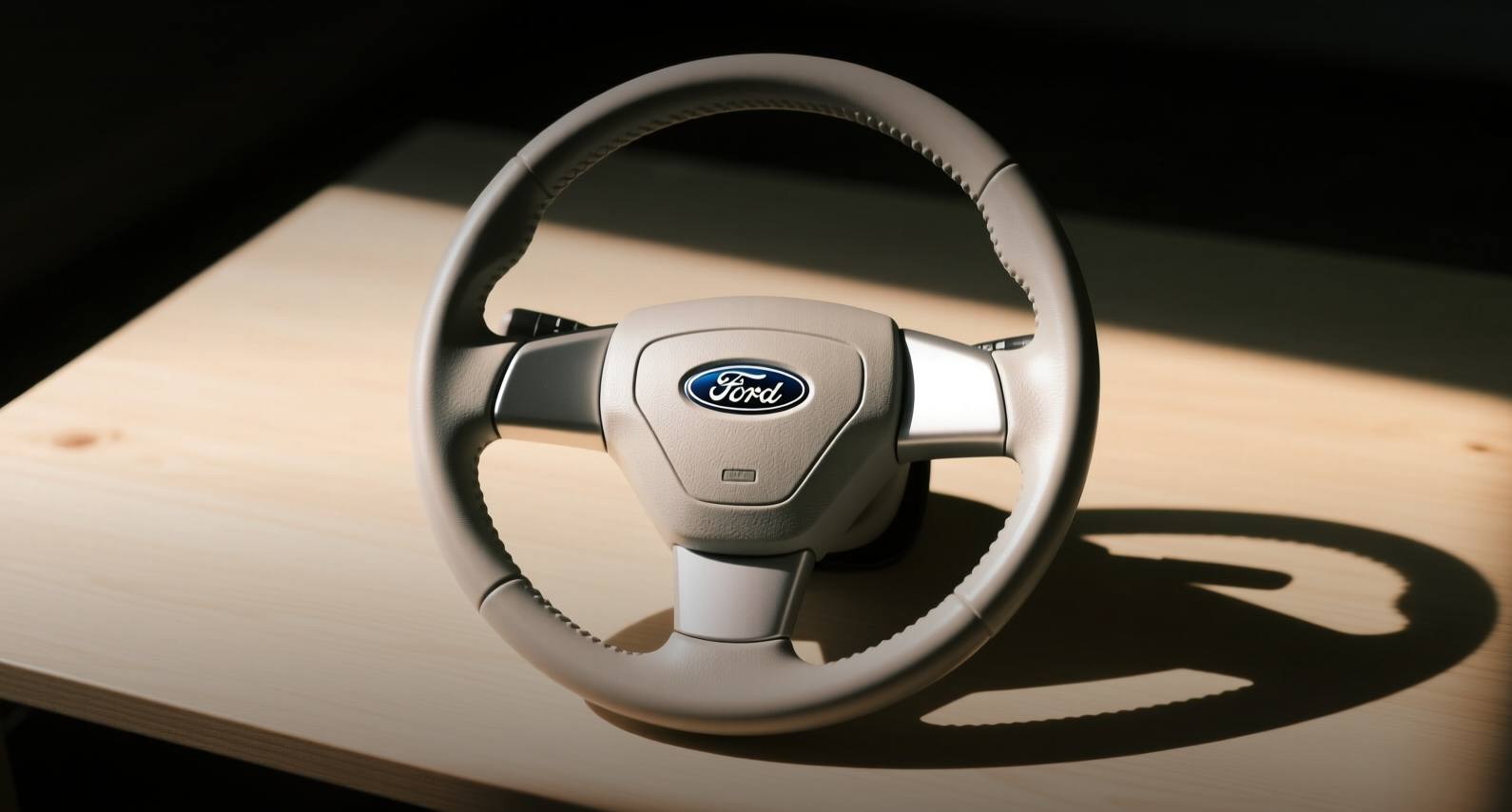
Ford Motor Co. and Geely Automobile Holdings agreed to form a manufacturing joint venture at Ford's Valencia, Spain plant, pooling production to build four new multi-energy models starting in 2028 as European automakers race to match the cost structure of Chinese rivals.
The partnership, announced Thursday, gives Ford a path to fill its underused Almussafes facility — running at less than a quarter of its 500,000-vehicle annual capacity — while handing Geely a manufacturing foothold inside the European Union that bypasses tariffs on Chinese-built EVs. Ford will own 66% of the venture and Geely 34%, with operations expected to begin in the first half of 2027.
"This JV with Ford in Europe reflects our commitment to open, collaborative product development as part of our growth strategy, deepening our local presence and commitment to customers in Europe," Alex Nan, vice president of Geely Auto Group, said in a statement. "We are dedicated to delivering vehicles that European customers will choose on merit."
The venture will produce an all-new multi-energy crossover designed by Ford and jointly developed with Geely, plus a compact Bronco SUV built for European roads, alongside two electric Geely SUVs. The first Geely-branded model is expected to be the EX2, an affordable electric hatchback that was China's best-selling new car last year, according to Spanish newspaper ABC. Production of Ford's Kuga plug-in hybrid will continue uninterrupted.
The deal addresses a structural problem shared by many legacy automakers in Europe: factories built for volume that no longer exists. Ford's Valencia plant, which opened in 1976 to build the original Fiesta, has seen its model lineup shrink to essentially one nameplate — the Kuga — as the company phased out the Mondeo, Focus and Fiesta across Europe. By sharing the plant with Geely, Ford can spread fixed costs across a larger production base while gaining access to Geely's electric-vehicle platform technology.
For Geely, the venture provides a hedge against the European Commission's tariffs on Chinese EVs, which added as much as 45% to the cost of imported vehicles. The Hangzhou-based automaker, which owns Volvo, Polestar and Lotus, sold 474,228 vehicles overseas in the first half of 2026. It reported 2025 global sales of 3 million units, up 39% year over year, with new-energy vehicles accounting for 1.7 million of those deliveries.
Why Spain Won the Factory
Spain has emerged as Europe's most welcoming destination for Chinese automakers seeking to avoid tariffs. Unlike Germany or Italy, the country lacks a dominant homegrown car brand and has actively courted foreign investment. Chery is already working with Spanish company Ebro at a former Nissan plant in Barcelona, while BAIC has partnered with local firm Santana to build off-road vehicles in Andalusia. Stellantis is establishing a battery factory with Chinese battery giant CATL in Zaragoza.
Spanish Prime Minister Pedro Sanchez played a central role in brokering the Ford-Geely deal, which secures thousands of jobs at a plant that had faced an uncertain future. The Valencia facility has been a cornerstone of Spain's automotive industry since Ford became the first non-Spanish automaker to build there in 1976.
"This partnership shows how automakers are strengthening Europe's industrial base, but we can't do it alone," Jim Baumbick, president of Ford of Europe, said. "What we've achieved in Valencia, with the ongoing support of Spain's national and regional governments, is a masterclass in public-private partnership."
What It Means for Investors
The joint venture reshapes the competitive landscape for multi-energy vehicles in Europe. Ford gains access to Geely's cost-efficient platform architecture — the same underlying technology that powers the EX2 — potentially allowing it to accelerate its own EV lineup without the full burden of platform development costs. The company plans to bring five new passenger vehicles to European showrooms by 2029.
Geely, meanwhile, secures a production base in the world's second-largest EV market by volume, with the ability to scale quickly if demand materializes. The venture also deepens a relationship that began in 2010, when Ford sold Volvo Cars to Geely and watched the Swedish brand regain its footing under Chinese ownership.
The broader implication for the European auto industry is clear: the cost benchmark for manufacturing has shifted. Legacy automakers that cannot fill their factories or match the cost structure of Chinese competitors will face pressure to form similar partnerships. Ford's Valencia plant, once at risk of becoming a stranded asset, now serves as a template for how traditional automakers can adapt — by sharing the factory floor with the competition.
This article is for informational purposes only and does not constitute investment advice.
