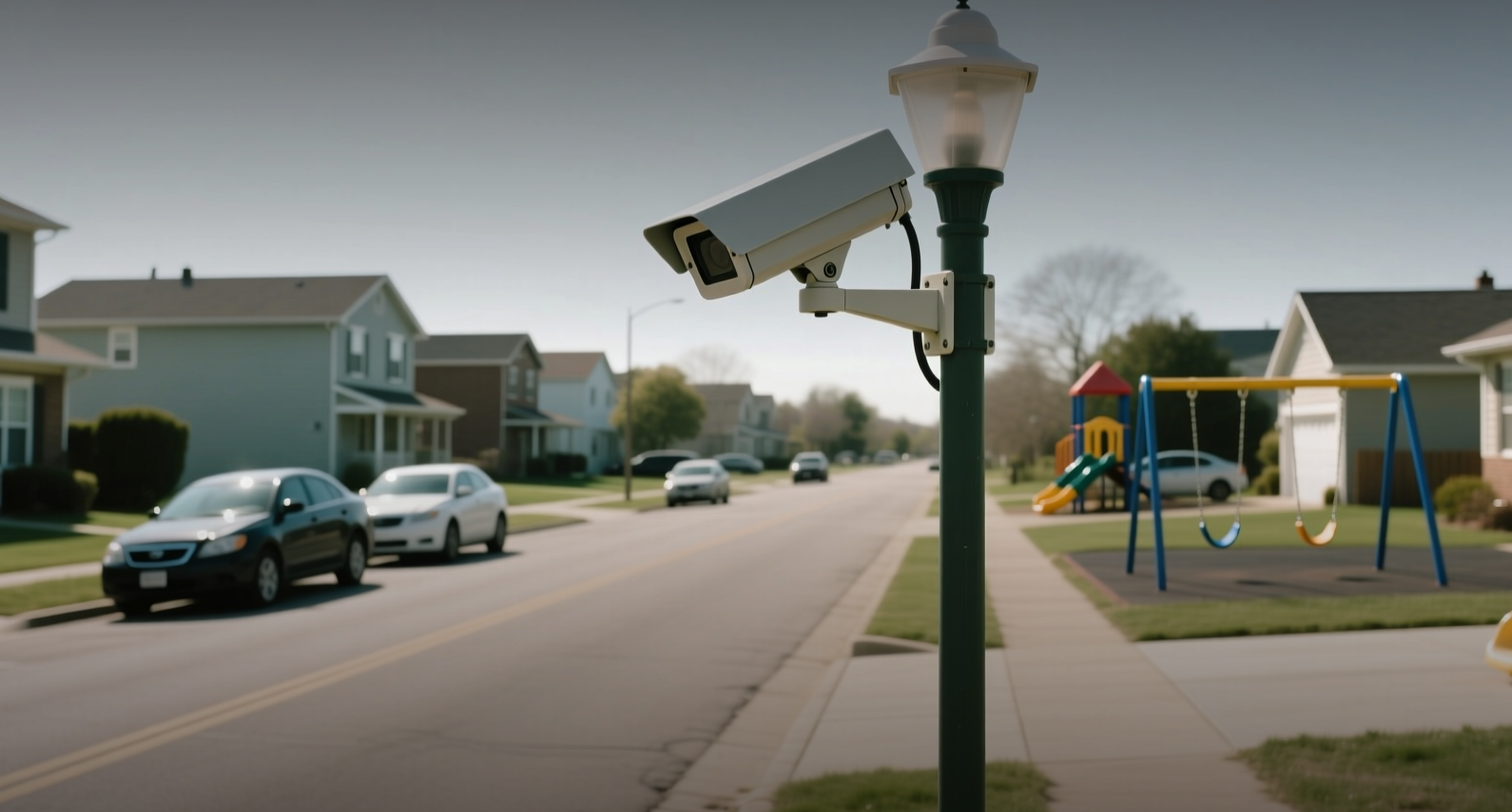
Flock Safety's 120,000 AI cameras capture 20 billion license plates a month, and the backlash against the surveillance network is now bipartisan.
Flock Safety's AI-enabled license plate readers, now numbering 120,000 across 49 states, have drawn bipartisan backlash as Republican lawmakers propose warrant requirements and President Trump said the cameras are "under review." The Atlanta-based company captures 20 billion license plates a month, logging dents, bumper stickers and other identifying features that police can search without a warrant.
"Am I on the defensive? I'm on the offensive because I need to make sure that everyone has a conversation about how we build this combined world of safety and privacy," Chief Executive Garrett Langley said in an interview with The Wall Street Journal.
Flock, backed by a16z and Tiger Global, raised $500 million at an $8.3 billion valuation in April and crossed $500 million in annual recurring revenue in the first half of 2026, with over half of new revenue now coming from non-license-plate products such as drones, gunshot detection and AI-powered search. The company has signed contracts with police, retailers and homeowners associations at a rapid clip, and its conference drew record attendance even as media were barred.
The scrutiny threatens a business that has become the most pervasive vehicle surveillance network in American history. Flock opponents held rallies in 44 states, and two Massachusetts towns stopped using the cameras in the past week, joining 82 contract terminations across 28 states since 2021 tracked by the San Francisco Standard. The Washington Post documented nearly 50 officers charged with or accused of misusing the cameras, many to stalk current or former romantic partners, while the Institute for Justice maintains a database of more than 150 documented abuse cases.
Security flaws and the 'wardrivers'
The backlash has grown more visible over the past year, coinciding with public concern about the rapid spread of AI. Benn Jordan, a cybersecurity researcher with millions of YouTube views, demonstrated he could take control of a Flock camera by repeatedly pressing a button and accessed a Flock security camera feed over the internet. Langley said Flock patched the vulnerabilities, attributing the internet access to faulty SIM cards from a supplier that affected 0.05 percent of cameras.
Jordan and a network of "wardrivers" — volunteers who scan for the radio signals cameras emit and log their positions on DeFlock's interactive map — have turned Atlanta, which studies say has more surveillance cameras per resident than any other U.S. city, into the epicenter of resistance. Jason Hunyar, an Atlanta-area resident, filed more than 200 public-records requests and found Flock employees viewed cameras in the suburb of Dunwoody more than 1,000 times, including at a park near a playground. Langley said Dunwoody's police gave Flock permission to use its cameras for sales demonstrations, a practice the company has since stopped.
Data retention and the legal fight
Flock responded to the pressure this month by recommending a default data-retention window of seven days, down from 30, requiring a case code before searches and adding an "Evidence Mode" for active investigations. But the changes are recommendations, not binding terms. An audit by the Los Angeles Police Department's inspector general found one Flock contract lets the company retain data for five years and use it "for any purpose in Flock's sole discretion," while Dallas police plan to keep license-plate data for a full year.
Privacy advocates argue the network's scale crosses a legal threshold. The Supreme Court's ruling this year in United States v. Chatrie held that police accessing precise location history is a search requiring a warrant, a precedent that could extend to ALPR networks that reconstruct a person's daily movements. "Law enforcement can circumvent the Fourth Amendment simply by pulling out their wallet and buying that data," said Tom Bowman, policy counsel at the Center for Democracy and Technology.
Flock is a private company, so the reputational damage has no direct share-price effect, but the regulatory climate could shape the broader surveillance-tech sector and any future funding round. The company says it is adding customers at ten times the rate of churn, and Langley framed the scrutiny as a chance to set industry standards. "We provide critical public safety infrastructure for our customers, and we will never be done building safer and safer products," he said.
This article is for informational purposes only and does not constitute investment advice.