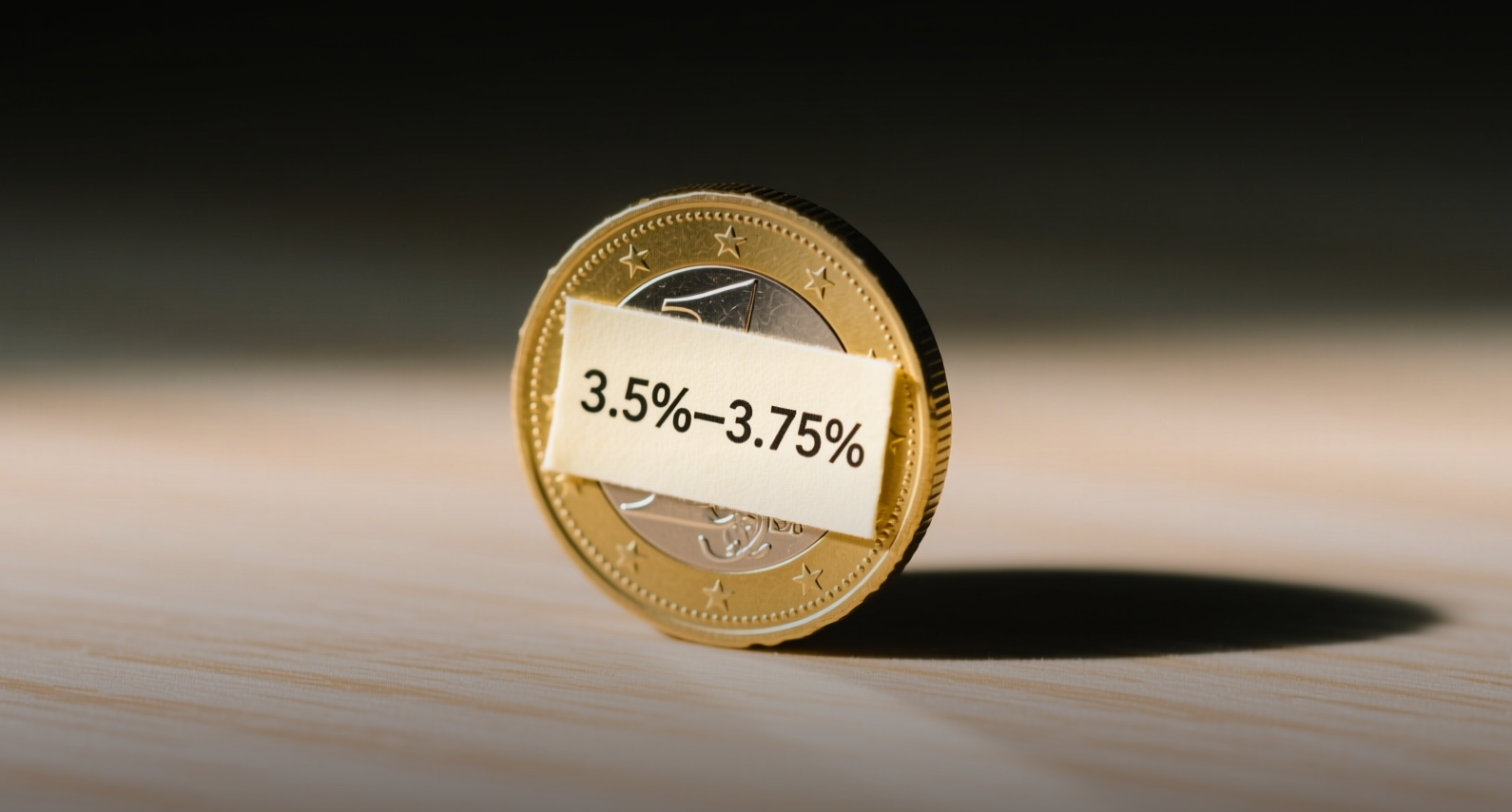
All 76 economists surveyed by Bloomberg expect the Fed to hold rates steady — but traders see a 10% chance of a hike, creating a rare divergence.
All 76 economists surveyed by Bloomberg expect the Federal Reserve to hold its benchmark rate at 3.5%-3.75% at the July 28-29 meeting, yet futures markets show less conviction, pricing just a 90% probability of no change.
"While inflation remains too high, there are encouraging reasons to expect that inflation has peaked and should edge down in coming quarters," John Williams, president of the Federal Reserve Bank of New York, said Wednesday.
June producer prices rose 5.5% from a year earlier, below the 6.2% consensus, offering the Fed room to hold. The S&P 500 climbed to a six-week high Wednesday, while the 10-year Treasury yield fell 4.8 basis points to 4.541%. The Fed's Beige Book, published Wednesday, described economic activity across the 12 districts as increasing at a slight to moderate pace, with most regions reporting little to no change in employment.
A rate hold is the base case, but the gap between economist certainty and trader caution means any deviation — or even a hawkish or dovish shift in the statement language — could trigger outsized moves across equities, bonds and currencies. The last time the Fed used similarly cautious language ahead of a hold was in September 2025, which preceded a 25-basis-point cut at the following meeting in November.
The unanimous economist forecast masks a more nuanced picture beneath the surface. While all 76 respondents expect no change, the 10% probability of a hike priced in swap markets — though small — is non-trivial for a meeting where virtually no analyst anticipates tightening. That divergence reflects lingering inflation concerns after June's PPI print, which at 5.5% year-over-year remains well above the Fed's 2% target, even as it decelerated from May's 6.0% pace.
The Cross-Asset Calculus
The bond market has already begun pricing the implications. The 10-year yield's 4.8-basis-point drop Wednesday — the largest single-day decline in three weeks — suggests fixed-income investors are betting the Fed's next move will be a cut, not a hike. Equities, meanwhile, have been more ambivalent: the S&P 500's six-week high came alongside a 2% decline in the Philadelphia Semiconductor Index, as tech investors weighed AI-driven optimism against rate-sensitive valuation pressure.
For currency markets, the stakes are equally high. A hawkish hold — one that stresses inflation persistence — could strengthen the dollar, while a dovish tilt acknowledging the PPI slowdown would likely weigh on the greenback against the euro and yen.
What Happens Next
The July 28-29 decision is the first of three remaining FOMC meetings in 2026, with the next scheduled for September 22-23. If inflation continues to moderate, economists expect the Fed to begin signaling a potential cut in the fall. But if producer price pressures reaccelerate, the 10% hike probability embedded in swaps could rise quickly, catching markets off guard.
This article is for informational purposes only and does not constitute investment advice.