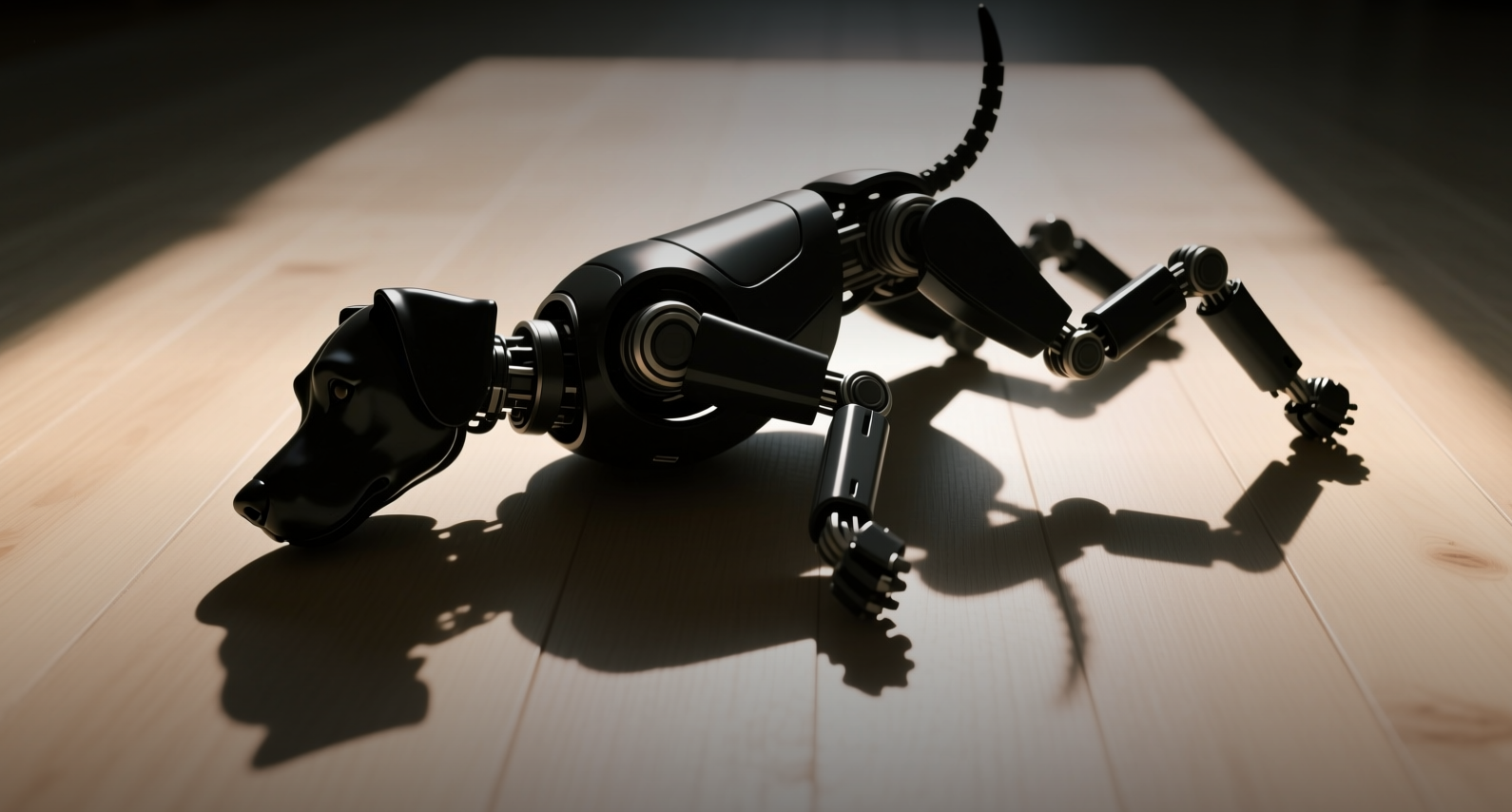
The U.S. Federal Communications Commission on Tuesday added foreign-made humanoid robots, quadruped robots and power inverters to its Covered List, barring new imports of the devices after national security agencies flagged cybersecurity and supply chain vulnerabilities.
"The FCC is acting in lock step with our national security agencies to secure America's critical supply chains," Chairman Brendan Carr said in a statement. The ban applies to fully assembled robots as well as those assembled on U.S. soil with more than 35 percent of their components manufactured abroad, according to a Trump administration official.
The decision follows a White House task force study that concluded foreign-built mobile robots — including two-legged humanoids and four-legged robotic dogs — could create cybersecurity risks threatening critical infrastructure. The FCC cited the case of French programmer Sammy Azdoufal, who reportedly accessed data from thousands of robotic vacuum cleaners made by Chinese manufacturer DJI, as an example of the risks. The ban also covers power inverters, devices that convert direct current from batteries or solar panels into alternating current for grid use.
The move targets China's rapidly expanding robotics sector, with companies such as Unitree already selling humanoid robots and robotic dogs in the U.S. market. Most humanoid robots sold in the U.S. are manufactured abroad, particularly in China, though several domestic companies — including Boston Dynamics, Tesla, Figure AI and Agility Robotics — already produce some models stateside. Tesla aims to begin industrial production of its Optimus humanoid robot at two U.S. factories, claiming it will eventually produce 1 million units annually in Fremont, California and 10 million in Austin, Texas. Hyundai, which acquired Boston Dynamics this month, plans to build a U.S. robotics factory with capacity for 30,000 units per year.
Domestic Winners and Losers
The ban creates a clear bifurcation in the robotics market. U.S.-based manufacturers stand to benefit from reduced foreign competition, while companies reliant on imported components face higher costs and supply chain disruptions. The Pentagon and Department of Homeland Security can grant exemptions, providing a potential carve-out for defense-related applications. Existing robots already sold or authorized in the U.S. are not affected by the ban.
The FCC's action extends beyond robotics. In a separate but related escalation, the commission also began revoking existing authorizations for nine companies marketing clones of DJI products in the U.S., including Skyrover drones and Xtra cameras. The 2025 National Defense Authorization Act had already set the stage for DJI's inclusion on the Covered List, and the FCC's latest move signals a broader crackdown on Chinese technology imports across multiple categories.
What's at Stake
The ban reshapes competitive dynamics in two fast-growing markets. The global humanoid robotics market is projected to reach $66 billion by 2030, according to Goldman Sachs Research, while the power inverter market — critical for the expanding solar and battery storage sectors — was valued at $12 billion in 2025. U.S. energy storage manufacturing already lags in cost and performance compared with Chinese rivals, and the inverter restrictions could further pressure domestic solar project economics if alternative suppliers cannot fill the gap quickly.
Companies have been encouraged to apply for conditional approval exemptions, and the FCC's rules include a 30-day public comment period before the ban takes full effect. The commission may also target DJI's existing product catalog for future revocation, a scenario that would eliminate the remaining pathway for U.S. consumers to access DJI's camera technology through clone brands.
This article is for informational purposes only and does not constitute investment advice.