

The EU General Court ruled Meta Platforms' Marketplace is not a gatekeeper under the Digital Markets Act but upheld the designation for Messenger, delivering a mixed outcome for the social media giant.
The EU General Court ruled Meta Platforms' Marketplace is not a gatekeeper under the Digital Markets Act but upheld the designation for Messenger, delivering a mixed outcome for the social media giant.
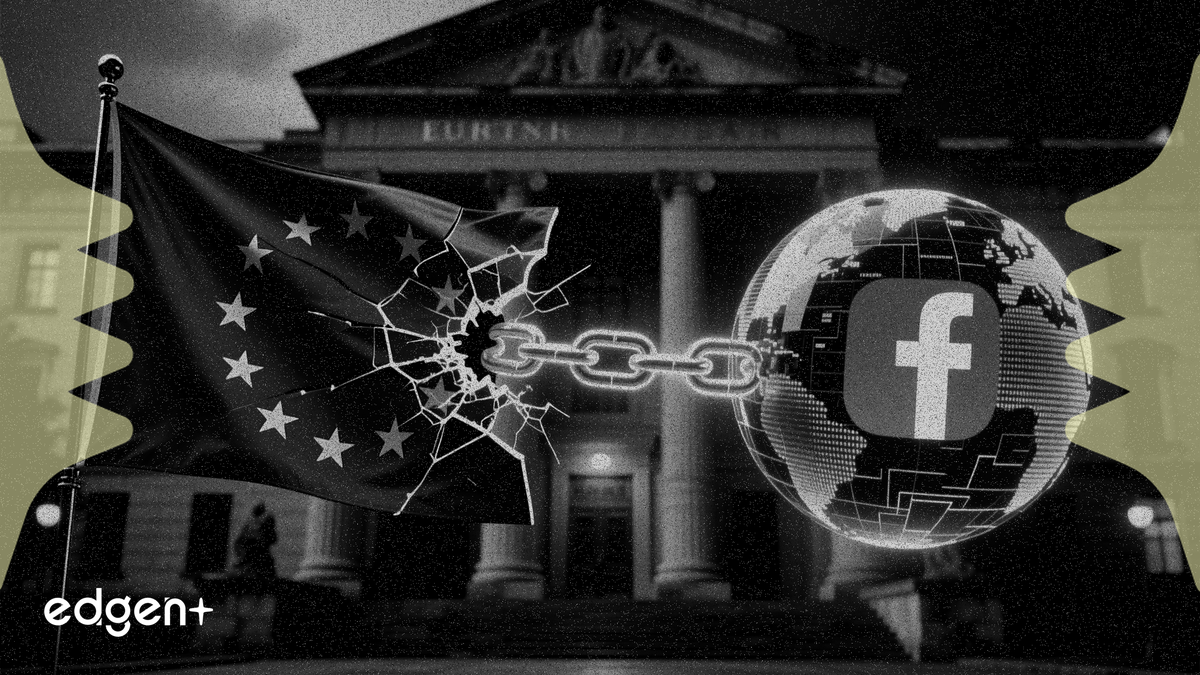
The EU General Court ruled Meta Platforms' Marketplace is not a gatekeeper under the Digital Markets Act but upheld the designation for Messenger, delivering a mixed outcome for the social media giant.
The EU General Court on Wednesday overturned Meta Platforms' gatekeeper designation for Marketplace but upheld it for Messenger, a split ruling that challenges how regulators classify Big Tech services under the Digital Markets Act.
"The decision does not satisfy the requirements in terms of reasoning as regards Marketplace, in that it allows neither Meta to understand the reasons for its classification as a core platform service that is an online intermediation service nor the Courts of the European Union to exercise their power of review," the General Court said.
Meta took its grievance to the Luxembourg-based tribunal after the European Commission designated both services as important gateways for businesses to reach users under the DMA because they met the quantitative criteria. The court rejected Meta's challenge against the same designation for Messenger, leaving that label intact. The case is T-1078/23 Meta Platform v Commission.
The mixed ruling creates an unclear regulatory path for Meta's e-commerce ambitions in Europe while preserving strict interoperability and data-sharing obligations for its messaging platform. The decision may also influence how other Big Tech firms contest their DMA classifications, with the European Commission now required to provide more detailed reasoning for future designations.
The DMA, which took effect in May 2023, initially designated six gatekeepers — Alphabet, Amazon, Apple, ByteDance, Meta and Microsoft — covering 22 core platform services, according to the European Commission. Meta was designated for Facebook, Instagram, WhatsApp and Messenger, with Marketplace added through a subsequent review. The last time a company successfully challenged a gatekeeper designation was in September 2024, when ByteDance won a temporary reprieve for TikTok from a separate EU court ruling.
For Marketplace, the court found the Commission failed to adequately explain why the classified ads platform qualified as an online intermediation service under the DMA's definition. The ruling does not permanently exempt Marketplace from gatekeeper status — the Commission may re-designate it with a more detailed justification. The outcome reduces some compliance burdens for Meta's e-commerce operations in the 27-nation bloc, where the company has been expanding Marketplace's reach against competitors such as eBay and Amazon. Marketplace allows users to buy and sell goods within the Facebook ecosystem, generating revenue through listing fees and transaction charges.
For Messenger, the court upheld the Commission's reasoning that the messaging app serves as a core gateway for businesses to reach consumers, particularly through its business messaging features. The designation means Messenger must comply with DMA obligations including interoperability with third-party messaging services, a requirement Meta had argued would compromise user privacy and security. The ruling contrasts with the Marketplace outcome, showing the Commission's methodology was deemed sufficient for messaging but not for e-commerce services. Messenger remains subject to the DMA's ban on self-preferencing and data combination across Meta's services without user consent.
The DMA requires designated gatekeepers to obtain explicit user consent before combining personal data across their core platform services, a provision that directly affects Meta's advertising business. For Messenger, this means Meta cannot merge user data from the messaging app with data from Facebook or Instagram without permission — a restriction the company has previously said could reduce its advertising revenue in Europe. The European Commission opened a non-compliance investigation into Meta's "pay or consent" model in March 2024, which remains ongoing.
The ruling carries notable financial implications. Gatekeeper status under the DMA carries penalties of as much as 10% of global annual revenue for non-compliance, and up to 20% for repeat violations, according to the regulation. Meta shares closed at $597.63 on Tuesday, down 0.47%, ahead of the ruling. The European Commission now faces a choice: provide a more detailed justification for Marketplace's designation or allow the platform to operate without gatekeeper obligations. For other Big Tech firms with pending DMA challenges — including Apple's fight over its App Store designation and Amazon's dispute over advertising classification — the ruling indicates courts will scrutinize the Commission's reasoning but will not automatically overturn designations. The Commission has yet to announce whether it will appeal the Marketplace ruling or submit a revised designation.
This article is for informational purposes only and does not constitute investment advice.
