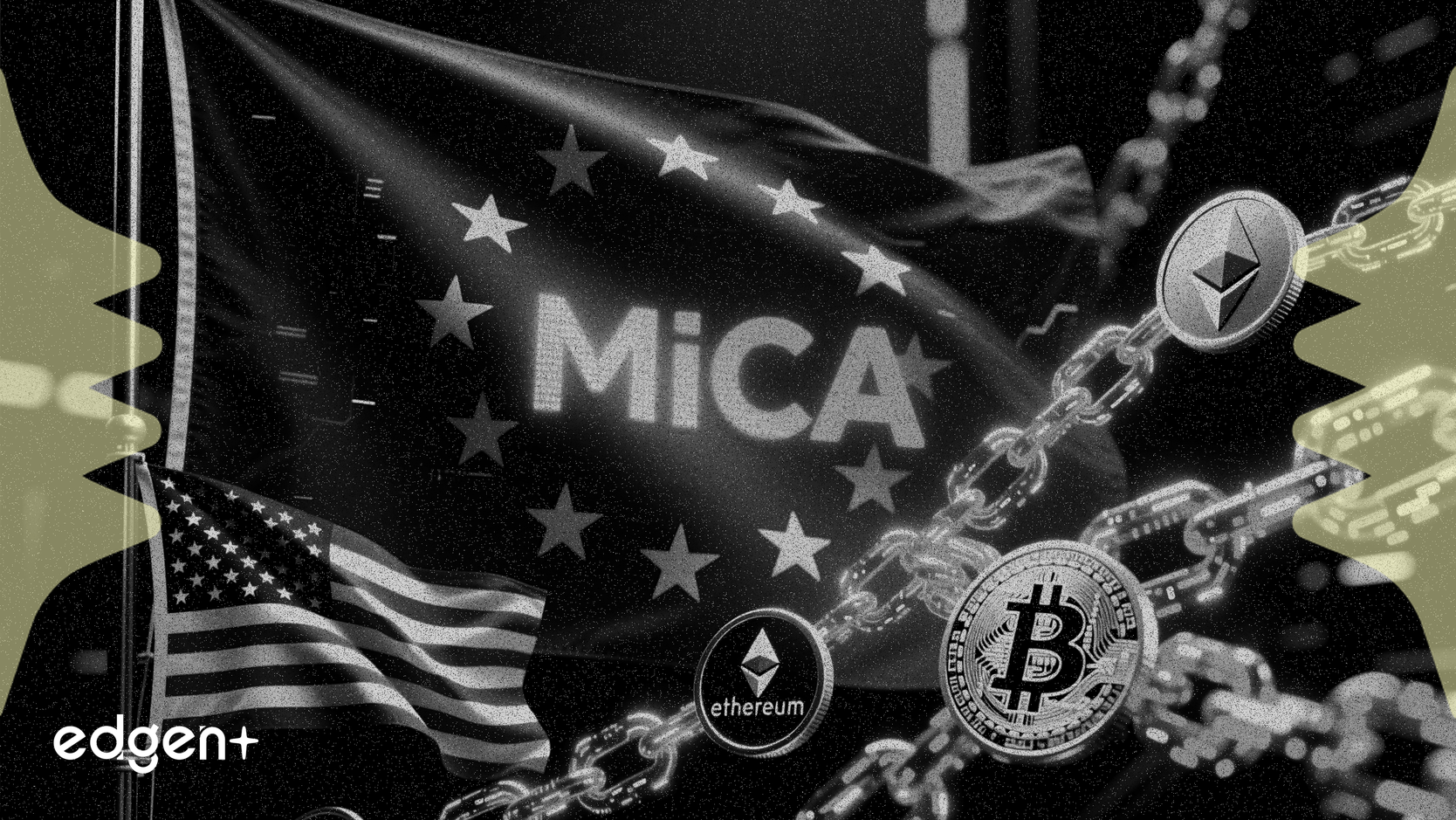
Europe Implements MiCA Framework on June 30
The European Union has moved from drafting to active enforcement with its Markets in Crypto-Assets (MiCA) regulation, establishing one of the world's first comprehensive legal frameworks for digital assets. The rules governing asset-referenced and e-money tokens become applicable on June 30, 2024, with regulations for crypto-asset service providers (CASPs) following on December 30, 2024. A transition window extends to July 1, 2026, for firms already operating under national laws.
This regulatory clarity gives companies defined timelines and compliance milestones. A key feature of MiCA is its "passporting" system, which allows a firm licensed in one EU member state to offer services across the entire 27-nation bloc. This single-market access is a powerful incentive for firms to establish a European base, as it simplifies expansion strategies and reduces redundant legal costs.
US Relies on Agency Enforcement as Clarity Act Stalls
In stark contrast, the United States remains without a singular federal framework for crypto assets. The regulatory environment is shaped by enforcement actions from a patchwork of agencies, including the Securities and Exchange Commission (SEC), Commodity Futures Trading Commission (CFTC), and the Treasury. This approach creates significant uncertainty, particularly around the fundamental question of whether a digital asset is a security or a commodity.
Legislative solutions, such as the Digital Asset Market Clarity Act of 2025, are still in progress and not yet law. This bill aims to assign regulatory authority to the CFTC for digital commodities and the SEC for investment contracts, but its passage is not guaranteed. Until a clear federal law is enacted, the primary pressure point remains token classification, which dictates registration requirements, disclosure standards, and the legality of offering certain products in the US market.
Firms Prioritize EU Licenses Over US Market Uncertainty
The regulatory divide is directly influencing corporate strategy and capital allocation. Crypto firms are increasingly choosing to secure licenses in an EU country first, using it as a stable headquarters to scale operations across the continent. This move provides the regulatory certainty needed for long-term planning and product development.
Consequently, market activity in the US is becoming more conservative. Exchanges are cautious about listing new tokens that could later be deemed unregistered securities by the SEC, and services like staking face legal ambiguity. This divergence risks fragmenting global liquidity pools, with capital flowing toward EU-regulated venues that offer clearer rules. While the US possesses deep capital markets, the lack of a predictable regulatory pathway is beginning to redirect innovation and investment toward Europe.