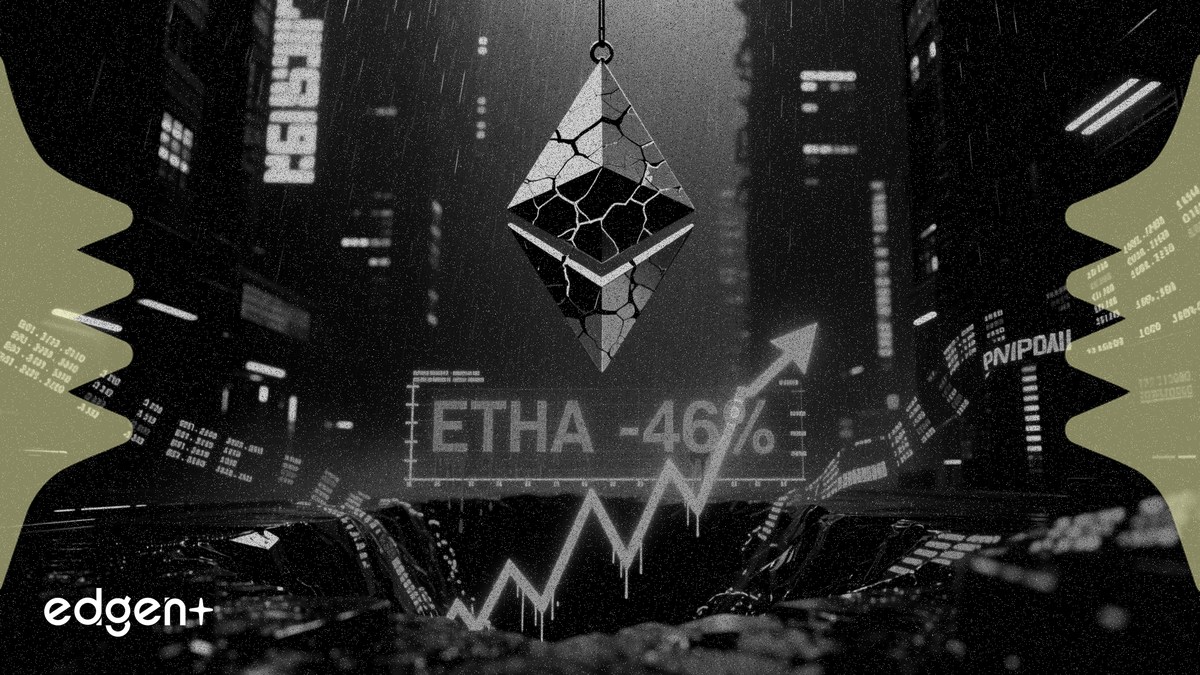
The iShares Ethereum Trust ETF lost 46% in 2026, with most damage concentrated in a single afternoon after the May payroll report.
"The magnitude of the move in ether ETFs shows how levered crypto products amplify macro shocks," said Geoffrey Kendrick, head of digital assets research at Standard Chartered. "A hot payroll print forced a rapid repricing of rate expectations, and ether was the most exposed."
A $10,000 position in ETHA at the start of 2026 was worth about $5,290 by Friday's close. The selloff swept across the ether ETF complex. The Grayscale Ethereum Staking Mini ETF fell 11% in a single session, reducing a $10,000 stake to $8,867. The ProShares Ultra Ether ETF, a 2x leveraged product tracking ether futures, dropped about 23% on Friday alone, with a $10,000 position falling to $7,731. The GraniteShares 2x Long COIN Daily ETF also suffered heavy losses during the same period as the broader crypto selloff intensified.
Friday's non-farm payroll report showed the US labor market running hotter than economists had forecast, pushing fed funds futures to price out near-term rate cuts. The repricing hit risk assets across the board, but ether-linked products bore the brunt due to their higher beta to macro shifts and the concentrated nature of ETF flows.
The 46% year-to-date decline in ETHA shows how macro-sensitive ether ETFs have become as the Federal Reserve's rate path shifts. The May payroll data removed a key support for speculative assets, and ether ETFs — still in their early adoption phase — saw outsized outflows as institutional investors reduced exposure. The next catalyst for the sector is the June consumer price index report on June 11, which will either confirm the hawkish repricing or offer relief to battered ether positions. A softer inflation print could trigger a sharp reversal in ether ETF flows, while another hot reading risks deepening the selloff toward the $4,000 support level on ether itself.
This article is for informational purposes only and does not constitute investment advice.