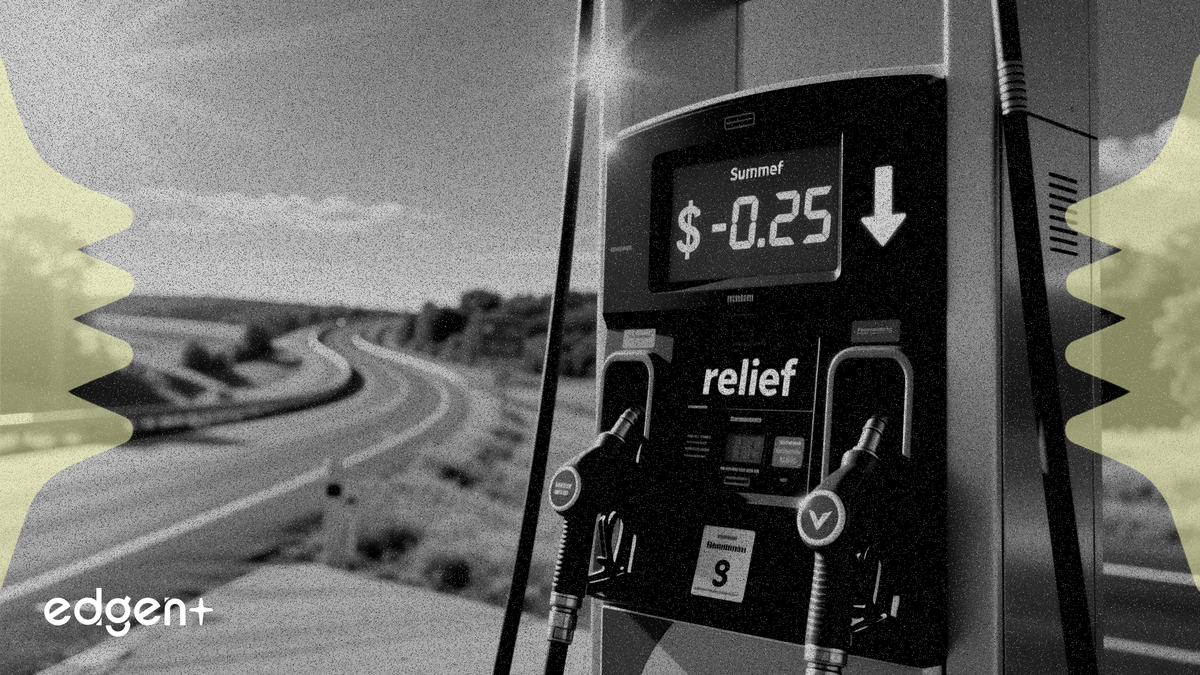
The Biden administration will allow the sale of gasoline with higher ethanol content this summer in an effort to increase fuel supply and lower prices at the pump, the Environmental Protection Agency announced Monday. The temporary emergency waiver allows for the sale of E15, a gasoline blend with 15% ethanol, which is typically restricted between June 1 and Sept. 15 due to concerns it contributes to smog in warmer weather.
"The short-term waiver will provide communities with additional fuel supply and greater flexibility, which will help to lower prices at the pump," EPA Administrator Lee Zeldin said in a statement. He noted the move provides "maximum flexibility" for consumers and retailers ahead of the busy summer driving season.
E15 is generally sold at a discount to the standard E10 blend, which contains 10% ethanol. Officials project that the higher-ethanol blend can be sold for about 25 cents less per gallon. However, the impact will be limited as only about 3,000 of the nation's 145,000 gas stations currently offer E15. While most cars made in 2001 or later are approved to run on the blend, it is not recommended for small engines like those in lawnmowers and boats.
The waiver represents a temporary victory for the ethanol industry and corn growers, who have long pushed for year-round access to the E15 market. The decision, however, sidesteps a larger legislative battle where a provision for permanent year-round sales was recently separated from the farm bill to ensure the broader agricultural legislation could pass. A standalone vote on the E15 issue is scheduled for May 13, but its future remains uncertain.
A Contentious Blend
The debate over E15 highlights a fundamental conflict between agricultural interests and the oil industry. For corn growers, expanded ethanol sales represent a crucial source of demand. The National Corn Growers Association praised the temporary waiver but emphasized that a permanent solution is necessary to provide market certainty and pass on savings to consumers consistently. A 15% blend uses 50% more ethanol per gallon than E10, meaning wider adoption could significantly boost corn demand over time.
Conversely, oil refiners and some lawmakers from oil-producing states argue that expanding E15 sales disrupts the fuel market and could impose costs on smaller refineries. There are also consumer trade-offs; ethanol contains less energy than gasoline, meaning vehicles using E15 may experience slightly lower fuel economy, potentially offsetting some of the per-gallon savings.
Legislative Impasse
The path to a permanent fix remains complex. House leaders decoupled the year-round E15 provision from the farm bill to avoid a larger political fight that threatened the entire package. While the farm bill passed the House on April 30, the standalone E15 vote now looms as a significant test for the biofuels lobby.
"For all the effort they’ve had, they just have not been able to get it past the finish line," said Bill Lapp, president of Advanced Economic Solutions, commenting on past efforts to secure permanent year-round E15. The upcoming vote will determine whether the ethanol industry can secure a standalone victory or if it will continue to rely on temporary administrative actions that create market uncertainty.
This article is for informational purposes only and does not constitute investment advice.