


Key Takeaways:
- Dow closed at 51,562, up 1.73%, its highest level ever
- Healthcare and financials led as Broadcom's miss sparked chip selloff
- Nasdaq slipped 0.09% as semiconductor shares tumbled
Key Takeaways:
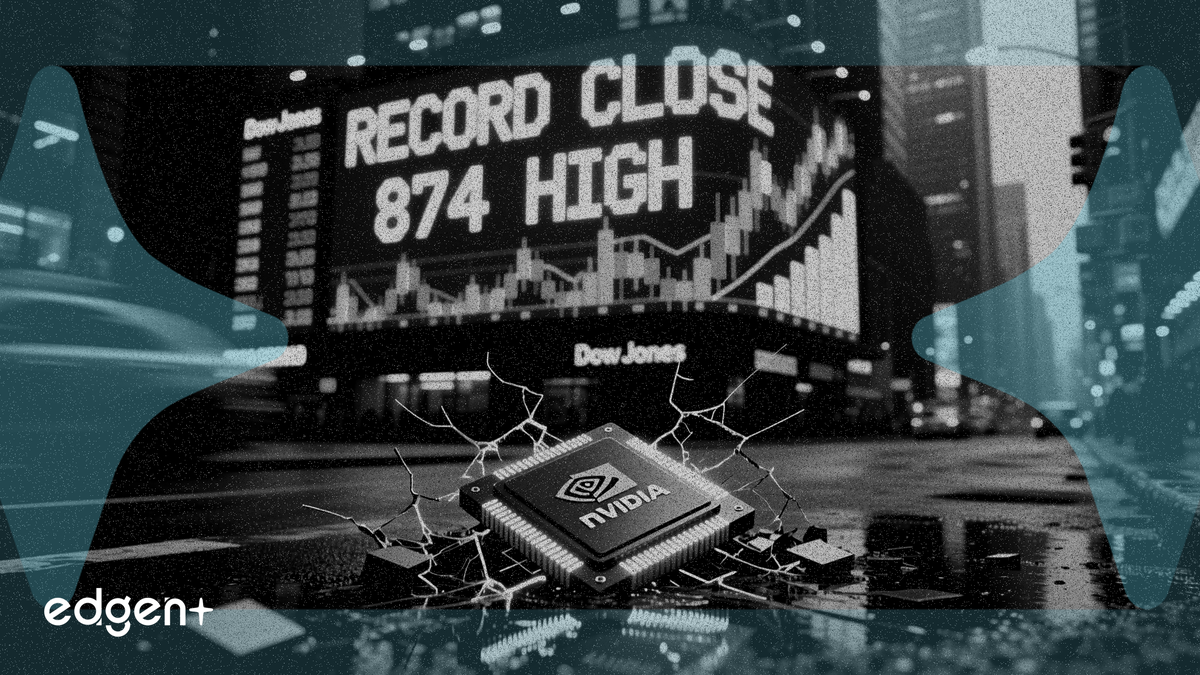
The Dow Jones Industrial Average surged 874 points to a record close of 51,562 as investors rotated out of AI chip stocks into healthcare and financials, while progress toward ending the Iran war boosted sentiment.
"About the only blemish on the market at this point is Broadcom, and I think investors are buying the dip," said Paul Nolte, senior wealth adviser and market strategist at Murphy & Sylvest in Elmhurst, Illinois. "I don't think investors have given up on chips yet, but what they've yet to come to grips with, 'Is this real? Are these valuations legitimate?' I'm not sure yet that investors have really questioned that."
The S&P 500 rose 0.41% to 7,584, while the Nasdaq Composite slipped 0.09% to 26,830. Healthcare and financials posted the biggest gains among the 11 S&P 500 sectors, while technology was the worst performer. UnitedHealth jumped 5.2% after Bank of America raised its rating to buy. Blackstone rose 7.5%, recovering from the previous session's selloff triggered by renewed concerns over private credit after the asset manager capped withdrawals from its flagship private credit fund. Broadcom tumbled 12.6% after missing revenue estimates, dragging down Advanced Micro Devices, Micron Technology and Qualcomm, which fell between 2.6% and 7.7%. Marvell Technology bucked the trend, gaining 4.9%.
The rotation raises questions about whether the AI trade that has driven chip stocks up more than 92% this year is becoming crowded. Front-month crude futures fell as the US House passed a measure blocking President Donald Trump from continuing the Iran war, raising hopes that tanker traffic through the Strait of Hormuz could resume. A US-mediated ceasefire agreement between Israel and Lebanon, an essential condition of an Iranian agreement to a peace deal, bolstered optimism of a near-term resolution, though Hezbollah rejected the truce.
Breadth favored advancers across both exchanges. On the NYSE, advancing stocks outnumbered decliners by a 2.19-to-1 ratio, with 308 new highs and 145 new lows. On the Nasdaq, 3,082 stocks rose and 1,681 fell, a 1.83-to-1 ratio, with 100 new highs and 92 new lows. Volume on US exchanges totaled 18.77 billion shares, below the 20.11 billion average over the last 20 trading days.
The labor market showed signs of softening. Initial jobless claims unexpectedly rose 6.1%, and first-quarter labor costs and productivity were revised sharply lower. Layoffs announced by US corporations jumped 11% in May to 97,006, with nearly 40% of those cuts attributed to AI, according to a report from Challenger, Gray and Christmas. The data added to a mixed economic picture as investors weighed the implications for Federal Reserve policy.
"How many deals have we had? It's always right around the corner, a corner we've yet to reach," Nolte said of the Iran peace prospects. "Things are moving, but are they moving at a pace that's going to allow the world to get back to what passes for normal in a few weeks, a few months, or maybe sometime next year?"
This article is for informational purposes only and does not constitute investment advice.
