

Dell Technologies' record $51.3 billion AI server backlog and 88% revenue surge show enterprise AI infrastructure demand is accelerating — and the buyer base is widening beyond the four hyperscalers that dominate the narrative.
Dell Technologies' record $51.3 billion AI server backlog and 88% revenue surge show enterprise AI infrastructure demand is accelerating — and the buyer base is widening beyond the four hyperscalers that dominate the narrative.
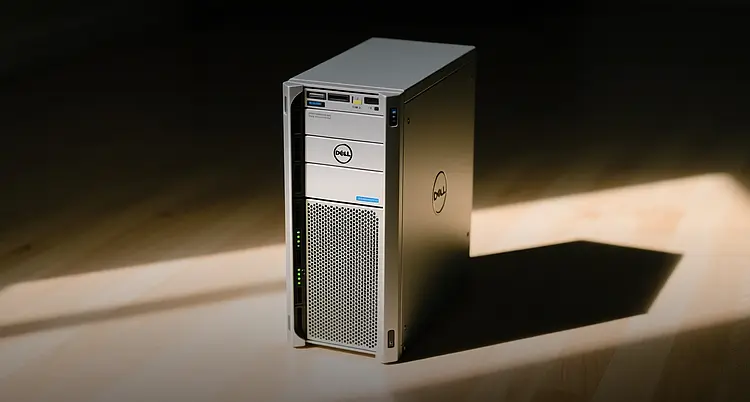
Dell Technologies booked $24.4 billion in AI orders in its fiscal first quarter alone, pushing its AI backlog to a record $51.3 billion as enterprise customers, sovereign programs and neocloud providers race to secure compute capacity.
"We're seeing demand from a much broader set of customers than a year ago — neocloud, sovereign and traditional enterprise are all scaling simultaneously," Dell's management said on the earnings call, noting the AI customer base surpassed 5,000, a gain of more than 50 percent in six months.
Revenue hit a record $43.8 billion in the quarter ended May 1, up 88 percent from a year earlier, with AI server revenue alone reaching $16.1 billion. The company exited the quarter with a $51.3 billion AI backlog, a figure that exceeds the annual revenue of most semiconductor companies. Dell shares have surged 239.8 percent year to date, far outpacing the broader Zacks Computer & Technology sector's 18.6 percent return.
The numbers challenge the bear case that AI capital expenditure is dangerously concentrated on Microsoft, Google, Amazon and Meta. A pre-revenue AI lab called Reflection AI recently signed a $150 million-a-month contract for Nvidia GB300 chips at Elon Musk's Colossus data center, committing roughly $6.3 billion through 2029. If a company that has shipped no product is willing to pay that price for compute, the demand curve underneath the entire AI trade is broader than the concentration argument allows.
New Hardware Targets the Density Bottleneck
Dell last month introduced the PowerEdge XE8812 server, part of the Dell AI Factory with Nvidia, designed to address the industry's most pressing physical constraint: rack space. Powered by Nvidia's Vera Rubin NVL4 architecture, the platform supports up to 144 GPUs per rack, making it one of the highest-density AI infrastructure offerings on the market. The server targets AI training, inference and scientific simulation workloads, delivering higher memory capacity and improved energy efficiency compared with prior generations.
The product launch extends Dell's strategy of embedding itself in the AI supply chain through partnerships. The company is collaborating with Nvidia, Alphabet's Google Cloud, OpenAI, xAI, ServiceNow, Palantir, Mistral and CrowdStrike to integrate AI solutions across compute, storage, networking, software and services. Dell is also bringing Google Distributed Cloud and Gemini models on-premises with confidential compute, addressing data residency and sovereignty requirements that are becoming deal-breakers for government and regulated-industry customers.
In May, Dell announced that PowerEdge servers will support Advanced Micro Devices' Instinct MI350P PCIe GPUs, giving enterprises a second GPU architecture option beyond Nvidia. The move positions Dell to capture demand from customers seeking cost flexibility as AI deployments scale from pilot to production.
The Buyer Base Is No Longer Four Names
The bear case on AI infrastructure spending, most prominently articulated by Michael Burry, rests on concentration risk: that the combined AI CapEx sits on just four hyperscaler balance sheets, and a pullback by any one of them would crater the build-out. Dell's backlog data and the Reflection AI contract both suggest that thesis is losing relevance.
Reflection AI, founded in early 2024 by two former Google DeepMind researchers, agreed to pay $150 million a month for Nvidia GB300 systems at Colossus 2, the Memphis campus xAI uses for its own training. The full term runs to 2029, with a 90-day exit clause after the first three months. Anthropic previously leased all of Colossus 1 at about $1.25 billion a month, and Google followed with $920 million a month for bridge capacity. The pattern is consistent: well-funded, non-hyperscaler buyers are signing frontier-scale compute contracts before they have products to sell.
For Dell, the implication is direct. The company's AI server business is no longer dependent on the procurement cycles of four cloud giants. Sovereign programs, national-security customers and venture-funded labs represent a new demand pool motivated by strategic priority rather than quarterly budget discipline. Dell's work with the Department of Energy's Genesis Mission and Pentagon AI programs, facilitated through its Dell AI Factory platform, gives it exposure to this sovereign demand channel.
What It Means for Investors
Dell carries a Zacks Rank #1 (Strong Buy), with a Growth Score of A and Momentum Score of B, reflecting upward earnings revisions driven by the AI backlog. The stock's 239.8 percent year-to-date gain already prices in significant optimism, but the $51.3 billion backlog provides revenue visibility that most hardware companies cannot match. The key risk is margin pressure from AI server mix — high-volume, lower-margin server business can dilute overall profitability even as revenue grows. Dell's ability to convert backlog into cash flow at expanding margins will determine whether the stock can sustain its multiple.
The broader takeaway for investors is structural. If the AI infrastructure build-out is being pulled forward by sovereign and strategic demand rather than by enterprise budgets that a downturn could freeze, then the companies supplying the scarce inputs — chips, servers, networking gear and physical data center capacity — benefit regardless of which AI lab ultimately wins. Dell, with its $51.3 billion backlog and expanding partner ecosystem, is one of the few publicly traded vehicles for that thesis.
This article is for informational purposes only and does not constitute investment advice.
