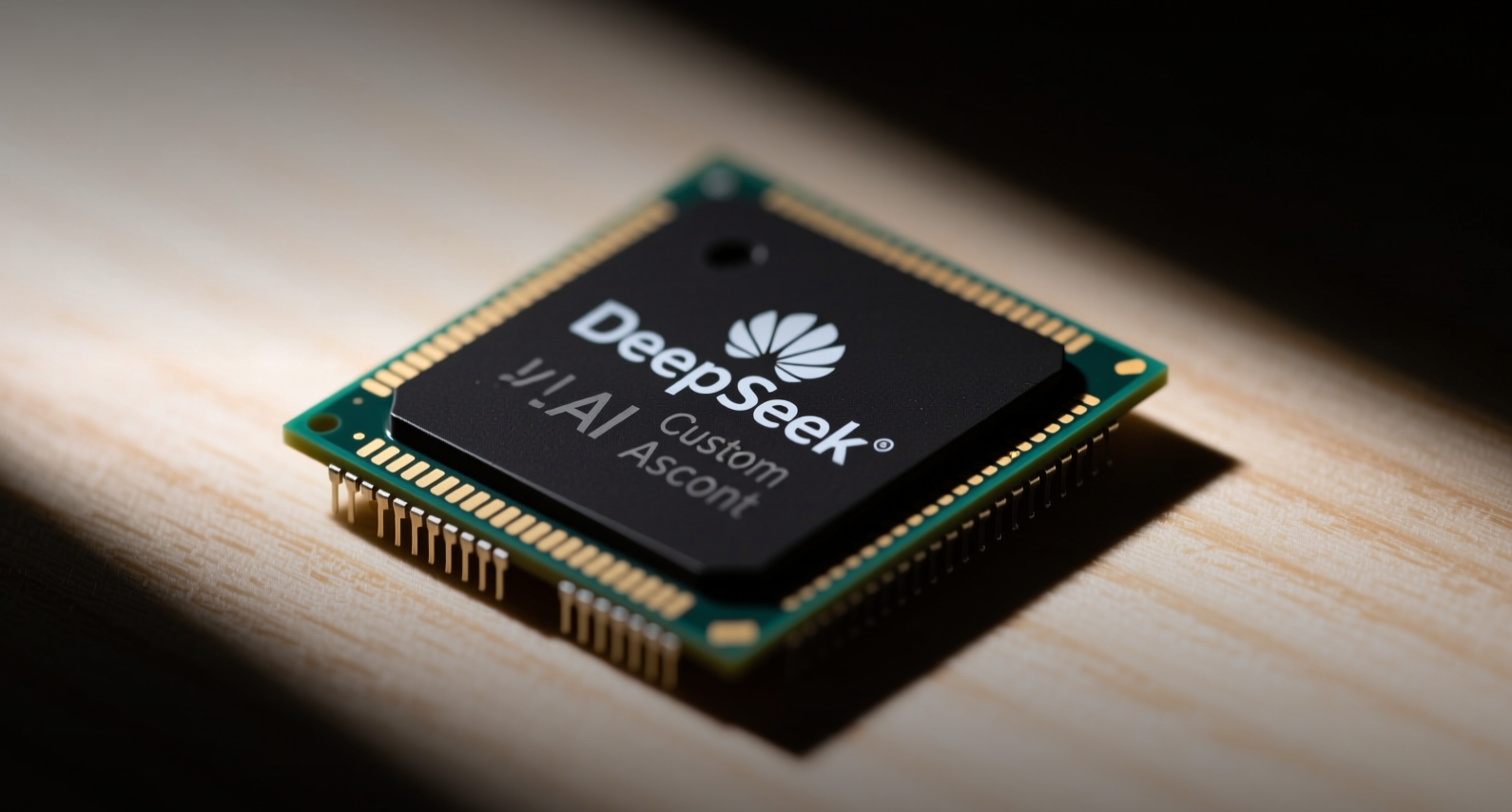
DeepSeek's $7.4 billion fundraising — the largest single round by a Chinese AI startup — was triggered by Liang Wenfeng's realization that the company could not compete without massive capital reserves after seeing Anthropic's Claude Mythos preview in April.
DeepSeek's $7.4 billion fundraising — the largest single round by a Chinese AI startup — was triggered by founder Liang Wenfeng's conclusion that the company could not sustain its research ambitions without massive capital reserves after reviewing Anthropic's Claude Mythos preview in April, according to people familiar with the matter. The Hangzhou-based company, valued at more than $50 billion in the round, plans to double its roughly 300-person workforce across all departments.
"Humanity is currently at the dawn of AGI," DeepSeek said in a statement on WeChat. "As technology advances, we are striving to at least double the scale of all departments."
Liang personally contributed approximately $3 billion — 200 billion yuan — representing roughly 40 percent of the total raise, while maintaining his controlling stake. Internet giant Tencent and battery manufacturer Contemporary Amperex Technology participated as institutional investors, alongside China's National Artificial Intelligence Industry Investment Fund, signaling strong government backing. The company is immediately opening applications for 27 types of technical and corporate roles, including development engineers, data engineers, AI product managers, and operations staff, with all positions open to student interns.
The fundraising marks a strategic pivot for DeepSeek, which had operated as a self-funded research lab for three years after Liang's 2023 meetings with potential investors fell through when he told them the company had no commercialization or product roadmap. The change in approach was driven by competitive pressure: Anthropic's Claude Mythos, previewed in April, demonstrated capabilities built on massive compute and data that Liang concluded DeepSeek could not match without a significantly larger capital base.
The Huawei Chip Trade-Off
DeepSeek's commitment to adapting its models for domestic Huawei chips has come at a significant cost. The company's training and deployment systems were built around Nvidia's CUDA software, requiring engineers to rewrite底层 software to run efficiently on Huawei hardware. The effort has resulted in a 15-month gap without releasing any new-generation models — an unusually long pause in an era when top labs ship new models every two to three months.
The gap caused DeepSeek to miss the coding tools boom that followed Anthropic's Claude Code launch in the second half of last year. Liang told investors during the fundraising roadshow that coding tools and AI chatbots are both temporary waypoints on the path to artificial general intelligence, and that betting heavily on short-term products would distract from the ultimate goal.
Liang believes Huawei's chips will match Nvidia's performance within several years, and that DeepSeek should complete the adaptation work ahead of that timeline. Huawei only learned that DeepSeek had been testing its chips privately last year, after which the two companies began working directly together.
Market Share Gains in the US
Despite the model release gap, DeepSeek's existing models are gaining traction in the US developer market. The company's flagship V4 model, released in April, captured 17 percent of token usage on Vercel's AI Gateway platform in May, up from less than 1 percent the previous month. That made DeepSeek the third-largest model provider on the platform behind only Anthropic and Google.
The lightweight V4 Flash variant is priced 20 to 50 times cheaper than comparable Anthropic models, a pricing strategy that Liang has said he will maintain. The growth continued into June, according to platform data.
DeepSeek remains the only major AI lab that fully open-sources the underlying code of all its models, a philosophy Liang has described as essential to preventing AI from being controlled by a small number of companies. The company has established an employee stock ownership plan allocating shares at the fundraising valuation.
For investors, the implications are clear. DeepSeek's aggressive expansion and ultra-low pricing strategy pressure margins at US AI leaders including OpenAI and Anthropic, while its pivot to domestic chips strengthens China's semiconductor self-sufficiency narrative. Nvidia, whose H100 and Blackwell GPUs power most large AI training runs, faces a long-term risk if Chinese labs successfully decouple from its ecosystem — though the 15-month model gap at DeepSeek shows the difficulty of that transition.
This article is for informational purposes only and does not constitute investment advice.