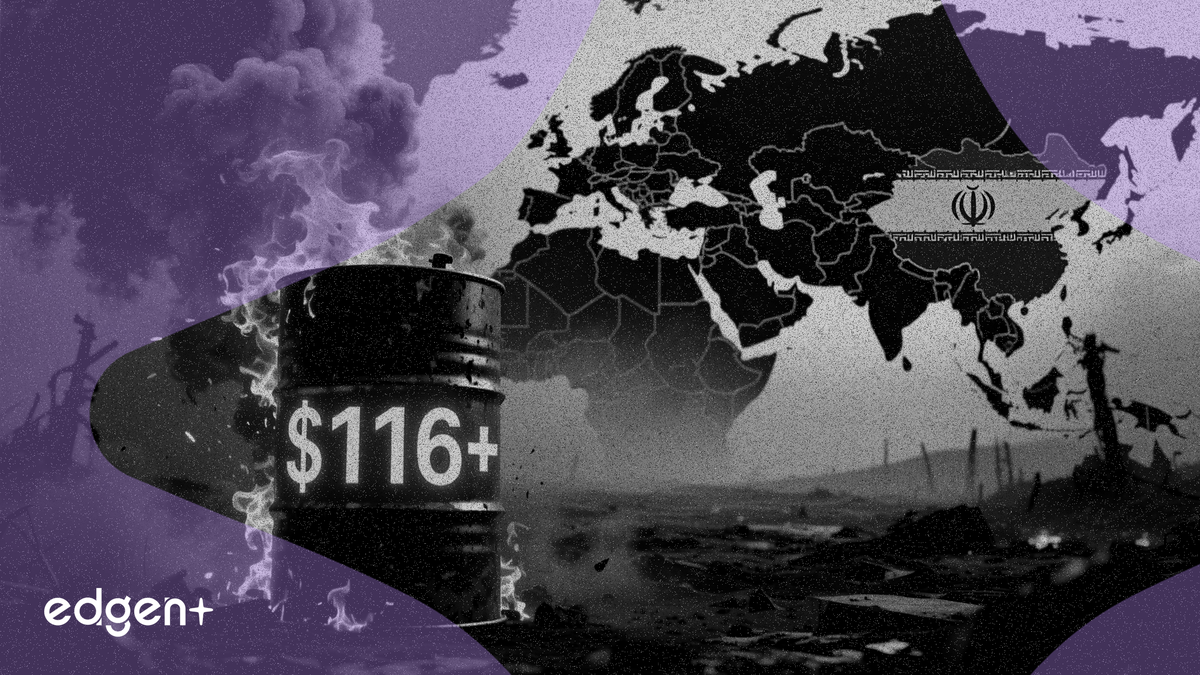
(P1) Crude oil futures broke above $116 a barrel heading into Tuesday's trading as global markets brace for a potential escalation in the U.S.-Iran conflict ahead of an 8 p.m. Eastern deadline for a diplomatic resolution.
(P2) "If Iran doesn't agree to U.S. terms by the 8pm Eastern deadline, investors to prepare for a sharp pullback," Scott Bauer at Prosper Trading Academy said.
(P3) The threat of a wider conflict has pushed crude prices steadily higher, with oil surging from around $70 to over $110 a barrel since the conflict began in late February, according to a Forbes analysis. The disruption has already prompted Amazon to add a 3.5% surcharge for third-party sellers, while shipping giants UPS and FedEx have added fuel surcharges of more than 25%.
(P4) The standoff has left energy markets in a state of heightened alert, with the primary risk centered on the Strait of Hormuz. A failure to reach an agreement could lead to further U.S. military action, potentially targeting Iran's energy infrastructure and triggering a significant, prolonged disruption to the 20 million barrels per day that transit the strait.
A Market on Edge
Global oil markets are no longer reacting to simple supply and demand fundamentals but to a binary choice: agreement or escalation. According to Oil & Gas 360, the market is caught in a narrow band of uncertainty, pricing in worst-case scenarios and then pulling back on diplomatic headlines. Tehran’s rejection of a U.S.-proposed 15-point ceasefire plan as “maximalist and unreasonable” has kept the Strait of Hormuz constrained, maintaining pressure on global energy flows.
The conflict's progression could follow one of three paths, according to an analysis by Ariel Cohen in Forbes. The first, a continued military escalation, could see the U.S. seize critical infrastructure like Iran's Kharg Island, which handles about 90% of the country's oil exports. Such a move would severely diminish global supply and likely drive oil prices higher, benefiting producers outside the Middle East, such as those in the Atlantic Basin and Caspian region.
Economic Ripples Beyond the Pump
Even if the U.S. were to "declare victory and leave," as a second scenario suggests, the geopolitical risk premium on oil would likely remain. Iran could continue to impose tolls on passage through the Strait of Hormuz, a move that violates international maritime law but would benefit strategic partners like Russia and China.
The most optimistic scenario involves a conditional armistice, brokered by neutral parties like Pakistan or China, that fully reopens the strait. While this would resolve immediate supply concerns, prices would likely settle at a level higher than before the conflict, reflecting a new political risk premium.
The economic impact extends far beyond fuel costs. Experts warn that the rising price of oil, a key component in chemical production, will increase costs for everything from pharmaceuticals to fertilizers. Christopher Wolf, a professor of agricultural economics at Cornell University, noted that rising diesel costs will make farming more expensive, with the Independent Grocers Alliance forecasting a potential 2-4% rise in food prices. As one UCLA professor told The Guardian, "When the prices go up, they rarely come back down."
This article is for informational purposes only and does not constitute investment advice.