

ConocoPhillips is set to become the first major U.S. oil company to operate in Syria since Bashar al-Assad's ouster, signing a contract this week to revive gas production alongside Novaterra Energy.
ConocoPhillips is set to become the first major U.S. oil company to operate in Syria since Bashar al-Assad's ouster, signing a contract this week to revive gas production alongside Novaterra Energy.
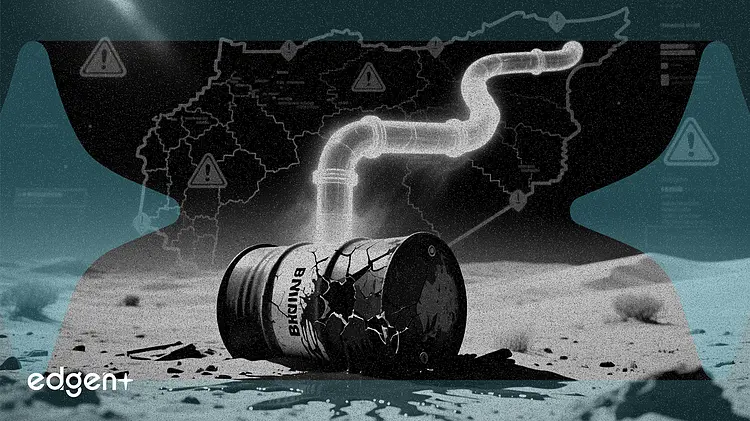
ConocoPhillips is set to sign a contract with Syria's new government to revive gas production, the Financial Times reported Monday, as Western energy majors return to the country after Bashar al-Assad's ouster in late 2024.
"ConocoPhillips and Novaterra Energy will develop existing gas fields and explore for new reserves under an agreement with state-owned Syrian Petroleum Company," the FT reported, citing two people familiar with the matter.
The deal builds on a November memorandum of understanding and is expected to be signed this week. It follows a separate May agreement in which TotalEnergies, QatarEnergy and ConocoPhillips launched a technical review of the offshore Block 3 area near Latakia. Brent crude fell $3.45 to $83.89 a barrel Monday, while WTI lost $4.03 to $80.85, as the broader market absorbed news of a U.S.-Iran peace deal that could reopen the Strait of Hormuz.
The contract signals a potential thaw in Syria's international isolation and could open the door for broader energy investment in a country whose oil and gas infrastructure was battered by more than a decade of civil war. For ConocoPhillips, the deal represents a strategic expansion into an emerging market as global majors compete for access to new reserves.
Syria's oil production averaged about 380,000 barrels per day before the conflict began in 2011 but collapsed to roughly 20,000 bpd during the war years, according to industry estimates. Natural gas output, critical for domestic power generation, suffered a similar decline. The country now faces chronic electricity shortages and needs billions of dollars in investment to rebuild its energy infrastructure.
Interest among energy majors for new Syrian projects has grown since Assad's ouster, with the new government under President Ahmed al-Sharaa actively courting foreign investors. The push to attract international capital comes as Syria seeks to restore its energy sector, which sustained extensive damage during more than a decade of conflict and international sanctions.
The ConocoPhillips deal also comes as the broader Middle East energy landscape undergoes rapid change. The U.S.-Iran peace deal announced Sunday sent oil prices tumbling, with Brent crude settling at $83.89 a barrel, down $3.45, and WTI at $80.85, down $4.03. Before the Strait of Hormuz closure in early 2025, Brent traded near $70 a barrel.
Broader energy landscape shifts
Energy experts caution that supply normalization through the Strait of Hormuz will take months, not days. Ships loaded with crude have been stranded in the Persian Gulf for more than three months, unable to safely transit the waterway through which about a fifth of the world's oil and gasoline supplies typically traveled before the war.
"It's going to take time for people to feel comfortable and for insurance to be in place, particularly to get people on the ground to restart some of these assets," said Daniel Evans, global head of fuels and refining research at S&P Global Energy.
Alan Gelder, senior vice president of refining, chemicals and oil markets at Wood Mackenzie, said countries such as Saudi Arabia and the United Arab Emirates, which have alternate pipelines bypassing the Strait of Hormuz, may be among the quickest to resume production. "But places like Iraq could be much more challenged because they've had a much bigger shut-in, their fields are more difficult," he said. "It may well take about a year before they get back."
For Syria, the ConocoPhillips deal represents a test case for whether the country can attract the billions of dollars in foreign investment needed to revive its energy sector. The agreement positions the U.S. producer alongside QatarEnergy and TotalEnergies, which have already established a foothold through the Block 3 offshore technical review.
This article is for informational purposes only and does not constitute investment advice.
