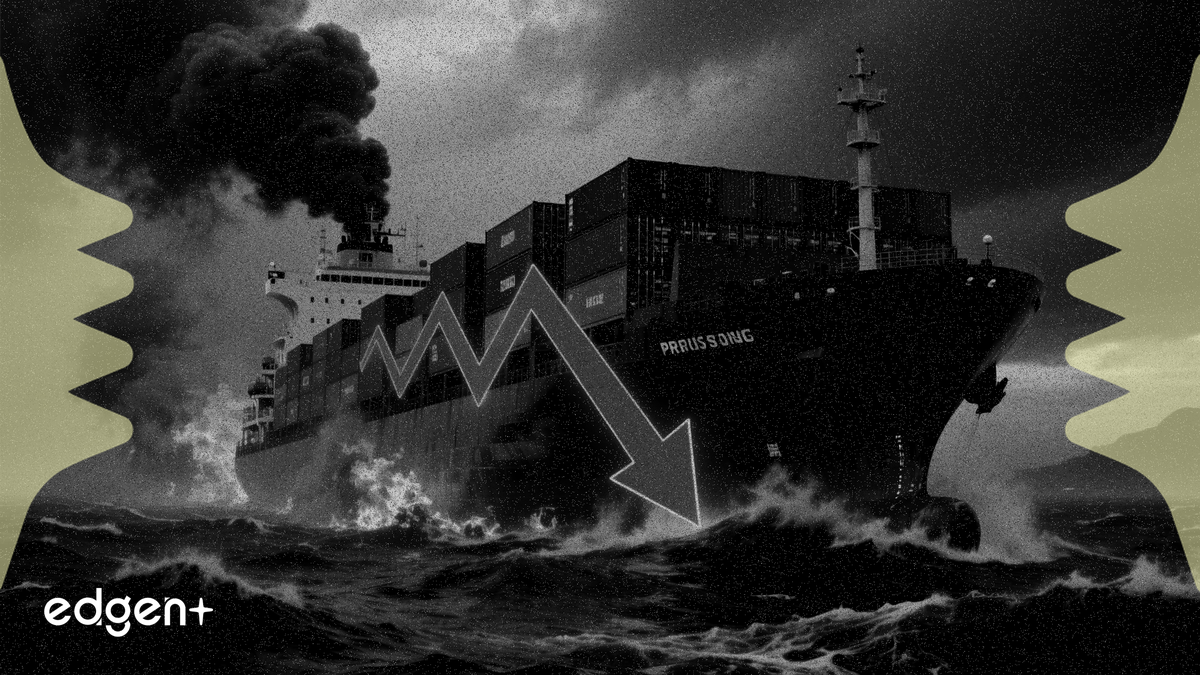
Le géant français du transport maritime CMA CGM a vu son bénéfice de base au premier trimestre chuter de plus de 30 %, la faiblesse des marchés du fret et les perturbations liées au conflit en Iran ayant frappé le troisième transporteur de conteneurs au monde.
"Le Groupe a réalisé une performance résiliente au premier trimestre", a déclaré le président-directeur général Rodolphe Saadé dans un communiqué. Il a noté que la diversification du modèle économique a soutenu les résultats, mais l'entreprise reste prudente quant à ses perspectives en raison de la guerre, des prix du pétrole et de l'incertitude commerciale.
Le groupe basé à Marseille a publié un EBITDA de 2,11 milliards de dollars au premier trimestre, en baisse de 31,6 % par rapport aux 3,09 milliards de dollars de la même période l'an dernier. Le chiffre d'affaires total est resté presque stable à 13,23 milliards de dollars, mais les revenus spécifiques au transport maritime ont chuté de 8,5 % à 8,02 milliards de dollars, tandis que le bénéfice net a plongé à 250 millions de dollars contre 1,12 milliard de dollars un an plus tôt. Les volumes de transport ont augmenté de 1,5 % à 5,93 millions d'EVP, mais le revenu moyen par conteneur a chuté de près de 10 %.
Ces résultats mettent en lumière un double défi pour les transporteurs mondiaux : la normalisation des taux de fret après les sommets de l'ère pandémique et les nouvelles pressions sur les coûts dues aux conflits géopolitiques. Le conflit en Iran a gravement perturbé le détroit d'Ormuz, un corridor énergétique vital. Un navire de CMA CGM y a été attaqué ce mois-ci, et les transporteurs font face à une flambée des coûts d'assurance et de carburant, les forçant à utiliser des itinéraires alternatifs et à reconfigurer leurs services. Contrairement au segment maritime, la branche logistique de l'entreprise, CEVA, a vu son chiffre d'affaires augmenter de 6,6 % à 4,56 milliards de dollars.
Des retombées économiques plus larges
Les perturbations du transport maritime mondial envoient des ondes de choc économiques bien au-delà des bénéfices des transporteurs, en particulier dans les pays dépendant des importations comme l'Inde. Le conflit menace le passage de 40 à 45 % du pétrole brut de l'Inde et de plus de 80 % de ses importations de GPL, créant des pénuries d'approvisionnement et une pression inflationniste sur le carburant et l'alimentation.
La crise engendre également une pénurie d'emplois. Les travailleurs indiens revenant du Golfe peinent à trouver du travail, tandis que les industries orientées vers l'exportation réduisent leurs effectifs. À Kanpur, centre d'exportation de cuir, les usines tournent à moitié de leur capacité en raison des coûts logistiques élevés et de la baisse de la demande étrangère, selon Taj Alam, propriétaire de Kings International. Les recruteurs signalent que les embauches pour des emplois dans le Golfe se sont taries, accentuant la pression sur un marché du travail indien déjà tendu.
La performance de CMA CGM, baromètre du commerce mondial, signale que les transporteurs et les économies qu'ils desservent font face à d'importants vents contraires. La prudence des prévisions reflète un environnement où le risque géopolitique se traduit directement par des coûts plus élevés et une instabilité économique. Les investisseurs surveilleront la durée des perturbations dans le détroit d'Ormuz.
Cet article est fourni à titre informatif uniquement et ne constitue pas un conseil en investissement.