


Chinese state-owned banks surged to record highs after interim results confirmed earnings resilience and the first dividend payout ratio increase since listing.
Chinese state-owned banks surged to record highs after interim results confirmed earnings resilience and the first dividend payout ratio increase since listing.
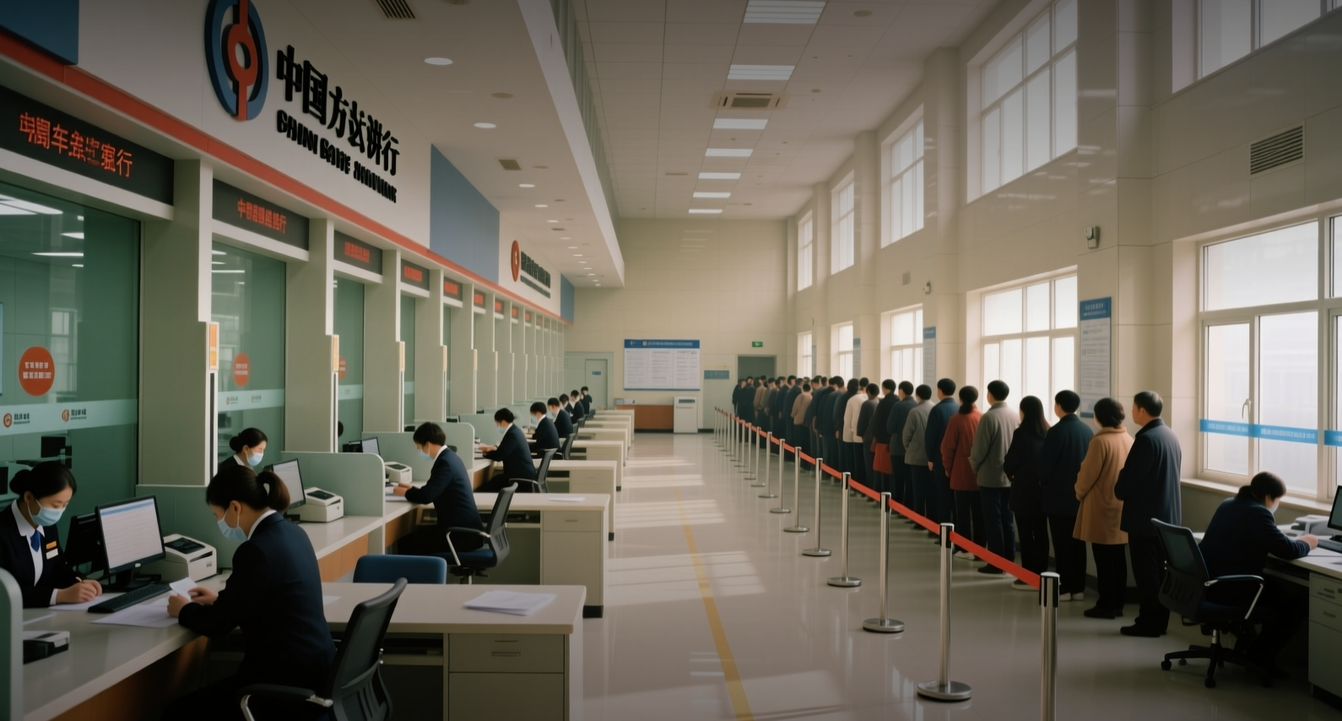
Chinese state-owned banks surged to record highs after interim results confirmed earnings resilience and the first dividend payout ratio increase since listing.
CCB and Bank of China hit record highs Aug. 31 after six state-owned banks beat interim expectations and raised dividend payout ratios by 1 ppt — the first increase since listing.
"The 2Q results beat market expectations, and the 1 ppt increase in regular payout ratios marks the first such move since listing — a positive signal for shareholder returns," JPMorgan said in a report, maintaining Overweight ratings on all state-owned banks.
Bank of China shares rose 5.2 percent to HKD5.87 with turnover of HKD2.376 billion, while CCB gained 3.39 percent to HKD9.45 on HKD2.032 billion in turnover. Postal Savings Bank of China climbed 7.37 percent to HKD5.21, and China Merchants Bank and Bank of Communications each advanced more than 2 percent. The six major lenders — ICBC, Agricultural Bank of China, Bank of China, CCB, Bank of Communications, and Postal Savings Bank — all reported year-over-year growth in first-half net profit attributable to shareholders on Aug. 28.
The dividend payout increases mark a structural shift in how China's largest banks return capital to shareholders. Citi expects large Chinese banks to gradually raise payout ratios toward 40 percent, a level that would make their dividend yields increasingly attractive relative to government bond yields in a declining rate environment. Insurance funds and long-term institutional investors have been accumulating high-dividend banking stocks, and the widening spread between bank dividend yields and bond yields could sustain the sector's re-rating through the remainder of 2026.
The interim results dispelled earlier market concerns that persistently narrowing net interest margins would compress bank earnings. Although NIMs at the six major banks remained under pressure in the first half, they offset the impact of margin compression through credit volume expansion, growth in non-interest income, and disciplined credit cost management. Bank of China reported a 5.1 percent year-over-year increase in first-half net profit attributable to shareholders and announced an 8.8 percent boost to its interim dividend, exceeding some investors' expectations on payout.
The rally extended to the A-share market, where banking stocks bucked the broader downtrend in early trading. Bank of China rose more than 3 percent, CTBC Bank gained nearly 2 percent, and Bank of Beijing, Qilu Bank, and Postal Savings Bank of China each advanced more than 3 percent. The divergence between bank stocks and the broader market shows the sector-specific nature of the move, driven by earnings delivery rather than broad risk appetite.
Citi's expectation that large Chinese banks will gradually raise payout ratios toward 40 percent represents a meaningful shift from historical norms. The last time Chinese state-owned banks increased regular payout ratios was at their initial public offerings, making the current 1 ppt increase a landmark event for shareholder returns. JPMorgan also upgraded Postal Savings Bank of China to Overweight, citing its relatively attractive dividend yield and above-peer profit growth.
Short-selling data as of Aug. 28 showed CCB short interest at 17.6 percent of turnover and Bank of China at 20.3 percent, suggesting that even bearish positioning has not prevented the rally. The high short ratios also indicate that some investors remain skeptical of the sector's ability to sustain its gains, which could fuel further upside if the rally continues.
Analysts caution that the trajectory of third-quarter net interest margins, changes in real estate-related asset quality, and whether policymakers introduce a new round of profit-concession measures will determine whether banking stocks can sustain their current momentum. If NIM compression accelerates in the second half, the earnings resilience that drove this rally could come under renewed pressure. Conversely, if the rate environment stabilizes and payout ratios continue to climb, the sector's valuation re-rating could extend further.
The stakes are significant. Chinese state-owned banks represent a substantial portion of the H-share market's dividend-paying capacity, and their re-rating has implications for the broader Hang Seng Index and for investors who use these stocks as bond proxies. With the sector now trading at record levels, the question is whether the market has already priced in the dividend payout improvements or whether further increases are on the horizon.
This article is for informational purposes only and does not constitute investment advice.
