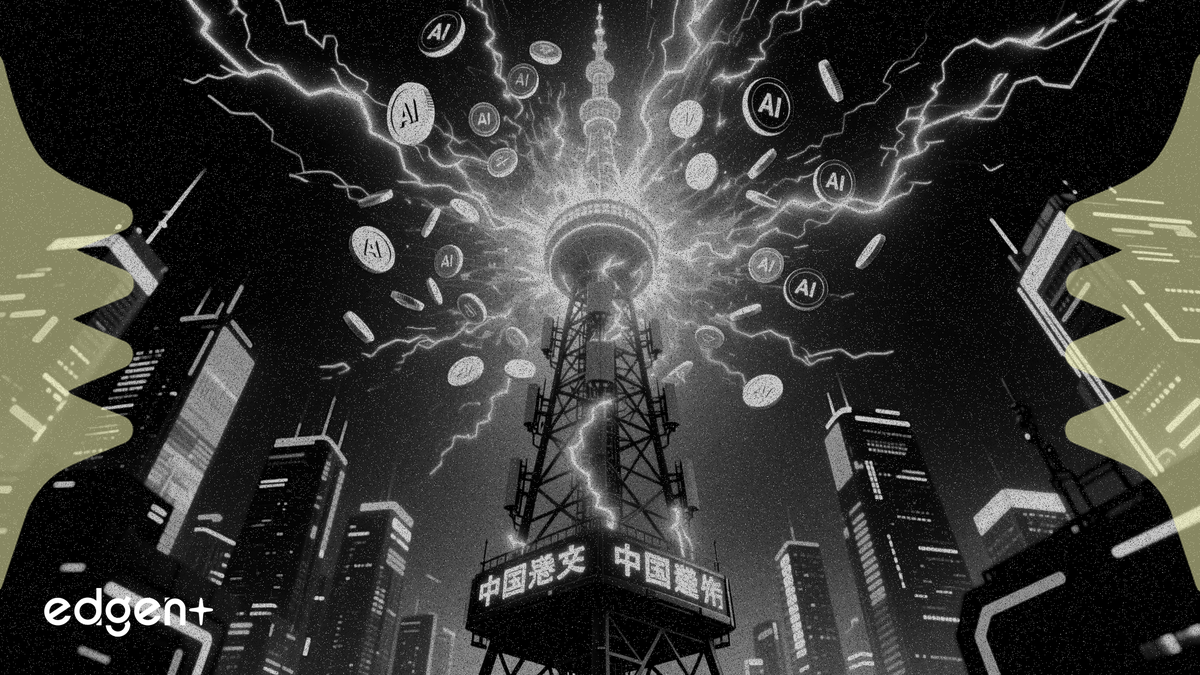
China’s technology giants are pivoting from leasing raw computing power to operating a token-based economy for AI services, a strategic shift that has seen daily token consumption explode more than 1,000-fold in just over two years.
The industry is moving from "selling computing resources" to a higher-value model of "pricing based on intelligent utility," with token operations poised to become the next high-growth investment theme, according to a recent report from Guolian Minsheng Securities.
The move comes as surging demand tightens supply, with Aliyun raising some AI service prices by up to 34% since March, while Tencent Cloud and Baidu Smart Cloud implemented hikes of up to 5% and 30%, respectively. Underscoring the trend, China Telecom recently launched a 16.45 billion yuan ($2.3 billion) procurement for a "token factory" to standardize and sell AI model access.
This transition creates a new, potentially high-margin revenue stream for state-backed telecom operators and cloud providers, directly challenging the traditional hardware-centric model. For investors, the shift redefines value away from simply owning GPUs toward controlling the platforms that package and distribute AI services, a market that has already driven daily token use from 100 billion in early 2024 to 140 trillion by March 2026, according to data from the National Data Administration cited in the report.
Telecoms Enter the Fray
China's three state-owned telecom operators have all made aggressive moves into the token economy, leveraging their vast infrastructure and customer base.
China Telecom has taken a direct-to-consumer approach, launching monthly token plans ranging from 9.9 yuan ($1.40) for 10 million tokens to 49.9 yuan ($6.90) for 80 million tokens. It has also established a "Token Ecosystem Alliance" to build out the value chain. The company's recent 16.45 billion yuan tender for a "token factory" signals its commitment to becoming a central player.
China Mobile is focusing on partnerships and regional pilots. In Shanghai, it partnered with Tencent to offer 400,000 tokens for just 1 yuan ($0.14). The company launched its own token operations ecosystem alliance with partners including Tencent and Alibaba, aiming to reduce per-token costs by around 30% through centralized operations.
China Unicom is targeting specific AI use cases, offering free trial allocations of 30 million tokens to "one-person company" users in Shanghai and bundling tokens with its other cloud and software platforms.
A New Business Model
The token model aims to solve several problems in the AI computing market. It standardizes access to a wide variety of different AI models and underlying hardware, abstracting away the complexity for the end-user. Instead of leasing a specific type of GPU, a customer can simply buy a bucket of tokens that can be used across multiple services.
For providers, this transforms a one-time hardware-based sale or lease into a recurring, high-stickiness revenue stream. It allows for more flexible pricing through subscriptions and tiered packages, significantly lowering the entry cost for small businesses to experiment with AI, from hundreds of thousands of yuan down to the thousand-yuan level, according to China Telecom.
The long-term competitive advantage will likely belong to firms that can create a feedback loop of proprietary data, model optimization, and high-quality token output. This puts the telecom operators, with their direct access to network data and enterprise clients, in a strong position. The shift also reflects a maturing market, moving from the initial phase of infrastructure build-out to a new stage focused on efficient operation and service delivery.
This article is for informational purposes only and does not constitute investment advice.