
China's LineShine supercomputer, built with domestically designed CPUs, reclaimed the world's fastest title for the first time since 2017.
China's LineShine supercomputer, built with domestically designed CPUs, reclaimed the world's fastest title for the first time since 2017.
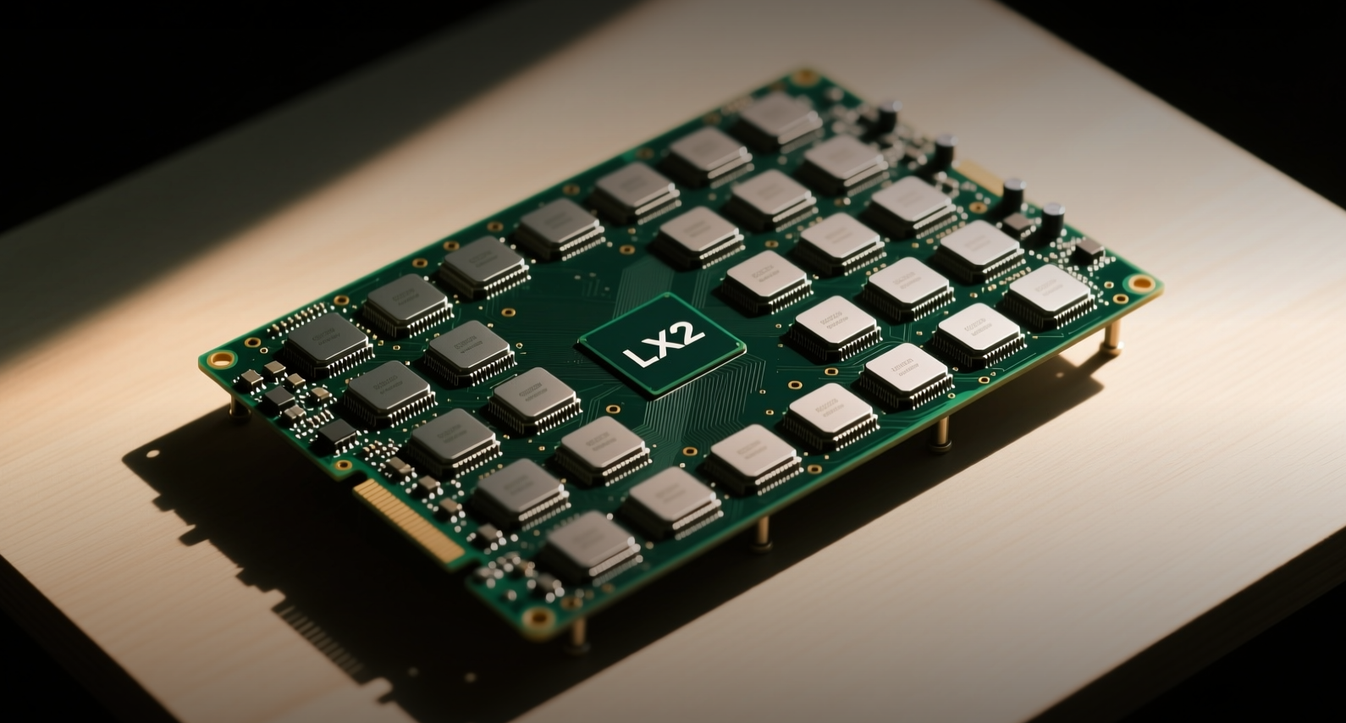
China's LineShine supercomputer, built with domestically designed CPUs, reclaimed the world's fastest title for the first time since 2017.
China's LineShine supercomputer achieved 2.198 exaflops on the TOP500 benchmark, 22% faster than the US Energy Department's El Capitan, marking the first time a Chinese system has topped the biannual ranking since 2017.
"The Chinese system is impressive — they developed a machine that is not reliant on GPUs, which is a fundamentally different approach," Jack Dongarra, a University of Tennessee professor and TOP500 organizer, said.
LineShine, installed at the National Supercomputing Centre in Shenzhen, runs on 13.79 million cores across custom 304-core LX2 processors at 1.55 GHz, linked by a proprietary interconnect. The system draws 42.2 megawatts of power, achieving 52.07 gigaflops per watt. Unlike the top US systems — El Capitan, Frontier and Aurora, all of which rely on AMD or Nvidia accelerators — LineShine uses only central processing units, a design choice that limits its performance on AI-oriented tasks.
The debut challenges the effectiveness of US export controls that since 2015 have restricted Chinese access to Intel chips and later Nvidia's advanced GPUs. The system was developed without public funding, allowing its operators to submit to the TOP500 after China halted submissions in 2023 following years of chip-related restrictions from the Trump and Biden administrations.
A CPU-Only Design With Trade-Offs
LineShine's reliance on CPUs rather than graphics processing units creates a sharp divergence in performance depending on the workload. On the HPL-MxP benchmark, which measures mixed-precision performance critical for AI training, LineShine ranked fourth at 7.92 exaflops — a modest 3.6 times speedup over its standard score. By contrast, El Capitan led the same benchmark at 16.7 exaflops, a 9.2 times speedup, reflecting the advantage of its AMD Instinct MI300A accelerators for AI-style computing.
The gap underscores a fundamental reality: the TOP500 ranking measures traditional scientific computing, not AI capability. Cloud providers such as Microsoft, Amazon and Google have built massive AI-focused supercomputers that largely do not compete for TOP500 spots. A study last year by AI policy researchers estimated that xAI's Colossus system in Tennessee, built with 200,000 AI chips, was already more powerful than El Capitan for AI workloads.
"China is hoping to convince the world export controls are useless by hoping we ignore the details," Jimmy Goodrich, a senior fellow at the University of California's Institute for Global Conflict and Cooperation, said.
What LineShine Means for Chip Stocks
LineShine's debut adds five exascale systems to the global tally — one in China, three in the US and one in Germany — and demonstrates that China can build world-leading supercomputers without access to advanced US chips. The system uses domestically developed processors, memory, networking and cooling, representing a milestone in China's push for self-sufficiency.
For investors, the implications are nuanced. Nvidia, whose GPUs power most leading AI systems, faces no direct competitive threat from a CPU-only supercomputer, but the narrative that export controls are failing could weigh on the stock. AMD, whose MI300A accelerators power El Capitan and three other top-10 systems, benefits from continued US government demand. Intel, which supplies processors for Aurora and Microsoft's Eagle system, has limited exposure to the supercomputer segment but could see its foundry ambitions tested if Chinese chipmakers prove capable of producing competitive designs without Western tools.
LineShine was designed to support both traditional scientific simulations and AI workloads, said Lu Yutong, the machine's chief designer. But industry experts expressed skepticism that a CPU-only system could match dedicated AI supercomputers whose hardware is optimized for training today's large language models.
The TOP500 list's growing architectural diversity — spanning custom Chinese silicon, AMD-powered US Department of Energy systems, and Europe's sovereign computing infrastructure — signals that no single technology path dominates leadership-class computing. For semiconductor investors, the race is no longer just about who builds the fastest machine, but whose architecture wins the next wave of computing demand.
This article is for informational purposes only and does not constitute investment advice.
