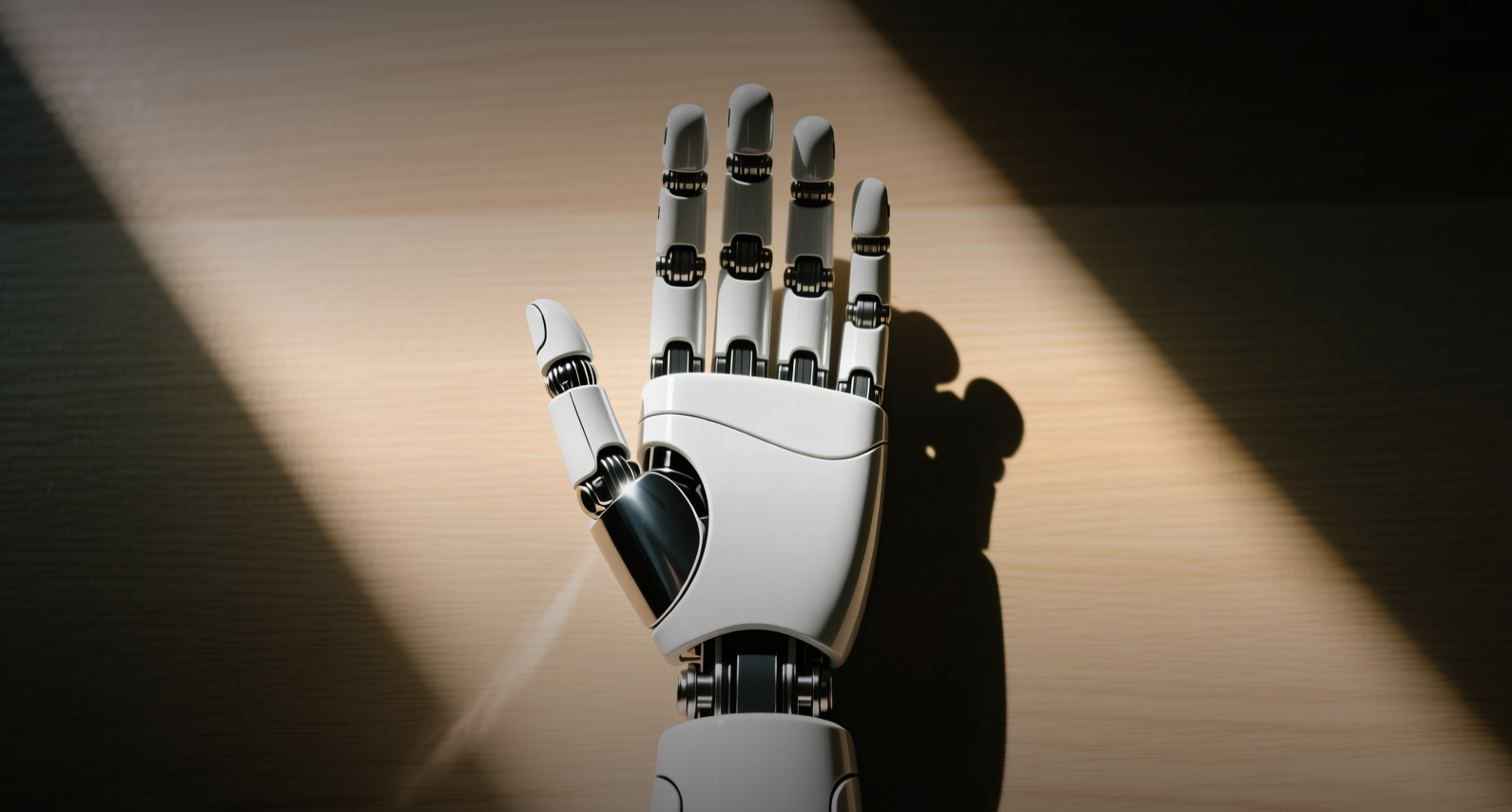
China's State Council has placed artificial intelligence at the center of its industrial strategy, with Premier Li Qiang chairing a meeting to review AI development as the country's embodied AI market heads toward a projected 1 trillion yuan by 2035.
China's cabinet-level focus on AI comes as the country's embodied AI market — spanning humanoid robots and intelligent industrial systems — is projected to reach 400 billion yuan ($55 billion) by 2030 and surpass 1 trillion yuan by 2035, according to the Development Research Center of the State Council.
"Over the past five years, China has made rapid progress in embodied AI, especially humanoid robots, reaching the top international tier and even taking a leading position in some areas," Yao Qizhi, a Turing Award winner and academician at the Chinese Academy of Sciences, said.
The 2026 Government Work Report pledged to establish mechanisms to boost investment in future industries including embodied AI, quantum technology, brain-computer interfaces and 6G. International Data Corp. data shows global shipments of embodied AI industrial robots reached 18,000 units in 2025 and are expected to exceed 50,000 in 2026, with China accounting for more than 45 percent of the market.
For investors, the policy push signals a systematic buildout that could reshape competitive dynamics across manufacturing, logistics and services. Nio's smart manufacturing plant reported that embodied AI technology boosted production efficiency by more than 30 percent, cut labor costs by 25 percent and reduced defect rates by 40 percent — early returns on what the government sees as a strategic pillar of economic growth.
From Factory Floors to Policy Priority
Inside a factory in Hefei, Anhui province, a 1.66-meter-tall humanoid robot named Lingshu places semiconductors onto moving production lines with sub-millimeter precision. Developed by Youibot, the robot has already been deployed in electronics factories and logistics centers across Hefei, Suzhou and Chongqing, where one unit can work as efficiently as eight to 12 human workers per shift while operating 24 hours a day, according to Zhang Zhaohui, founder and CEO of Youibot.
The scene represents a rapid transition from research labs to commercial deployment. During this year's Spring Festival Gala, humanoid robots performed flips, martial arts and synchronized group movements — a sharp leap from simpler demonstrations a year earlier. Li Lecheng, minister of Industry and Information Technology, said the performances "showcase more than entertainment" and reflect China's progress in translating AI into real-world applications.
Competition Heats Up as Hurdles Remain
Robot maker UBTech has secured orders worth more than 100 million yuan for its Walker S2 humanoid robots, which are being deployed in factories across southern China. The company plans to deliver more than 1,000 units in 2026. Yet significant technical challenges persist. Lin Yonghua, chief engineer at the Beijing Academy of Artificial Intelligence, said more work is needed to achieve stable, high-quality control of humanoid robots, improve dexterous manipulation and overcome constraints in power supply and heat management.
Global competition is intensifying, with the United States, Japan and Germany ramping up investment in embodied AI. He Xiaopeng, CEO of electric vehicle maker Xpeng, has called for national-level research and development funds and standardized frameworks — similar to autonomous driving classifications — to accelerate commercialization.
For investors, the question is which companies will capture the value. Nio's 30 percent efficiency gain and 25 percent labor cost reduction offer a template for returns, while UBTech's order book suggests early commercial traction. But with the technology still facing power and control constraints, the timeline to mass adoption remains uncertain. The State Council's attention, however, shows that policy support — and the capital that follows — will continue to flow.
This article is for informational purposes only and does not constitute investment advice.