
A geopolitical maneuver by Beijing injects fresh uncertainty into one of the world's most critical shipping lanes, with billions in trade at stake.
A geopolitical maneuver by Beijing injects fresh uncertainty into one of the world's most critical shipping lanes, with billions in trade at stake.
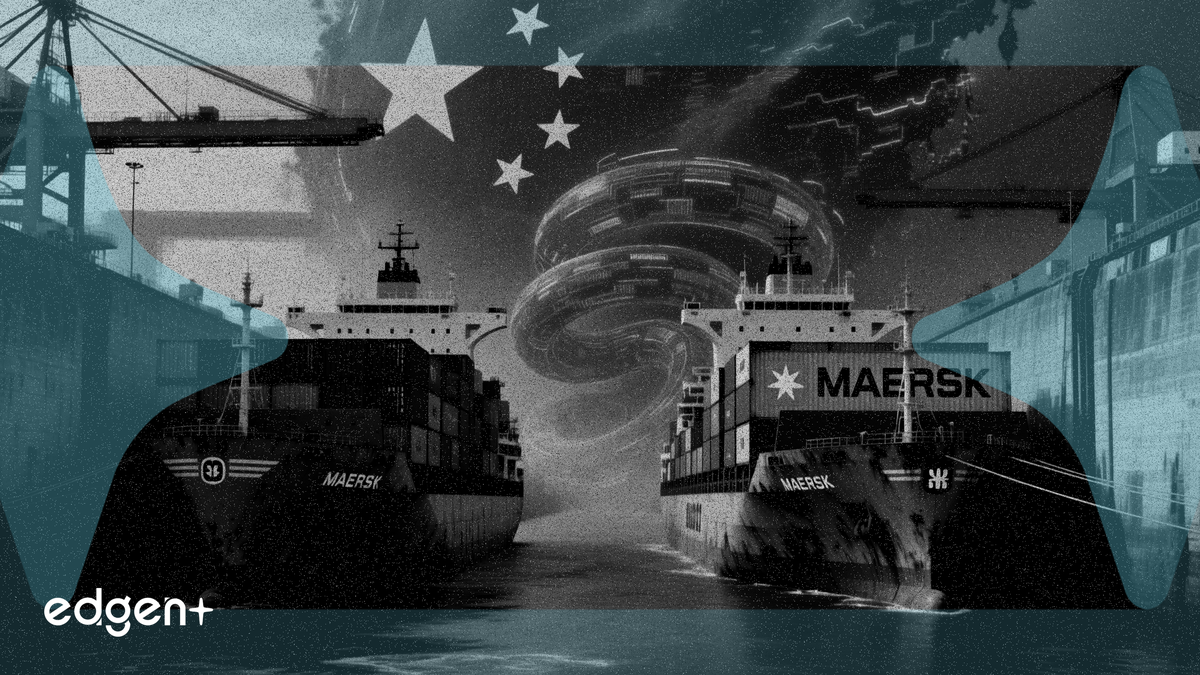
The Chinese government has reportedly asked shipping giants A.P. Moller-Maersk A/S and Mediterranean Shipping Co. to abandon their temporary takeover of two key Panamanian ports, a move that challenges a recent Panama Supreme Court ruling and creates a complex diplomatic situation for the world's largest container lines. The intervention took place in early April 2026, according to sources cited by the Financial Times.
"This is a clear signal from Beijing that it will protect its commercial interests abroad, even if it means pressuring neutral parties," said David Sacks, a senior research fellow at the Council on Foreign Relations. "Maersk and MSC are caught between a sovereign court ruling and a geopolitical superpower, a position no international carrier wants to be in."
The request from Beijing follows a February Supreme Court decision in Panama that revoked the port concession contracts held by Panama Ports Company (PCC), a subsidiary of Hong Kong-based CKH HOLDINGS (00001.HK). The court then transferred temporary operational control of the Balboa and Cristobal ports to Maersk and MSC to ensure continued smooth trade flows. Shares in CKH Holdings were down 0.16 percent in recent trading.
At stake is the operational stability of two of the most important container ports in the Americas, which handle a significant portion of the cargo passing through the Panama Canal. The Chinese intervention creates significant operational and legal risks for Maersk and MSC, potentially disrupting global trade flows if a resolution isn't found and setting a precedent for state influence over commercial contracts.
The root of the issue lies in the Panamanian Supreme Court's ruling, which invalidated a 25-year concession held by PCC. The legal basis for the revocation has not been fully detailed, but the court moved swiftly to appoint Maersk and MSC as temporary operators. China's government has framed its request as a matter of business ethics, urging the two European shipping lines not to engage in what it terms "illegal activities" that would harm the interests of Chinese companies.
This situation is reminiscent of China's pressure on the Sri Lankan government regarding the Hambantota port, where commercial terms were renegotiated under diplomatic influence. Maersk and MSC, for their part, have maintained that their temporary operating rights were obtained legally through the Panamanian judicial system with the primary goal of preventing disruptions at a critical global chokepoint.
The Balboa and Cristobal ports are vital nodes in the global logistics network, situated at the Pacific and Atlantic entrances to the Panama Canal, respectively. Together, they handle millions of containers annually, serving as a crucial transshipment hub for trade between Asia, the Americas, and Europe. Over $270 billion in annual trade passes through the canal, and any operational hiccups at its main ports could have cascading effects on supply chains.
The standoff places Panama in a difficult diplomatic position, caught between its own judicial sovereignty and pressure from a major global power. For Maersk and MSC, the decision on whether to comply with China's request or uphold the Panamanian court's mandate carries significant financial and geopolitical ramifications.
This article is for informational purposes only and does not constitute investment advice.