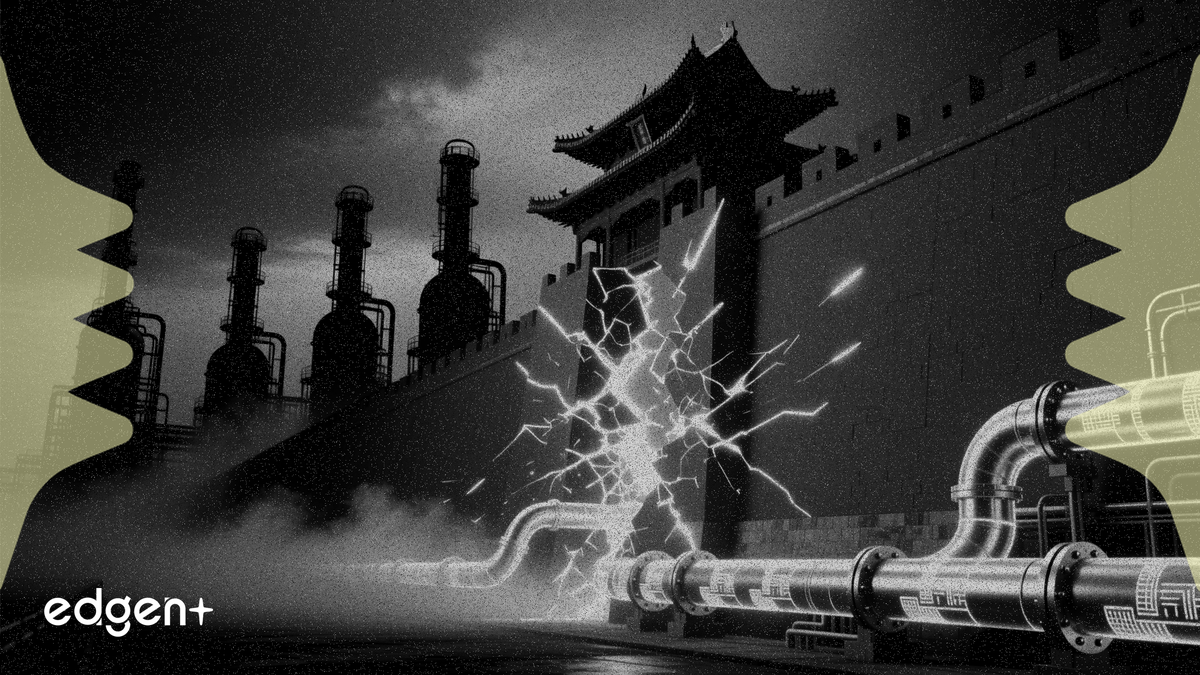
(P1) China’s financial regulator has quietly directed the country's largest banks to suspend new lending to five oil refiners hit by US sanctions, a move that contrasts sharply with Beijing's public vow to resist Washington's measures and tests the limits of its economic defiance.
(P2) The verbal directive from the National Financial Regulatory Administration (NFRA) came just before a long holiday weekend on May 1, according to people familiar with the matter cited by Bloomberg News. This instruction to avoid new yuan-denominated credit directly contradicts a May 2 notice from China’s Ministry of Commerce (MOFCOM), which ordered firms to disregard the US sanctions under the country's 2021 anti-sanctions blocking law.
(P3) The US sanctions targeted five private refiners, including major player Hengli Petrochemical (Dalian) Refinery Co., for their role in processing Iranian crude. While China's blocking order caused spot Brent futures to soar past $120 a barrel, the NFRA's cautious guidance advised banks to review exposure and not extend new credit, though they were also told not to call in existing loans.
(P4) The episode reveals the critical balancing act for Beijing as tensions with Washington escalate weeks before a planned presidential meeting. The core challenge is shielding China's systemically important state-owned banks—including ICBC, Agricultural Bank of China, and Bank of China—from the severe risk of US secondary sanctions and losing access to the vital US dollar clearing system.
A Tale of Two Policies
The conflicting signals from two powerful arms of the Chinese government underscore a long-standing dilemma. Publicly, Beijing has consistently railed against what it calls unilateral sanctions and extraterritorial overreach. The deployment of its 2021 blocking statute for the first time was a significant statement of intent, legally barring Chinese entities from complying with the foreign restrictions.
Privately, however, China has a history of ensuring its largest and most globally integrated companies comply with US rules to avoid catastrophic financial penalties. Major state-owned banks have previously adhered to US sanctions against Iran and North Korea. The NFRA's guidance to halt new loans to the five refiners—Hengli Petrochemical, Shandong Jincheng, Hebei Xinhai, Shouguang Luqing, and Shandong Shengxing—is the latest example of this pragmatic risk management.
Washington has intensified its efforts to choke off Iranian oil revenue, a key financial resource for Tehran. US Treasury Secretary Scott Bessent confirmed that letters had been sent to two Chinese banks, warning them of secondary sanctions risks if they were found supporting transactions tied to Iran. This puts China's largest lenders, which Bloomberg data shows have all previously lent to Hengli, in a precarious position between domestic policy and international financial reality. The last time similar tensions flared, Beijing funneled Iran-related business through the smaller, already-sanctioned Bank of Kunlun to insulate its main financial institutions.
This article is for informational purposes only and does not constitute investment advice.