



China's auto export boom faces a critical test as the EU targets plug-in hybrids, the segment driving the surge.
China's auto export boom faces a critical test as the EU targets plug-in hybrids, the segment driving the surge.
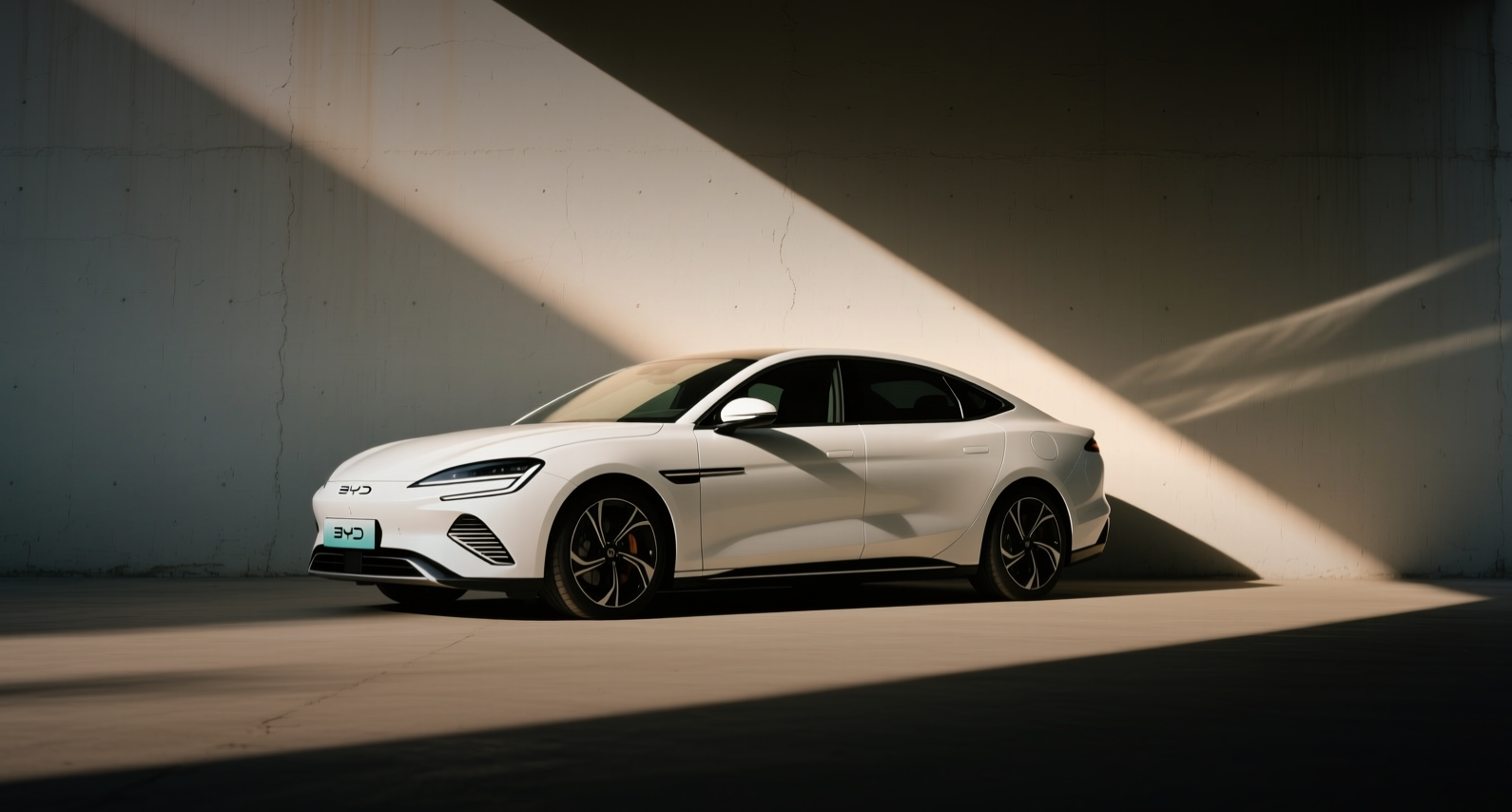
China's auto export boom faces a critical test as the EU targets plug-in hybrids, the segment driving the surge.
China's auto exports surged 71% to 3.22 million units in the first five months of 2026, but the European Union's plan to impose countervailing duties on plug-in hybrid electric vehicles threatens the trade model that fueled the growth.
"The pure export trade model for automobiles will face increasing trade protection risks," CMSI said in a research report, urging automakers to localize production capacity to enhance risk resilience.
New energy vehicles, particularly PHEVs, have been the core driver of the export boom, supported by elevated international oil prices and weak domestic demand, according to the broker. NEV passenger vehicle exports accounted for 54% of total passenger vehicle exports in May, up from 36.6% at the start of 2025, and have remained above 50% for three consecutive months. The shift marks a rapid transformation of China's auto export mix toward electrified powertrains.
The EU's planned countervailing duties on China-made PHEVs would force automakers to upgrade their business models from pure trading to localized manufacturing, a costly transition that could compress margins in the near term. CMSI recommends focusing on companies with strong global operational capabilities, including Geely Auto, BYD Co., XPeng and Chery Auto.
The export acceleration comes as domestic demand in China remains subdued, pushing automakers to seek growth overseas. The 3.22 million units exported in the January-to-May period compares with roughly 1.89 million in the same period last year, according to China Passenger Car Association data cited by CMSI. The 71% growth rate marks a significant acceleration from the 58% full-year export growth recorded in 2025, showing the increasing reliance on overseas markets to absorb production capacity.
EU Tariffs Force a Manufacturing Pivot
The European Commission's plan to extend countervailing duties to PHEVs represents the latest escalation in trade friction over Chinese automotive exports. The EU previously imposed provisional tariffs of up to 38% on battery electric vehicles from China in 2024 following an anti-subsidy investigation, with the standard 10% import duty applied on top. Extending those measures to PHEVs would broaden the scope of affected vehicles at a time when Chinese automakers have been pivoting toward hybrids as a workaround for range anxiety and charging infrastructure gaps in overseas markets.
The specific tariff rates for PHEVs have not yet been disclosed, but the direction of policy is clear: the EU is tightening access for China-made electrified vehicles across the board. The previous 38% tariff on BEVs effectively priced some Chinese EV models out of the European market. A similar levy on PHEVs would directly target the fastest-growing segment of China's auto export mix, which has been the primary driver of the 2026 export surge.
For Chinese automakers, the response is shifting from export-led growth to overseas factory construction. BYD has already announced manufacturing plants in Hungary, Brazil and Thailand, while Chery is building facilities in Spain. Geely, through its ownership of Volvo and Polestar, already has European production capacity. The transition from pure export to localized manufacturing requires significant capital investment and years to execute, creating a period of uncertainty for earnings and margins.
Four Stocks Tied to the Overseas Expansion Theme
CMSI identified four automakers best positioned to navigate the shift. Geely Auto, with its established global brand portfolio that includes Volvo, Polestar and Lotus, offers the most diversified geographic exposure and existing European manufacturing footprint. BYD, the world's largest NEV maker by sales, has the scale to absorb localization costs and has been aggressively expanding its overseas factory network. XPeng, despite being smaller, has focused on technology differentiation with its advanced driver-assistance systems. Chery Auto has been among the fastest-growing Chinese exporters, with strong penetration in emerging markets across Southeast Asia, the Middle East and Latin America.
The broker's recommendations reflect a view that the winners in China's auto export story will be those that can operate as truly global manufacturers rather than pure exporters. The shift from trade to investment represents a structural transformation of China's automotive industry, with implications for supply chains, employment and trade balances across multiple regions.
The coming months will be critical for Chinese automakers as the EU finalizes its tariff plans. If the duties are set at levels comparable to the BEV tariffs, PHEV exports to Europe could face a sharp slowdown, accelerating the push for localized production. For investors, the key metric to watch will be how quickly companies can transition from export revenue to overseas manufacturing revenue — a process that typically takes three to five years from factory announcement to full production.
This article is for informational purposes only and does not constitute investment advice.
