
CATL's battery swap network has grown 57% in less than six months, putting the world's largest battery maker on track to dominate China's EV charging infrastructure.
CATL's battery swap network has grown 57% in less than six months, putting the world's largest battery maker on track to dominate China's EV charging infrastructure.
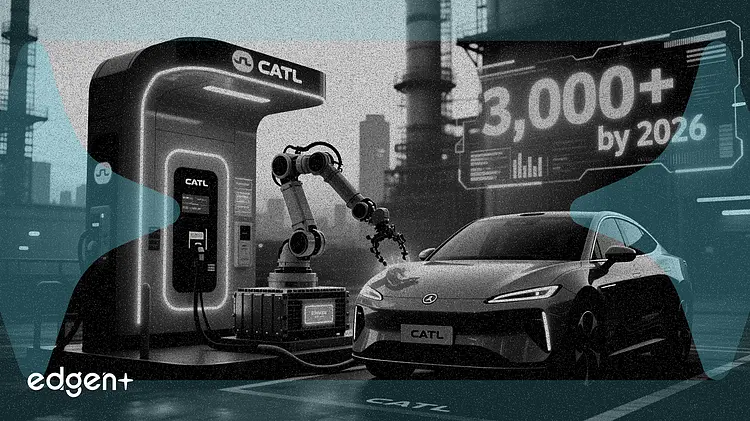
CATL completed 1,650 Chocolate battery swap stations across 127 Chinese cities as of May, adding more than 600 stations in less than six months as the world's largest battery maker accelerates its infrastructure push.
The company plans to exceed 3,000 stations by the end of 2026, expanding coverage to nearly 190 cities, CATL said. The network has already reached 82 additional cities since the start of the year, data showed.
Each Chocolate station is designed for standardized battery packs that can be swapped in minutes, competing directly with Nio's battery-as-a-service model. CATL's highway expansion targets an "11 vertical and 9 horizontal" battery swap corridor network by 2027, connecting major Chinese cities along key transport routes.
The rapid buildout positions CATL to capture recurring revenue from swap fees and battery leasing, diversifying beyond its core business of selling battery packs to automakers such as Tesla and BYD. CATL shares rose 2.6% on the announcement, with short selling accounting for nearly 30% of turnover.
Competitive Landscape
Nio, the pioneer of battery swapping in China, operated more than 2,600 swap stations as of early 2026. CATL's push into the same space with a standardized, automaker-agnostic format threatens to commoditize the model Nio built as a proprietary advantage. Unlike Nio's stations, which serve only Nio vehicles, CATL's Chocolate stations work across multiple brands, potentially accelerating adoption among fleet operators and ride-hailing companies.
Investment Angle
CATL's swap station expansion requires significant capital expenditure, but the long-term payoff lies in battery lifecycle management. By retaining ownership of batteries in the swap network, CATL can optimize battery recycling and second-life applications — a revenue stream that could add billions in annual earnings by 2030, according to industry estimates. The company trades at around 22 times forward earnings, a premium to battery peers, reflecting its dominant 45% global market share in EV batteries.
This article is for informational purposes only and does not constitute investment advice.
