
Ottawa stands ready to return to the negotiating table whenever Washington is, Carney said, keeping the door open to a deal even as 50 percent tariffs on Canadian goods stay in force.
Ottawa stands ready to return to the negotiating table whenever Washington is, Carney said, keeping the door open to a deal even as 50 percent tariffs on Canadian goods stay in force.
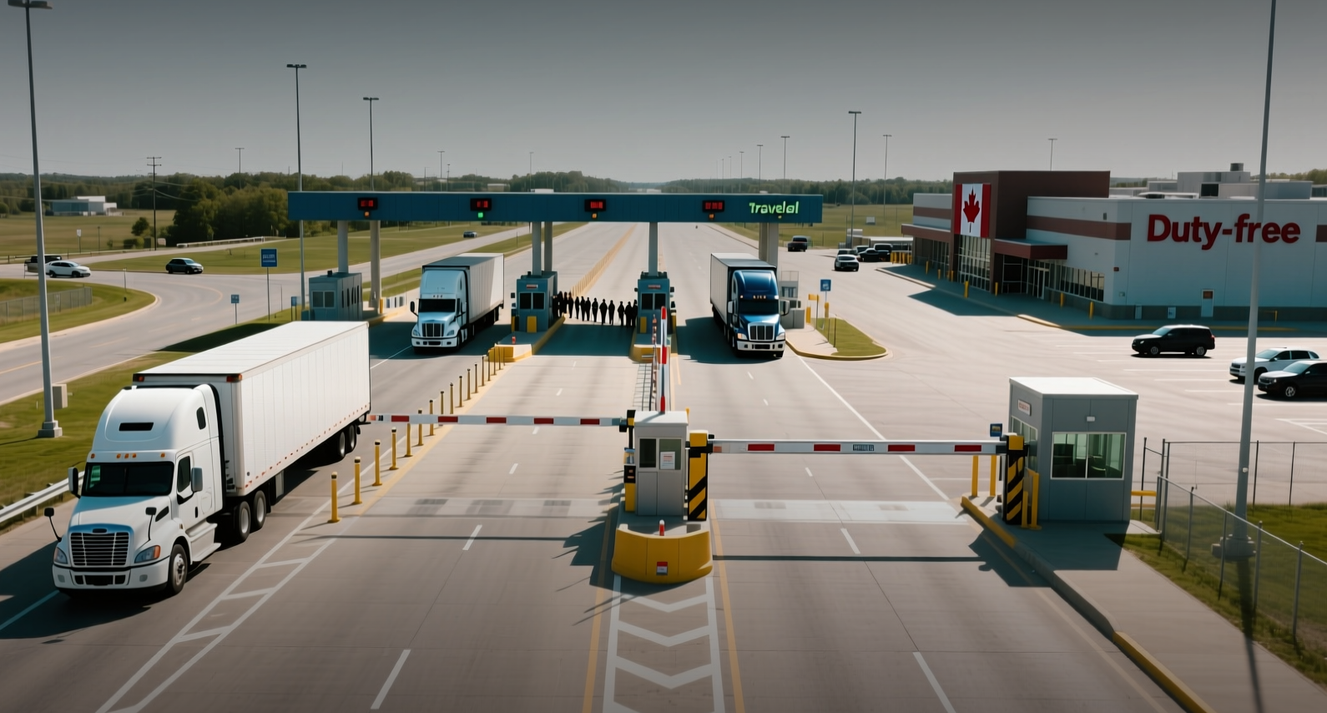
Prime Minister Mark Carney said Canada is ready to resume US trade talks "when the Americans are ready," pushing back on Commerce Secretary Howard Lutnick after failed negotiations left 50 percent tariffs on Canadian goods in place.
"We're ready to sit down and strike that deal when the Americans are ready," Carney said Wednesday, calling an agreement that benefits both countries possible. His retort came after Lutnick publicly blamed Ottawa for the collapse of the talks in August.
The exchange leaves the largest US trade relationship in limbo. Canada was the second-biggest US goods and services trading partner in 2025, with the US importing $454 billion and exporting $426 billion. Washington has layered duties across four statutory authorities since March 2025, most recently a 50 percent tariff on Canadian alcoholic beverages, dairy, paper and wood products under Section 338 of the Tariff Act of 1930 — the first time that authority has been invoked. Ottawa has answered with retaliatory tariffs on roughly $64 billion of US goods, including a fresh $20 billion tranche effective Sept. 8.
The standoff keeps cross-border supply chains in autos, agriculture, energy and lumber exposed to duties with no clear resolution date. In 2025 the US imposed duties on about 15 percent of imports from Canada by value, roughly $56 billion, with calculated duties reaching $10 billion versus $0.4 billion in 2024. If talks remain stalled, the next flashpoint is the USMCA joint review, which Canada and Mexico want to renew but the US has declined to extend.
The tariff escalation traces to March 2025, when President Donald Trump imposed 25 percent duties on most Canadian imports and 10 percent on energy and potash under the International Emergency Economic Powers Act, citing a national emergency over fentanyl trafficking. The Supreme Court struck down that authority in February, and the administration pivoted to a 10 percent, 150-day surcharge under Section 122 of the Trade Act of 1974. When that expired in July, Washington imposed a 10 percent tariff under Section 301 after a US Trade Representative investigation into forced labor.
The August failure to finalize an agreement triggered the Section 338 duties, a tool the US had never before used to impose tariffs. Canada's response has been calibrated to escalate in step: 25 percent tariffs on roughly $22 billion of US imports after the IEEPA round, another 25 percent on about $22 billion after the sectoral duties, and the $20 billion tranche now set for Sept. 8.
For trade-dependent sectors, the cost is compounding. Canada is the largest supplier of US energy imports and a top source of critical minerals, so the duties ripple beyond finished goods into industrial inputs. The last comparable escalation — the 25 percent IEEPA round in March 2025 — preceded months of retaliatory back-and-forth that distorted bilateral trade flows and forced companies to reprice supply chains.
The path forward hinges on whether the two sides can bridge differences before the USMCA review hardens positions. Canada's June 2025 legislation barring its government from raising dairy tariff-rate quotas or cutting over-quota tariffs limits the concessions Ottawa can offer, narrowing the room for a deal. Carney's conditional readiness keeps the door open, but with no date set for a return to the table, exporters on both sides of the border face an open-ended cost.
This article is for informational purposes only and does not constitute investment advice.
