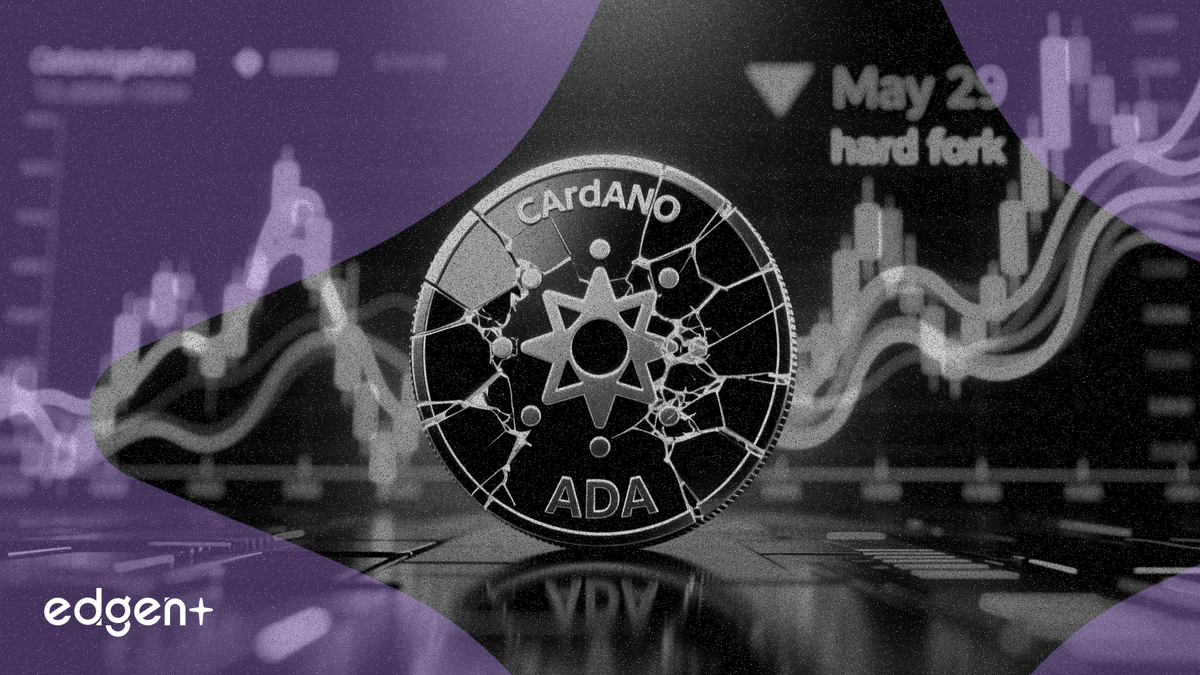
Cardano’s ADA token traded down 0.81% to $0.249 on May 20 after the V11 “Van Rossem” hard fork went live on the preview testnet, setting the stage for a key governance vote on May 29.
The upgrade introduces Plutus script enhancements and BLS12-381 cryptography support, which strengthens the foundation for zero-knowledge applications, according to developer announcements.
While the upgrade is a key technical milestone, derivatives open interest has declined 1.55% to $508.64 million, suggesting reduced leverage. In contrast, on-chain data reported by CryptoPatel shows whale wallets now hold 67% of the ADA supply, the highest concentration since 2020, indicating accumulation.
The May 29 governance vote is the next major catalyst, with a successful outcome needed to push the price beyond the $0.26 resistance level. Failure to hold the $0.24 support could expose the token to further downside toward $0.22.
The V11 hard fork is a developer-focused update designed to make smart contracts on the Cardano network cheaper and faster. The activation on the preview testnet is a critical step before the changes are pushed to the main network, pending the community governance vote. From a technical perspective, market analyst Jonathan Carter notes that ADA’s repeated defense of the $0.24 support level suggests ongoing accumulation. A breakout above the current descending triangle pattern would place immediate focus on the $0.33 level.
Institutional developments are adding a layer of support for the asset. CME Group and Nasdaq are preparing to launch a crypto index futures product scheduled for June 8, which will include Cardano alongside other major cryptocurrencies like Bitcoin and Ethereum. This provides a regulated pathway for hedge funds and asset managers to gain exposure.
Separately, market participants are tracking a potential timeline for a spot ADA exchange-traded fund (ETF). Grayscale filed an application for such a product over a year ago. Based on the SEC's new framework and the launch of ADA CME futures in February 2026, a decision could come as early as October 2026, creating another long-term catalyst for the ecosystem.
This article is for informational purposes only and does not constitute investment advice.