
Canada's 50% tariff on US copper wire marks the latest salvo in a trade war now covering roughly $20 billion in annual bilateral trade.
Canada's 50% tariff on US copper wire marks the latest salvo in a trade war now covering roughly $20 billion in annual bilateral trade.
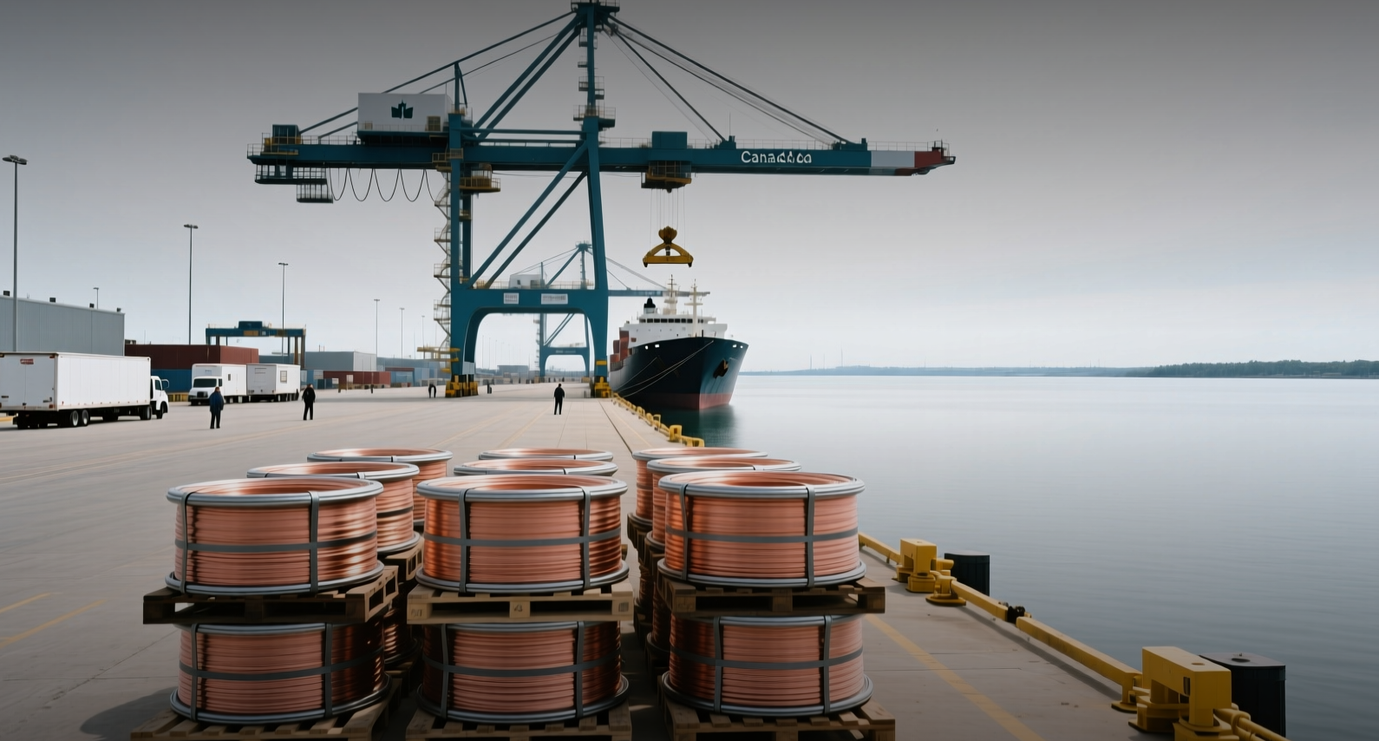
Canada imposed a 50% tariff on US copper wire imports Tuesday, part of a retaliatory package covering roughly 700 American products worth $20 billion per year as the bilateral trade war escalates.
"We will defend Canadian workers and industries dollar for dollar," Prime Minister Mark Carney said after negotiations between the neighboring countries collapsed Friday.
The copper wire duty takes effect Sept. 8 alongside tariffs of 15% to 50% on products ranging from toilet paper and cheese to furniture and appliances. The measures mirror US tariffs on Canadian goods, including doubling steel and aluminum duties to 50%.
The two nations share an estimated $900 billion annual trading relationship, with Canadian imports of US goods totaling $272 billion per year. The escalation threatens to disrupt North American supply chains in copper, steel, aluminum, and manufactured goods, with copper-dependent industries facing the steepest near-term cost increases.
The copper wire tariff targets a critical input for North American electrical infrastructure, construction, and automotive manufacturing. Canadian importers reliant on US copper wire will face sharply higher costs, potentially forcing them to source from domestic producers or alternative suppliers in Chile or Peru, the world's largest copper exporters. The move follows the US decision to double steel and aluminum tariffs to 50%, which took effect Saturday after talks collapsed.
Retaliation Targets Consumer Staples and Political Battlegrounds
Beyond copper, the tariff list spans household essentials. Toilet paper faces a 25% duty, while facial tissue stock carries a 50% rate. The US imported $328 million worth of toilet paper from Canada in 2024, making Canada the largest exporter of the product to the US, according to World Bank data. School and office supplies — notebooks, binders, folders — face 50% duties as back-to-school season arrives.
Seafood tariffs of 25% on fresh and frozen fish, including lobster, will hit Maine, a key political battleground ahead of the midterm elections. Canada is the largest seafood trading partner of the US, which imported $4.3 billion from Canada in 2025. Dairy products, including milk, cream, and a range of cheeses from Brie to Parmesan, carry duties of 25% to 50%. Wooden and metal furniture — desks, beds, dressers, sofas — face 50% tariffs.
The targeting of Maine is notable. Incumbent Republican Sen. Susan Collins, who has voted against Trump's tariff agenda, faces a reelection battle against Democrat Troy Jackson. Canadian officials said some items were chosen to strategically target states where voters have supported Trump.
Supply Chain Costs and Forward Outlook
The copper wire tariff adds to a cascade of cost pressures across North American manufacturing. US copper wire exports to Canada feed into electrical grids, telecommunications networks, and automotive wiring harnesses. Canadian buyers absorbing a 50% import tax will likely pass costs downstream or shift procurement to alternative suppliers, potentially reducing US export volumes.
The tariff package takes effect Sept. 8, giving affected industries a two-week window to adjust procurement. Whether the US responds with additional countermeasures on Canadian copper or other sectors remains uncertain, but the pattern of escalation suggests further rounds are possible. For copper markets, the tariff adds a new layer of friction to an already volatile pricing environment, with North American copper premiums likely to widen as trade flows reroute.
This article is for informational purposes only and does not constitute investment advice.
