
Canada walked away from US trade negotiations after Trump's "Donroe" doctrine tied tariffs to territorial demands, with Prime Minister Mark Carney putting sovereignty ahead of the economic cost of a trade war.
Canada walked away from US trade negotiations after Trump's "Donroe" doctrine tied tariffs to territorial demands, with Prime Minister Mark Carney putting sovereignty ahead of the economic cost of a trade war.
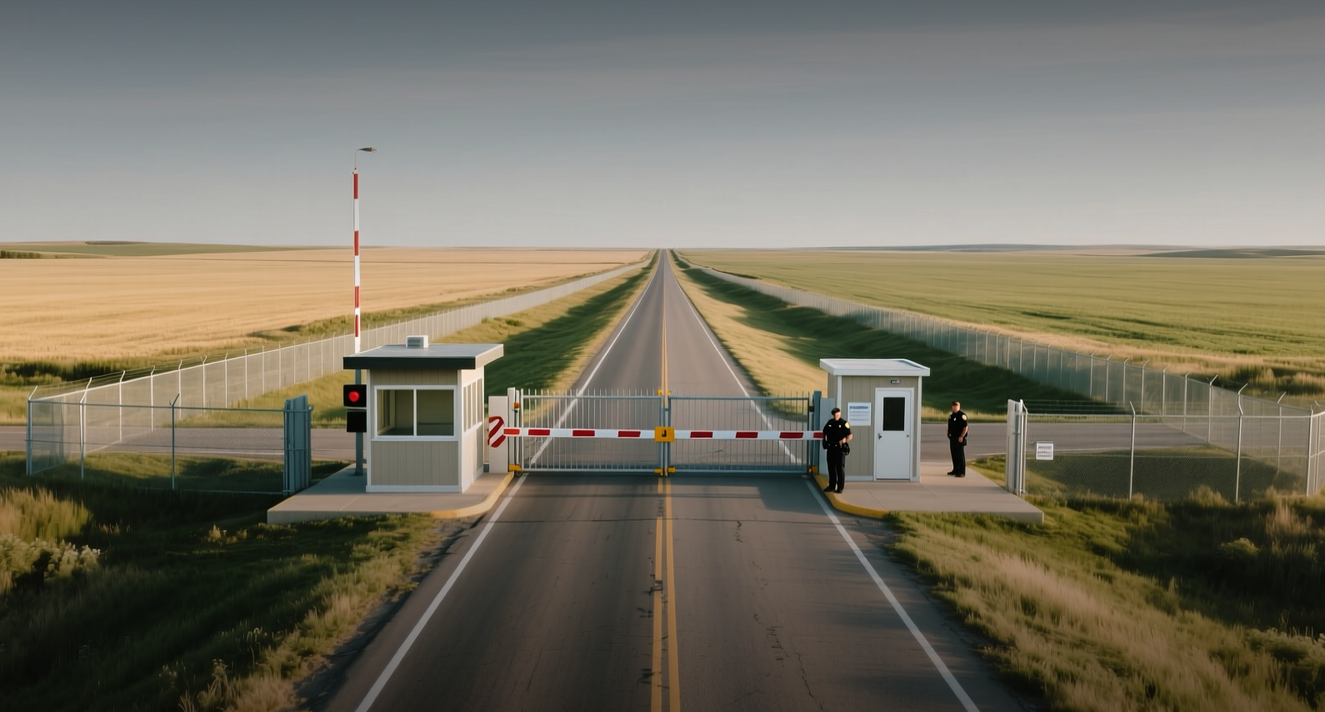
Canada's decision to abandon US trade talks reflects a sovereignty calculation rather than an economic one, after President Donald Trump's "Donroe" doctrine fused tariff policy with territorial ambition — from absorbing Canada as the 51st state to seizing Greenland and Venezuela's oil reserves.
"No Canadian leader wants to be the Delcy Rodríguez of the North," Chrystia Freeland, Canada's former deputy prime minister, told CNBC last week, invoking the US-installed interim president of Venezuela whose oil revenue now flows through the US Treasury. Treasury Secretary Scott Bessent countered Monday that Prime Minister Mark Carney "is not doing what's best for the Canadian people."
The rupture marks a sharp break from the postwar era, when Washington pursued trade liberalization as a goal in itself. Canada took what it called a "leap of faith" in the 1980s to negotiate a free-trade pact that President Ronald Reagan described as a "model for the future of this country and the world." Mexico joined a few years later, and NAFTA was followed by bilateral deals with Colombia, Chile, Peru, the Dominican Republic and Central America.
Trump's first term reversed that tide through the US-Mexico-Canada Agreement, which replaced NAFTA and favored the US but remained acceptable to its partners. His second term has gone further, linking levies to political and territorial goals: tariffs threatened against Colombia for refusing deportees, against Brazil for prosecuting his ally Jair Bolsonaro, and against Europe to force Denmark to hand over Greenland. Trump said Canada could avoid tariffs by becoming the 51st state.
Venezuela is the most extreme expression of the "Donroe" doctrine, a reformulation of the 1823 Monroe Doctrine that asserts US dominance of the Western Hemisphere. Its interim president, Delcy Rodríguez, was installed by the Americans and serves at their pleasure. US troops come and go at will. Last week Trump boasted that the US had taken control of a sizable chunk of Venezuela's oil reserves at zero cost.
Venezuelan-born Harvard economist Ricardo Hausmann said Trump's demands lack any "moral compass" and amount to "an illegitimate power grab." The US said it captured Venezuelan dictator Nicolás Maduro for drug trafficking.
The Venezuela example has reshaped how Canada reads US demands. In January, Bessent appeared to express support for Alberta secession; the province holds a referendum next month. Canada now worries about the leverage the US could wield as the dominant customer of its resources, and it fears tariffs on autos and trucks are intended to wipe out its industry. "I don't want Canadian cars, I don't want Canadian parts, I don't want Canadian anything," Trump wrote on social media.
Trump treats neighbors as a source of raw materials and a market for manufactured products. He has kept tariffs low on Canadian oil while pressing for greater access, and he wants to revive the Keystone XL pipeline from Canadian oil fields to US refineries that Biden killed in 2021.
Canadian officials also read US demands as a veto over their trade deals with other countries. US Trade Representative Jamieson Greer disputed that, saying Washington only wanted to ensure cheap aluminum and steel from China did not enter the US through Canada. Canada had proposed a common "Fortress North America" approach toward China; former Canadian trade negotiator Steve Verheul wrote that the US instead envisioned a fortress "where one ruler would have dictated what other inhabitants of the fortress could have done with the outside world."
Whether Canadian defiance outlasts a brutal trade war remains open. Tariffs of some sort are likely here to stay, but the Donroe doctrine may not be. Congress did not clamor for control of Venezuela, and it could be years before the US reaps tangible benefits from its oil reserves even as resentment grows there. Large majorities of Americans oppose Trump's tariffs on Canada and his renaming of Lake Ontario to "Lake America," according to an Ipsos poll.
Big changes in US trade policy require "some sort of societal consensus," said Doug Irwin, a trade historian at Dartmouth College. "Here it's one person, Trump, or maybe two, with [Commerce Secretary] Howard Lutnick, that have anti-Canada animus. It's hard not to see the hope of a reset." There is precedent: after the Smoot-Hawley tariff of 1930, Canada elected a protectionist government that retaliated; 17 years, a depression and a world war later, it joined the US to build the postwar trading system.
This article is for informational purposes only and does not constitute investment advice.
