

BYD's ability to sell more cars this year depends entirely on how many batteries it can build — a constraint the world's largest EV maker is racing to resolve.
BYD's ability to sell more cars this year depends entirely on how many batteries it can build — a constraint the world's largest EV maker is racing to resolve.
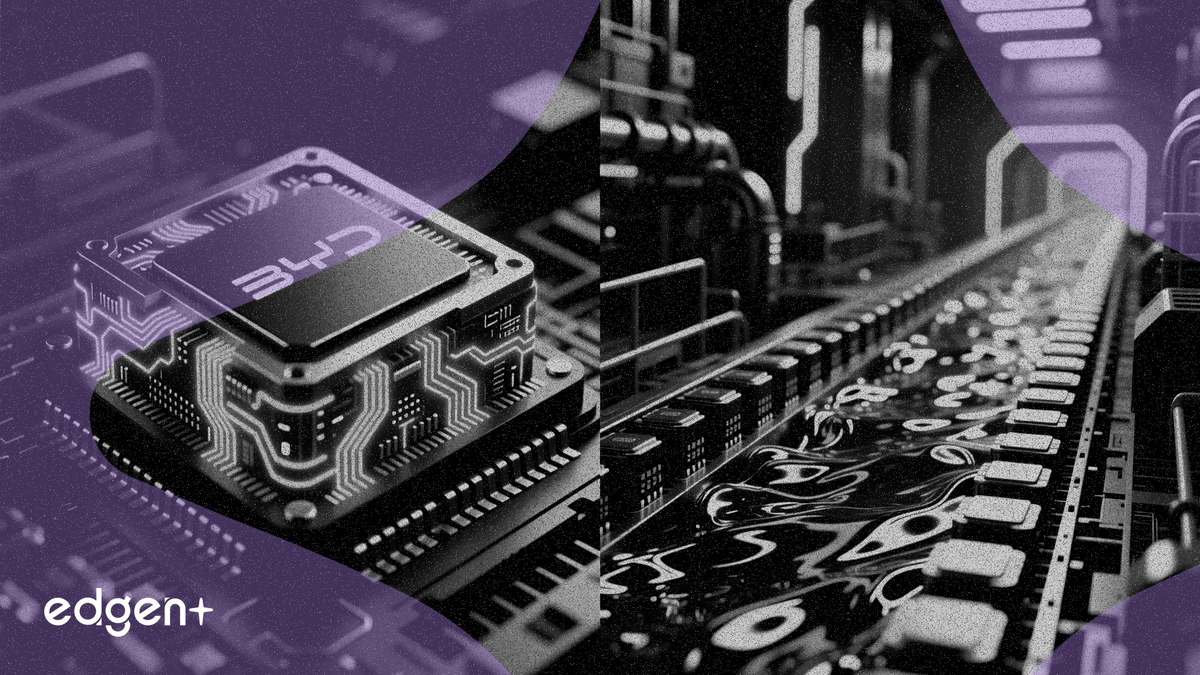
BYD's ability to sell more cars this year depends entirely on how many batteries it can build — a constraint the world's largest EV maker is racing to resolve.
BYD Co. Chairman Wang Chuanfu said the company's 2026 sales will be determined by battery production capacity, as the second-generation Blade Battery and its new Flash fast-charging technology draw strong demand both at home and abroad. Current capacity is rising by 20,000 to 30,000 units each month, though it remains insufficient to meet orders, Wang said.
"Sales this year will depend on battery production capacity," Wang Chuanfu, Chairman and President of BYD, said. "Once capacity ramp-up is completed next year, we expect both domestic and foreign markets to expand simultaneously."
BYD sold 376,990 vehicles in China in May alone, making it the country's best-selling brand, according to CarNewsChina. In Australia, sales reached 33,454 through the end of May, up 120.1 percent from a year earlier. The company is working around the clock to unlock the Blade Battery's full production potential, Wang said, adding that the battery division is receiving priority resource allocation.
The battery bottleneck comes as BYD prepares to launch the Great Han, a new luxury sedan built on the second-generation Blade platform. The vehicle will offer up to 1,008 kilometers of driving range on the CLTC cycle and support charging at BYD's new 1,500-kilowatt Flash chargers, which can deliver a full charge in as little as nine minutes. The Great Han will be available in rear-wheel drive Exclusive and all-wheel drive Flagship trims, with LiDAR-based active safety systems standard across the range.
Why Battery Capacity Is the Binding Constraint
The second-generation Blade Battery uses LFP chemistry — lithium iron phosphate, which is cheaper and safer than nickel-manganese-cobalt alternatives but historically offered lower energy density. BYD has narrowed that gap through cell-to-pack architecture that improves volumetric efficiency, bringing estimated pack costs to around $56 per kilowatt-hour, well below the industry average of roughly $100/kWh for LFP packs.
That cost advantage has driven BYD's rapid market share gains. But it also creates a production challenge: each Blade cell requires precise manufacturing conditions, and yield rates during ramp-up can constrain usable output. Wang's comments suggest that even with monthly increments of 20,000 to 30,000 units of capacity, BYD cannot yet satisfy the demand its competitive pricing and fast-charging network have generated.
The constraint is visible in BYD's product pipeline. The Great Han's 1,500-kW charging capability — roughly three times the power of Tesla's V4 Superchargers — requires not only new battery chemistry but also compatible cells in sufficient volume. BYD is simultaneously rolling out Flash charging stations across China, adding further pressure to battery supply.
What It Means for Investors
BYD shares traded 1.5 percent higher on the day of Wang's comments, with short selling accounting for 32.9 percent of turnover, according to AASTOCKS data. The battery-capacity bottleneck provides investors with a clear operational metric to track: monthly capacity additions of 20,000 to 30,000 units imply a potential annualized production increase of 240,000 to 360,000 vehicles once fully utilized.
The constraint also highlights a structural advantage. BYD controls its battery supply chain vertically — from lithium refining through cell production to pack assembly — unlike rivals such as Nio and Xpeng, which rely on external suppliers including CATL. If BYD resolves its capacity ramp by 2027 as Wang projected, it could widen its cost lead over competitors that face their own battery procurement constraints.
This article is for informational purposes only and does not constitute investment advice.
